
Nanoplastia Hair Treatment: Process, Benefits, Results & How Long It Lasts
-
Dokmai London
- Posted on
- 0 comments
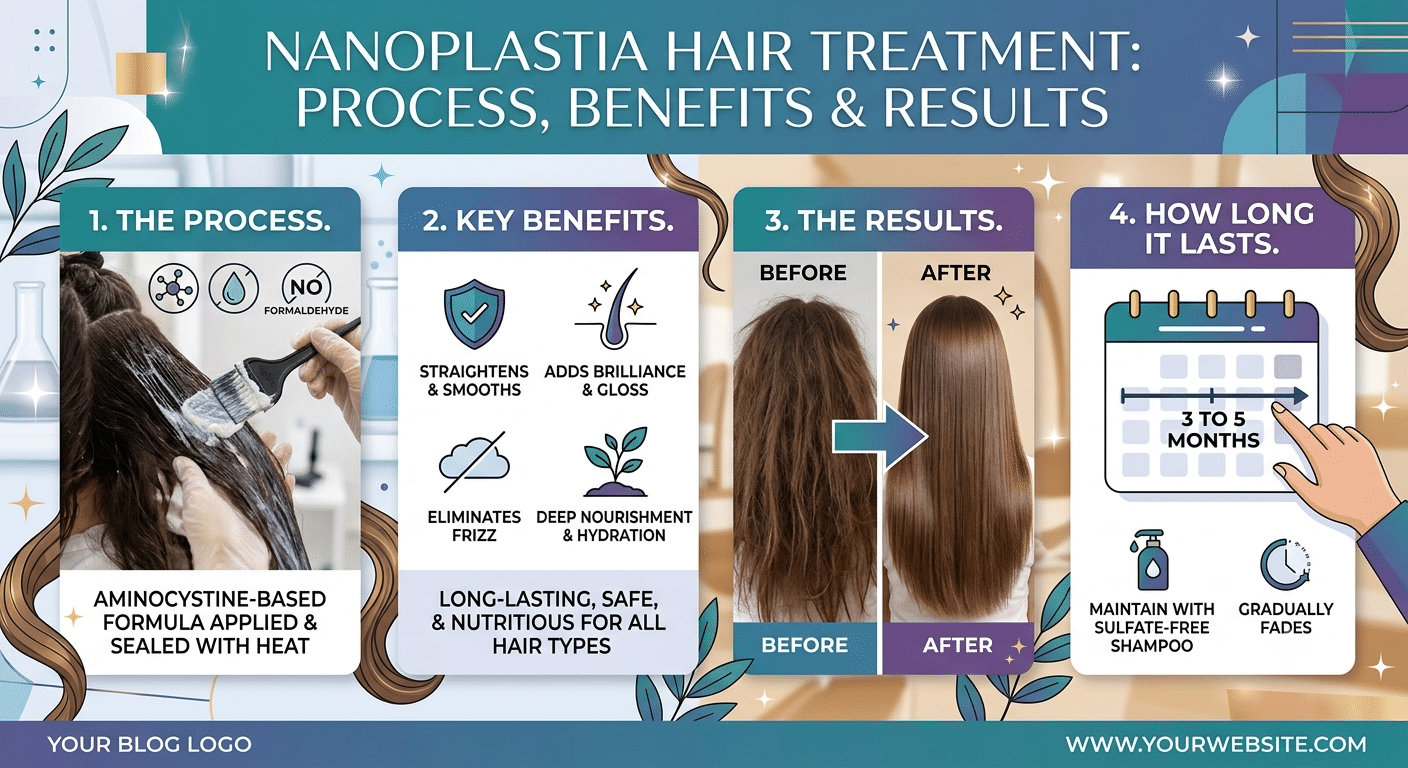
If your hair is constantly fighting you—frizz in humid weather, rough ends after washing, puffiness that refuses to settle, or curls and waves that take forever to style—you have probably come across Nanoplastia hair treatment. This modern salon treatment has become increasingly popular among people who want smoother, shinier and more manageable hair without necessarily choosing a permanently pin-straight look.
Nanoplastia is generally described as a professional hair-smoothing treatment based on formulations that may contain combinations of amino acids, proteins, conditioning ingredients, oils and other smoothing agents. The exact formula and procedure can vary considerably between brands and salons, so the word “Nanoplastia” by itself does not guarantee one identical chemical composition or result. Current beauty-industry sources commonly describe results lasting around three to six months, although some providers claim longer depending on the hair, formula and maintenance routine.
That difference matters. Think of Nanoplastia less like pressing a reset button on your hair and more like giving the hair fibre a carefully controlled makeover. The treatment can reduce frizz, improve softness, increase shine and make styling considerably easier, but the final result depends on your starting hair condition, the product used, the heat applied and what you do after leaving the salon.
This guide explains what Nanoplastia hair treatment is, how the process works, its potential benefits, expected results, aftercare requirements, safety considerations and how long it can last. If you are considering booking the treatment, understanding these details can help you have a much more informed conversation with your stylist.
What Is Nanoplastia Hair Treatment?
Nanoplastia is a professional hair-smoothing and restructuring treatment designed primarily to reduce frizz, improve manageability and create a smoother-looking hair surface. Unlike a traditional haircut or conditioning service, it involves applying a specialized formulation to the hair and then using controlled heat to help create the desired finish. Contemporary descriptions of Nanoplastia commonly mention amino acids, proteins, collagen, oils and conditioning compounds, although formulations vary from one manufacturer to another.
The treatment is particularly appealing to people who want a polished appearance without spending significant time every morning with a blow dryer and straightener. Hair can appear straighter, softer and more reflective after treatment, while waves or curls may become more relaxed depending on the product and application technique. That means the result should not automatically be described as identical to permanent rebonding. In many cases, the goal is controlled smoothness rather than an artificially flat appearance.
One important point is that Nanoplastia is a treatment category rather than a single universal formula. Two salons can use products marketed under the same name while having different ingredient lists, processing times and application protocols. That is why asking to see the product label and understanding what is actually being applied to your hair is more useful than relying only on the treatment name.
How Nanoplastia Works on the Hair
The process generally combines a conditioning or smoothing formulation with heat. Depending on the particular product system, the formula is applied section by section and allowed to process before the hair is dried and treated with a flat iron. The heat helps shape and seal the hair into the desired smoother finish.
Many descriptions of Nanoplastia focus on small or “nano” molecules penetrating the hair fibre, but consumers should be careful with overly scientific-sounding marketing language. Hair is a complex fibre, and the actual effect depends on the formulation and chemistry used. The visible improvement generally comes from a combination of conditioning, cuticle smoothing, reduction of surface roughness and heat-assisted styling.
A recent 2026 professional explanation also highlights an important distinction: the active ingredient matters more than the commercial name printed on the box. Products sold as keratin, Nanoplastia or other smoothing services can have different active chemistries, so the ingredient list and safety information deserve attention.
Ingredients Commonly Used in Nanoplastia
There is no single ingredient list that applies to every Nanoplastia product. Depending on the manufacturer, formulas may contain amino acids, hydrolyzed proteins, conditioning agents, oils, collagen-related ingredients and acidic smoothing compounds. Some professional systems are specifically marketed as formaldehyde-free, but that should be verified from the actual product documentation rather than assumed from the word “Nanoplastia.”
This distinction is especially important because the FDA warns that some hair-smoothing products can release formaldehyde when heated. The agency recommends checking ingredient information and asking salon professionals about formaldehyde, formalin, methylene glycol and the product’s Safety Data Sheet when relevant.
So, before any professional smoothing service, ask a simple question: “What exactly is being applied to my hair?” A good salon should be comfortable answering it.
Why Nanoplastia Has Become Popular
The popularity of Nanoplastia comes from a very practical problem: people want hair that looks polished without having to style it from scratch every day. Frizz, humidity, roughness and excessive styling time can make even healthy hair feel difficult to manage. A smoothing service can change that daily routine by making the hair easier to brush, dry and style.
Another reason is the desire for a more natural-looking finish. Many clients do not necessarily want completely flat hair. They want movement, shine and reduced puffiness while still looking like themselves. Depending on the formula and hair type, Nanoplastia may offer a smoother appearance without producing exactly the same visual result as a permanent straightening service.
There is also a growing interest in treatments positioned as alternatives to older chemical straightening techniques. Some current 2026 sources describe Nanoplastia as a formaldehyde-free option, while other experts emphasize that safety depends on the actual formulation rather than the marketing name.
That is why a professional consultation remains important. Your stylist should look at your hair rather than simply selling you a treatment from a menu. Hair density, porosity, previous colouring, bleaching, chemical processing, breakage and overall elasticity can all influence the result.
Nanoplastia Hair Treatment Process
The exact procedure varies between brands, but a professional Nanoplastia session generally follows a sequence designed to prepare, treat and seal the hair. The complete appointment can take several hours depending on hair length, density, texture and the manufacturer’s instructions.
Step 1 – Hair Consultation and Assessment
The first step should be a proper consultation. Your stylist needs to understand whether your hair has been coloured, bleached, chemically straightened or treated with other smoothing services. They should also examine whether the hair is excessively porous, brittle or breaking.
This assessment is not just a formality. Hair that looks dry can have very different underlying conditions from hair that is chemically compromised. A strand may appear rough on the surface but still have reasonable strength, while another may look acceptable but break easily when stretched or brushed.
A professional stylist can use this assessment to determine whether Nanoplastia is appropriate and how aggressively the treatment should be approached. Some salons may also recommend a strand test, particularly when the hair has been heavily processed.
Step 2 – Deep Cleansing
The hair is usually washed with a cleansing shampoo designed to remove oil, styling residue and buildup. Clean hair allows the treatment formula to distribute more evenly.
This stage is similar to preparing a wall before painting it. If the surface is covered in dust, oil or old residue, the new layer will not behave as predictably. Likewise, excessive product buildup can interfere with the application of a professional smoothing formula.
The stylist then prepares the hair according to the specific product instructions. This may involve towel-drying or completely drying the hair before application, depending on the system being used.
Step 3 – Application of the Nanoplastia Formula
The stylist divides the hair into manageable sections and applies the product carefully from the roots or near-root area toward the lengths, following the manufacturer’s instructions. The amount used should be appropriate for the hair’s density and condition rather than simply applying as much product as possible.
Even application is essential. Too little product may produce inconsistent results, while excessive product does not automatically mean better smoothing. Professional technique is therefore just as important as the formula itself.
The product is then allowed to process for the specified period. Processing time should be based on the manufacturer’s directions and the stylist’s professional assessment rather than an arbitrary “longer is better” approach.
Step 4 – Processing and Heat Activation
Heat is an important part of many Nanoplastia procedures. After processing, the hair is dried and sectioned before a flat iron is used to seal and shape the strands.
This is one reason professional application matters. Temperature, section size, number of passes and hair condition all influence the outcome. Hair that has already been heavily lightened or weakened may not tolerate the same heat approach as strong, untreated hair.
A stylist should adapt the technique rather than using one temperature and one number of passes for every client. The goal is to achieve the desired cosmetic result while minimizing unnecessary stress on the hair fibre.
Step 5 – Rinsing, Drying and Sealing
Depending on the product system, the hair may be rinsed before or after the heat-sealing stage. Some formulas follow a specific wash-and-seal protocol, while others require different timing. This is why there is no universal Nanoplastia procedure that every salon should follow.
After the final stage, the hair is dried and styled to reveal the result. The immediate difference can be striking: hair may look smoother, more reflective and less bulky, while frizz and flyaways are visibly reduced.
The treatment is not simply about making hair straight. A successful result should also focus on manageability, softness and a healthy-looking finish.
Benefits of Nanoplastia Hair Treatment
The most noticeable benefit for many people is frizz reduction. When the hair surface becomes smoother and more controlled, humidity and everyday movement may have less visual impact. This can be particularly appealing for people who struggle with puffiness during India’s humid or monsoon seasons.
Another potential benefit is improved shine. Smooth hair surfaces reflect light more evenly, which can make the hair appear glossier. This does not mean the treatment magically creates healthy hair from damaged strands, but improving surface condition can produce a visibly more polished appearance.
Nanoplastia can also make hair easier to manage. Brushing, blow-drying and styling may require less effort, especially for people whose natural texture tends to become bulky or frizzy. Instead of fighting the hair every morning, the styling routine can become considerably simpler.
Common cosmetic benefits include:
- Reduced frizz and puffiness
- Smoother-looking hair
- Improved shine
- Softer-feeling lengths
- Easier daily styling
- Less dependence on repeated straightening
- A more polished appearance
- Better manageability for difficult textures
However, results vary. A treatment should never be marketed as a guaranteed cure for hair damage or hair loss. Nanoplastia works primarily on the cosmetic condition and manageability of the hair shaft; it is not a medical treatment for scalp disorders or underlying causes of hair loss.
What Results Can You Expect?
The result depends heavily on your starting point. Someone with mildly wavy, frizzy hair may notice smoother, more relaxed hair, while someone with very curly or coarse hair may experience a significant reduction in curl but not necessarily perfectly straight hair.
The treatment can make hair look sleeker and more reflective, particularly immediately after the appointment. The hair may also feel softer because the surface has been conditioned and smoothed.
One of the biggest practical changes is often styling time. If you normally spend 30 minutes fighting frizz and trying to create a smooth finish, reducing that routine can make the treatment feel valuable even if the hair does not become completely straight.
It is also important to separate immediate visual results from long-term hair health. A glossy appearance does not necessarily mean the internal structure of the hair has been permanently repaired. Professional sources and medical commentary emphasize that heat-intensive smoothing treatments can still create problems for highly porous, bleached or fragile hair.
How Long Does Nanoplastia Last?
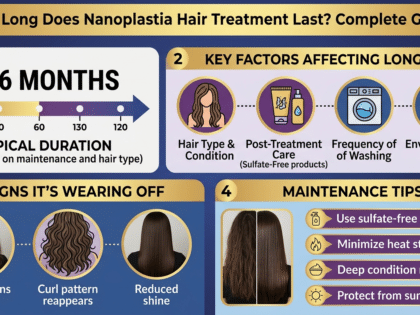
For many clients, Nanoplastia results can last approximately three to six months, but there is no universal expiration date. Hair type, washing frequency, product choice, lifestyle, technique and the specific Nanoplastia formulation can all change the longevity. Current 2026 sources commonly place the expected range around three to six months.
Some salons and product providers advertise longer durations, sometimes substantially longer, but those claims should be treated as product-specific rather than a guarantee for every person. A client with frequent washing, swimming, high humidity exposure or aggressive cleansing may see the smoothing effect fade sooner.
New hair growth also matters. Treated lengths retain the effect while untreated hair grows from the scalp. As a result, the transition becomes gradually more noticeable rather than the entire treatment suddenly disappearing overnight.
Think of it like wearing a premium pair of shoes. Their appearance and performance depend not only on their original quality but also on how often you wear them, where you wear them and how you care for them. Nanoplastia works in a similar way: professional technique creates the foundation, but aftercare influences how long the cosmetic result remains noticeable.
Factors That Affect Nanoplastia Longevity
Several factors can determine whether your result stays impressive for three months or continues looking good toward the longer end of the range. The first is your washing routine. Frequent shampooing can gradually remove conditioning effects and reduce the smooth appearance over time.
Water quality can also matter. Hard water contains minerals that may accumulate on the hair and affect texture and shine. Chlorinated swimming pools can create additional stress, particularly for coloured or chemically treated hair.
Your styling habits matter as well. Excessive high heat from straighteners, curling irons and very hot blow-dryers can gradually affect the hair fibre. The treatment may make styling easier, but it does not make hair invincible.
Hair type and condition are equally important. Porous or heavily damaged hair may not retain a treatment in the same way as stronger, healthier hair. This is why realistic expectations should always be based on the individual rather than a generic promise such as “six months guaranteed.”
Nanoplastia Aftercare Tips
Aftercare is where many clients either protect their investment or unintentionally shorten the result. Your stylist should provide product-specific instructions because different Nanoplastia systems may have different post-treatment requirements.
In general, gentle cleansing and appropriate conditioning can help maintain a smooth appearance. Many professional sources recommend using products designed for treated hair and avoiding unnecessarily harsh cleansing routines. Current guidance also emphasizes that the first few days and the products used afterward can influence longevity.
A practical routine can include:
- Use a gentle shampoo recommended for treated hair.
- Condition the lengths regularly.
- Avoid unnecessary high-heat styling.
- Use heat protection whenever heat styling is necessary.
- Protect hair from prolonged chlorine exposure.
- Avoid aggressive brushing when hair is wet.
- Schedule professional maintenance according to your hair’s condition.
- Follow the specific aftercare instructions supplied with your treatment.
Do not automatically assume that every “sulfate-free” or “keratin-safe” product is perfect for every Nanoplastia formula. Your stylist should recommend products compatible with the specific system used.
Nanoplastia vs Keratin vs Smoothening
Although these services are often discussed together, they are not identical. The biggest mistake is assuming that the treatment name alone tells you exactly what chemicals are being used or what the final result will look like.
| Feature | Nanoplastia | Keratin Treatment | Chemical Smoothening |
|---|---|---|---|
| Main goal | Smoothing, frizz control and manageability | Smoothing and frizz reduction | More pronounced straightening |
| Finish | Often smooth and naturally polished | Smooth and controlled | Can be straighter and more structured |
| Result duration | Commonly around 3–6 months | Varies by formula and maintenance | Varies by technique and hair growth |
| Formula | Varies by brand | Varies significantly | Varies by chemical system |
| Heat involved | Commonly yes | Commonly yes | Commonly yes |
| Best suited to | Frizzy, wavy or difficult-to-manage hair | Clients seeking smoother, easier styling | Clients wanting stronger straightening |
| Main consideration | Product formulation and hair condition | Formula and heat exposure | Chemical processing and hair condition |
There is no single treatment that is automatically right for every person. The better choice depends on whether your priority is frizz control, softness, a relaxed texture, stronger straightening or easier everyday styling.
Who Is Nanoplastia Suitable For?
Nanoplastia may be considered by people dealing with frizz, dryness, puffiness, rough texture, waves or difficult-to-manage hair. It can be particularly attractive to people who want to reduce daily styling time.
People with coloured hair may also be candidates, but that does not mean every chemically treated head of hair should automatically receive the service. Hair that has been repeatedly bleached, over-processed or weakened requires a more cautious assessment.
The best candidate is not simply someone who wants straight hair. It is someone whose hair is healthy enough to tolerate the treatment process and whose expectations match what the specific product can realistically deliver.
A consultation should therefore come before the appointment. If your stylist takes time to ask about your previous chemical treatments and inspect the condition of your hair, that is a useful sign that the service is being approached professionally.
When Should You Avoid Nanoplastia?
Nanoplastia may not be appropriate for hair that is extremely brittle, severely over-processed, heavily breaking or highly porous. Some professional treatment providers specifically advise against smoothing very damaged hair and recommend reconstruction or strengthening work first.
This is particularly important after extensive bleaching. Lightening can significantly affect the structure and strength of the hair, and adding another heat-intensive chemical service without proper assessment may increase the risk of breakage.
You should also tell your stylist about previous reactions to hair products or scalp sensitivity. If you have an active scalp condition or unexplained hair loss, getting professional medical advice before cosmetic chemical treatment may be appropriate.
The rule is simple: if your hair is already struggling to survive normal brushing, it is probably not the time to push it through an intensive smoothing procedure.
Is Nanoplastia Safe?
Safety depends on the actual formulation, application method, ventilation, heat settings and condition of your hair. It would be inaccurate to claim that every product marketed as Nanoplastia is automatically risk-free.
The FDA specifically warns that some hair-smoothing products can release formaldehyde when heated and advises consumers to check ingredient information and ask salon professionals about the product being used.
Some Nanoplastia systems are marketed as formaldehyde-free, but the safest approach is to verify the exact product rather than relying on a salon label. Ask to see the ingredient list or product documentation and ask whether a Safety Data Sheet is available.
A professional salon should also use appropriate ventilation and follow the manufacturer’s instructions. If you experience burning, significant irritation, breathing difficulty or an unusual reaction during a treatment, the service should be stopped and appropriate medical advice sought.
How to Choose a Professional Salon
Choosing the salon can be just as important as choosing the treatment. Look beyond Instagram photographs and promotional promises. A beautiful before-and-after image tells you what happened to one person’s hair under particular conditions; it does not guarantee the same result for yours.
Ask your stylist what brand and formulation they use. Ask whether the product contains formaldehyde or formaldehyde-related ingredients, what the processing steps are, and how they adjust heat for coloured or damaged hair. The FDA specifically recommends that consumers ask salons about ingredients, training, safety precautions and ventilation when considering hair-smoothing services.
A good consultation should cover your hair history, including previous keratin treatments, smoothening, rebonding, bleaching, colouring and other chemical services. Your stylist should also explain what result is realistically achievable.
Finally, be cautious about absolute promises. “Zero damage,” “permanent repair,” “works for everyone” and “guaranteed six months” sound attractive, but hair does not behave identically from person to person. A trustworthy professional explains both the benefits and the limitations.
Frequently Asked Questions
1. Is Nanoplastia the same as keratin treatment?
No. Nanoplastia and keratin treatments are different service categories, although both can be designed to reduce frizz and improve smoothness. Their formulations, application procedures and results can vary significantly between products, so the ingredient list and manufacturer’s instructions matter more than the treatment name alone.
2. How long does Nanoplastia hair treatment last?
A commonly reported range is around three to six months, although individual results can be shorter or longer depending on hair type, washing frequency, formulation, application technique and aftercare. Some providers advertise longer durations, but these should be considered product-specific claims rather than universal guarantees.
3. Can Nanoplastia be done on coloured hair?
It may be possible, but coloured hair should be assessed before treatment. Hair that is lightly coloured and structurally strong may respond differently from heavily bleached or over-processed hair. A professional stylist should consider porosity, elasticity and previous chemical treatments before proceeding.
4. Does Nanoplastia permanently straighten hair?
Not necessarily. Nanoplastia is generally considered a smoothing treatment, although it can produce a significant straightening or relaxing effect depending on the formula and hair type. As new hair grows and the treatment gradually wears down, the natural texture becomes increasingly visible.
5. How can I make Nanoplastia last longer?
Follow the aftercare instructions provided for your specific treatment, use suitable hair-care products, avoid unnecessary high heat and protect your hair from excessive chlorine and harsh cleansing. Gentle maintenance can help preserve the smooth appearance for longer, although no aftercare routine can make a temporary cosmetic treatment permanent.
Conclusion
Nanoplastia hair treatment has become a popular option for people who want smoother, shinier and easier-to-manage hair without necessarily choosing traditional permanent straightening. The treatment can reduce frizz, improve the appearance of the hair surface and simplify everyday styling, making it particularly attractive for people dealing with persistent puffiness or difficult texture.
The process usually involves cleansing the hair, applying a specialized smoothing formula, allowing it to process and then using controlled heat to create the final finish. However, the exact procedure and ingredients differ between products, so the treatment name alone should never be treated as a guarantee of composition, safety or results.
For many clients, results can remain noticeable for approximately three to six months, with longevity influenced by hair type, product formulation, washing habits, lifestyle and aftercare.
The most important step happens before the product ever touches your hair: choose a qualified professional, discuss your hair history, understand the formulation being used and set realistic expectations. Smooth, glossy hair can look incredible, but healthy hair and informed treatment choices should always come first.
🔍 Want to find the best keywords and rank this article faster? Try the #1 SEO & AI visibility toolkit free for 14 Days . Track your keyword rankings, audit your site, and monitor your AI search visibility on ChatGPT, Gemini & Google AI Overviews
✨ Get better articles, faster. This prompt is powerful. But Pro Article Writer takes it further — AI humanizer, SEO tools, full editor, one-click options, and more control all in one place. Try it free →
If this prompt helped you, please leave a review — it keeps this prompt ranked #1.