
How Can You Choose the Best Face Wash for Acne? Complete Guide
-
Dokmai London
- Posted on
- 0 comments
How Can You Choose the Best Face Wash for Acne?
Choosing the best face wash for acne can be confusing because there are countless cleansers available for oily, dry, sensitive, and acne-prone skin. The right cleanser is not necessarily the one that produces the strongest or driest feeling after washing.
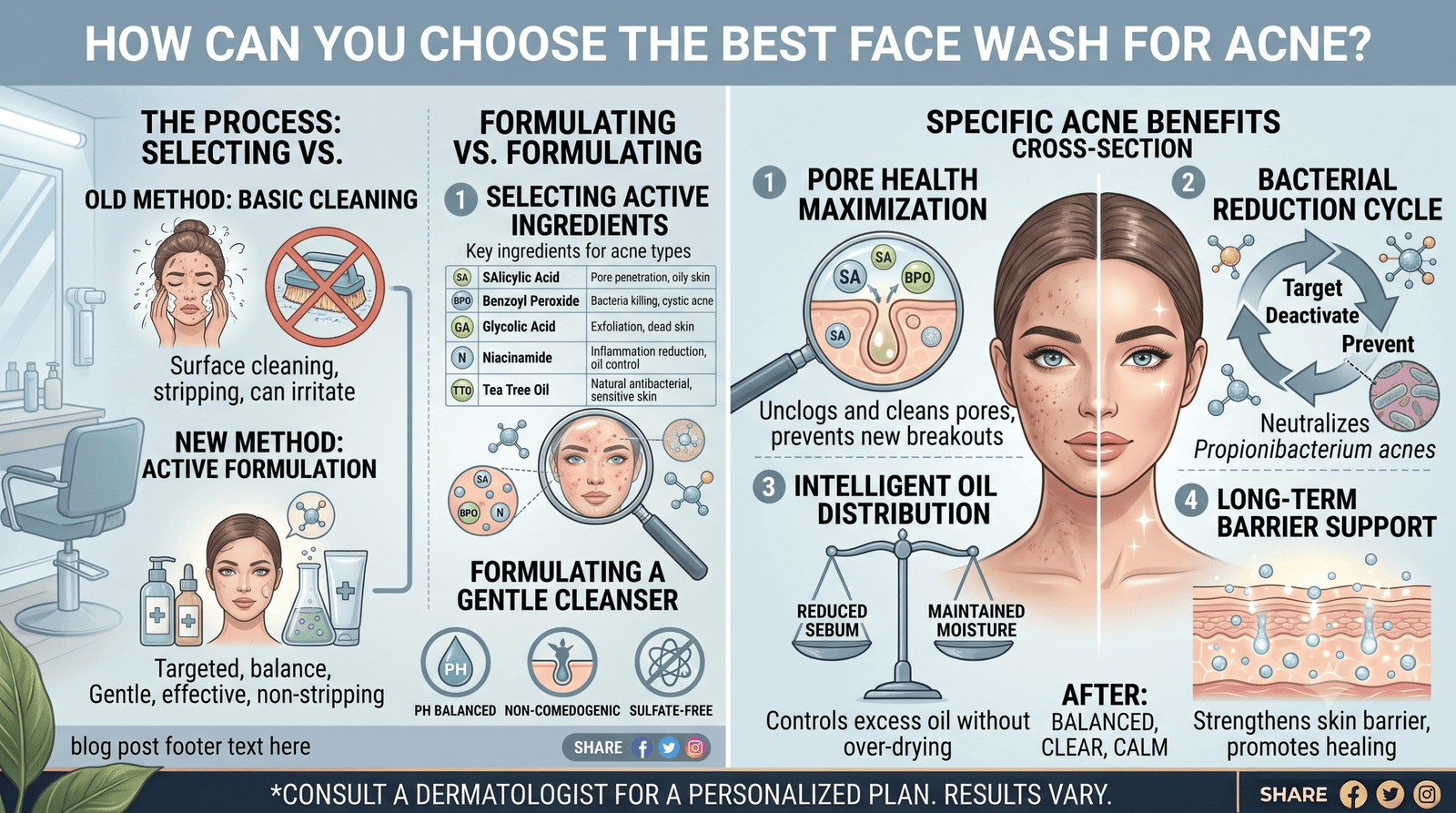
For acne-prone skin, dermatologists generally recommend a gentle cleansing routine and products that are appropriate for your skin type. A cleanser containing an acne-fighting ingredient such as salicylic acid or benzoyl peroxide may be useful for certain types of acne, while a gentle, non-comedogenic cleanser may be a better choice if your skin is easily irritated.
The goal is to clean away excess oil, sweat, dirt, and product buildup without unnecessarily irritating or drying the skin.
Why Is Choosing the Right Face Wash Important for Acne?
Acne-prone skin can be sensitive to aggressive cleansing. Washing your face repeatedly, scrubbing hard, or using harsh products can irritate the skin and potentially make breakouts appear worse.
The American Academy of Dermatology recommends gently washing acne-prone skin up to twice a day and after sweating, using a gentle, non-abrasive cleanser.
A good face wash should therefore balance cleansing and skin comfort.
Look for Acne-Fighting Ingredients
When choosing an acne face wash, pay attention to the active ingredients rather than focusing only on marketing claims.
1. Salicylic Acid
Salicylic acid is one of the most common ingredients used in acne cleansers. It helps unclog pores and exfoliate the skin and can be particularly useful for blackheads and whiteheads.
It may be a good option if your main concerns include:
- Blackheads
- Whiteheads
- Clogged pores
- Excess oil
- Mild breakouts
However, salicylic acid can cause dryness or irritation in some people, particularly when overused.
2. Benzoyl Peroxide
Benzoyl peroxide is another well-established acne-fighting ingredient. It helps reduce acne-causing bacteria and is commonly available in washes, gels, and other acne treatments.
It can be useful for people dealing with inflammatory pimples. However, it can also cause dryness, irritation, or peeling, so it should be introduced carefully.
For over-the-counter acne treatment, the AAD notes that starting with 2.5% benzoyl peroxide can help minimize irritation compared with stronger concentrations.
Choose a Face Wash According to Your Skin Type
Your skin type matters when choosing an acne cleanser.
For Oily and Acne-Prone Skin
If your skin becomes oily quickly, consider a lightweight gel cleanser designed for acne-prone skin.
A product containing salicylic acid may be useful if clogged pores and blackheads are your main concerns. Look for labels such as oil-free and non-comedogenic.
For Dry and Acne-Prone Skin
If your skin is both dry and acne-prone, avoid extremely harsh cleansers that leave your face feeling tight.
A gentle or hydrating cleanser may be more appropriate. You can use a separate acne treatment if necessary while keeping the cleanser mild.
For Sensitive Skin
Sensitive skin requires extra care. Choose a gentle, non-abrasive cleanser and avoid aggressive scrubbing.
If an acne-active cleanser causes persistent burning, redness, or irritation, discontinue it and consider speaking with a dermatologist.
For Combination Skin
If you have an oily T-zone but dry cheeks, choose a cleanser that removes excess oil without stripping the entire face.
A gentle cleanser can be a good starting point, with an acne treatment added according to your specific concerns.
What Does “Non-Comedogenic” Mean?
Non-comedogenic means a product is formulated to reduce the likelihood of clogging pores.
For acne-prone skin, dermatologists recommend choosing skin-care products, sunscreen, and makeup labeled non-comedogenic, oil-free, or won’t clog pores.
This does not guarantee that a product will work perfectly for everyone, but it is a useful feature to look for when shopping for skincare.
How Often Should You Wash Your Face?
More washing does not necessarily mean clearer skin.
Dermatologists generally recommend washing acne-prone skin twice a day and after sweating, rather than repeatedly washing throughout the day.
A simple routine can be:
Morning:
Face Wash → Moisturizer → Sunscreen
After sweating:
Gentle cleansing → Moisturizer if needed
Night:
Face Wash → Acne Treatment if appropriate → Moisturizer
The exact routine depends on your skin and the products you use.
How Should You Apply Face Wash for Acne?
The technique you use is just as important as the cleanser.
- Wet your face with lukewarm water.
- Apply a small amount of cleanser.
- Gently massage it with your fingertips.
- Avoid scrubbing with rough towels, brushes, or sponges.
- Rinse thoroughly.
- Pat your skin dry with a clean towel.
- Apply a suitable moisturizer.
The AAD specifically recommends using your fingertips and avoiding abrasive tools because scrubbing can irritate acne-prone skin.
Should You Choose a Foaming or Gel Face Wash?
There is no single texture that is best for everyone.
A gel cleanser can be a comfortable choice for oily or acne-prone skin, particularly when it contains an appropriate acne-fighting ingredient.
A gentle cream or hydrating cleanser may be more suitable for dry or sensitive skin.
Instead of choosing based only on texture, consider your skin type, ingredients, and how your skin responds after cleansing.
Ingredients and Products to Be Careful With
Acne-prone skin does not need to feel extremely dry to be clean.
Avoid unnecessarily harsh products that can irritate the skin, including aggressive scrubs and products that leave the skin excessively dry. The AAD advises avoiding irritating toners, exfoliants, and abrasive scrubbing when managing acne.
Be especially careful about combining several strong acne products at once. Too many active ingredients can increase dryness and irritation.
Common Mistakes When Choosing an Acne Face Wash
1. Choosing the Strongest Product
A stronger formula is not automatically better. The ideal product should effectively address your concern without causing unnecessary irritation.
2. Washing Your Face Too Many Times
Over-cleansing can irritate the skin and may make acne appear worse.
3. Scrubbing Acne Away
Scrubbing cannot simply remove acne. In fact, aggressive scrubbing can irritate the skin.
4. Using Too Many Acne Products
Changing products every few days can make it difficult to determine what is working and may irritate your skin. Dermatologists recommend giving an acne treatment time to work; improvement can take several weeks.
5. Forgetting Moisturizer
Acne treatments can cause dryness. Using an appropriate, non-comedogenic moisturizer can help maintain the skin barrier.
6. Skipping Sunscreen
Acne-prone skin still needs sun protection. Choose a broad-spectrum, non-comedogenic sunscreen that suits your skin type.
How Long Does an Acne Face Wash Take to Work?
Do not expect a new cleanser to clear acne overnight.
Acne treatments generally require consistent use over several weeks. The AAD notes that it can take around 6 to 8 weeks to see improvement with an acne treatment, while more complete clearing can take longer.
Give your routine enough time to work rather than constantly switching products.
When Should You See a Dermatologist?
A face wash may be enough for basic cleansing and may help with mild acne, but it is not always sufficient for moderate or severe acne.
If you have large, painful, deep pimples, acne that is leaving scars, or persistent breakouts, a dermatologist can assess the type and severity of your acne and recommend appropriate treatment.
Also, if what looks like acne does not improve with typical acne care, it may be another skin condition requiring a different approach.
Final Verdict: How Do You Choose the Best Face Wash for Acne?
The best face wash for acne is one that matches your skin type and acne concerns without unnecessarily irritating your skin.
For clogged pores and blackheads, a cleanser containing salicylic acid may be useful. For inflammatory acne, benzoyl peroxide may be an option. If your skin is dry or sensitive, a gentle, non-comedogenic cleanser may be the better starting point.
Most importantly, keep your routine simple: cleanse gently, moisturize, use sunscreen, and give your acne treatment enough time to work.
Clearer skin is usually achieved through consistency rather than constantly trying new products.
Frequently Asked Questions
1. What is the best face wash for acne?
The best face wash depends on your acne and skin type. Salicylic acid can help unclog pores, while benzoyl peroxide can help reduce acne-causing bacteria. A gentle cleanser may be better for sensitive or dry skin.
2. Is salicylic acid good for acne?
Yes. Salicylic acid can help unclog pores and is particularly useful for blackheads and whiteheads.
3. Is benzoyl peroxide good for pimples?
Yes. Benzoyl peroxide helps reduce acne-causing bacteria and can be effective for inflammatory pimples.
4. How many times should I wash my face if I have acne?
Dermatologists generally recommend washing gently twice a day and after sweating.
5. Can face wash remove acne permanently?
A face wash can help cleanse the skin and, when formulated with an appropriate acne ingredient, contribute to acne management. However, persistent or severe acne may require additional treatment.
6. Should I use moisturizer with an acne face wash?
Yes. If your acne treatment causes dryness, a suitable non-comedogenic moisturizer can help maintain your skin barrier.
7. Is scrubbing good for acne?
No. Aggressive scrubbing can irritate acne-prone skin and potentially worsen breakouts.
8. What does non-comedogenic mean?
Non-comedogenic products are formulated to reduce the likelihood of clogging pores and are often recommended for acne-prone skin.
9. How long does an acne face wash take to show results?
Acne treatments can take several weeks to show improvement. The AAD recommends giving an acne treatment around 6 to 8 weeks before judging its effectiveness, unless irritation or another problem occurs.
10. When should I see a dermatologist for acne?
See a dermatologist if you have deep or painful acne, scarring, persistent breakouts, or acne that does not improve with appropriate over-the-counter care.