
Why Is Vitamin C Good for Glowing Skin? Benefits, Uses & Skincare Guide
-
Dokmai London
- Posted on
- 0 comments
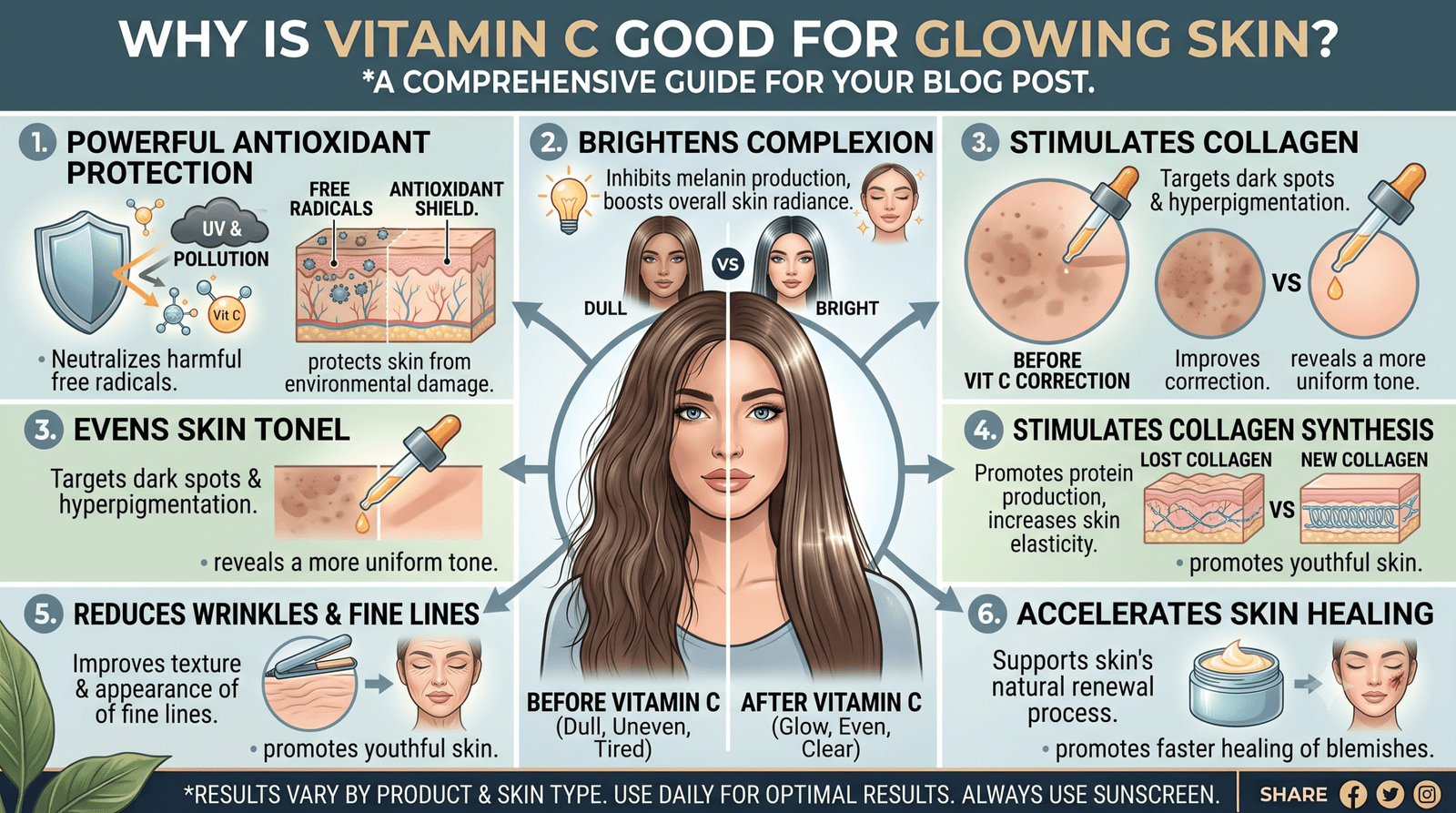
Why Is Vitamin C Good for Glowing Skin?
If you want brighter, healthier-looking, and more radiant skin, Vitamin C is one of the most popular skincare ingredients to consider. It is a powerful antioxidant that can help protect the skin from environmental stress while supporting a more even and glowing complexion.
Vitamin C is naturally found in many fruits and vegetables, but it is also widely used in skincare products such as serums, creams, and moisturizers. When applied topically, certain forms of Vitamin C can help improve the appearance of pigmentation, dullness, and uneven skin tone.
But why is Vitamin C good for glowing skin? Its benefits go beyond simply making the skin look brighter. Regular use of a suitable Vitamin C product can support a healthy-looking complexion and complement a good daily skincare routine.
What Is Vitamin C?
Vitamin C is an antioxidant that plays an important role in skin health. In skincare, it is commonly found in topical formulations designed to provide antioxidant protection and improve the appearance of the skin.
One of the most commonly studied forms is L-ascorbic acid, although skincare products may contain other Vitamin C derivatives designed to improve stability and tolerability.
Because Vitamin C can be unstable when exposed to light, air, and heat, the formulation and packaging of a product can influence its effectiveness.
Benefits of Vitamin C for Skin
1. Helps Brighten Dull-Looking Skin
One of the main reasons people add Vitamin C to their skincare routine is its brightening effect.
Skin can appear dull due to environmental exposure, uneven pigmentation, dehydration, and the natural buildup of dead skin cells. Vitamin C can help improve the appearance of uneven skin tone and give the complexion a brighter, more radiant appearance.
This makes Vitamin C particularly popular among people looking for glowing skin without relying on harsh treatments.
2. Helps Reduce the Appearance of Dark Spots
Dark spots and uneven pigmentation can develop after acne, sun exposure, or other forms of skin irritation.
Topical Vitamin C may help reduce the appearance of hyperpigmentation by interfering with melanin production pathways. With consistent use, this can contribute to a more even-looking complexion.
However, results usually take time, and Vitamin C should not be considered an overnight solution for pigmentation.
3. Provides Antioxidant Protection
Our skin is constantly exposed to environmental factors such as UV radiation and pollution. These factors can contribute to oxidative stress and premature signs of skin aging.
Vitamin C works as an antioxidant, helping neutralize free radicals. This is one reason it is widely included in modern skincare routines.
However, Vitamin C does not replace sunscreen. Daily broad-spectrum sunscreen remains an important part of protecting skin from UV-related damage.
4. Supports Collagen Production
Collagen is an important structural protein that helps keep skin looking firm and smooth.
Vitamin C is involved in collagen synthesis, which is another reason it is considered a useful ingredient for maintaining youthful-looking skin.
With regular skincare, Vitamin C may help support the appearance of firmer and smoother skin over time.
5. Helps Improve Uneven Skin Tone
Uneven skin tone can make the complexion look tired or less radiant. Vitamin C can be helpful when the goal is to achieve a more balanced-looking complexion.
It can be especially useful when combined with other basic skincare habits such as gentle cleansing, moisturizing, and daily sun protection.
How Does Vitamin C Give Skin a Glow?
The “glow” associated with Vitamin C comes from several potential benefits working together.
It can help improve the appearance of pigmentation, support collagen production, and provide antioxidant protection. When skin looks smoother and more even, it can naturally appear brighter and healthier.
However, skincare results vary from person to person. Your skin type, product formulation, concentration, consistency, and other skincare habits can all affect the outcome.
How to Use Vitamin C Serum
If you are new to Vitamin C, start with a simple routine rather than using several active ingredients at once.
A basic morning routine can be:
Cleanser → Vitamin C Serum → Moisturizer → Sunscreen
Apply Vitamin C according to the product’s instructions. If your skin is sensitive, starting with a lower concentration or using it less frequently may help your skin adjust.
Always patch-test a new skincare product if you are concerned about irritation.
When Is the Best Time to Use Vitamin C?
Vitamin C can be used in the morning or evening, depending on the product and your skincare routine.
Many people prefer using Vitamin C in the morning because its antioxidant properties complement daily sun protection.
A Vitamin C serum should generally be followed by moisturizer and broad-spectrum sunscreen during the daytime.
Can Vitamin C Be Used Every Day?
Many Vitamin C products are designed for daily use, but the ideal frequency depends on the product and your skin’s tolerance.
If you have sensitive skin or are using Vitamin C for the first time, consider starting gradually. If you experience persistent burning, redness, or irritation, stop using the product and consider consulting a dermatologist.
Using a product consistently and appropriately is more important than applying a high concentration too frequently.
Which Skin Types Can Use Vitamin C?
Vitamin C can be suitable for many different skin types, including normal, dry, oily, combination, and mature skin.
However, people with sensitive skin should pay particular attention to the formulation. Some forms and concentrations of Vitamin C may cause irritation, especially when introduced too quickly.
Choosing a product according to your skin type can make it easier to maintain a comfortable skincare routine.
Vitamin C and Sunscreen: Can You Use Them Together?
Yes. Vitamin C and sunscreen can complement each other in a morning skincare routine.
Vitamin C provides antioxidant support, while sunscreen helps protect the skin from UV radiation.
A simple morning routine can therefore include:
Vitamin C → Moisturizer → Sunscreen
Remember that Vitamin C is not a substitute for sunscreen. Using an appropriate broad-spectrum sunscreen every day is essential for effective sun protection.
Common Vitamin C Skincare Mistakes
Using Too Much Product
Applying more serum does not necessarily produce faster results. Follow the recommended amount on the product packaging.
Skipping Sunscreen
If pigmentation and skin brightness are your concerns, sunscreen is especially important. Sun exposure can contribute to dark spots and uneven pigmentation.
Starting With a Strong Formula
A high-strength Vitamin C product may not be suitable for everyone. Beginners or people with sensitive skin may prefer starting with a gentler formulation.
Combining Too Many Active Ingredients
Using multiple strong skincare actives at the same time can increase the possibility of irritation. Introduce new products gradually and keep your routine simple.
Ignoring Product Storage
Some Vitamin C formulations can degrade when exposed to air, heat, or light. Store your product according to the manufacturer’s instructions and pay attention to changes in color, smell, or texture.
How Long Does Vitamin C Take to Show Results?
Skincare results are not instant. Some people may notice improved brightness relatively quickly, while pigmentation, texture, and signs related to collagen support can take longer.
Consistency is key. Using a suitable product regularly, combined with moisturizer and sunscreen, can provide a better foundation for achieving healthier-looking skin.
Final Verdict: Is Vitamin C Good for Glowing Skin?
Yes, Vitamin C can be an excellent skincare ingredient for achieving brighter, more even, and healthier-looking skin.
Its antioxidant properties, ability to support collagen production, and potential to improve the appearance of dark spots make it a popular choice for people who want a radiant complexion.
For the best results, focus on a simple and consistent routine: cleanse, use Vitamin C as directed, moisturize, and apply sunscreen every morning.
Remember that glowing skin is not only about one ingredient. Good skincare habits, sun protection, hydration, adequate sleep, and choosing products suited to your skin type all contribute to a healthy-looking complexion.
Frequently Asked Questions
1. Is Vitamin C good for glowing skin?
Yes. Vitamin C can help improve the appearance of dullness, uneven skin tone, and pigmentation, helping the skin look brighter and more radiant.
2. Can Vitamin C remove dark spots?
Vitamin C may help reduce the appearance of dark spots and uneven pigmentation over time. Consistent use and daily sun protection are important.
3. Can I use Vitamin C every day?
Many Vitamin C products can be used daily, but follow the product instructions. If you have sensitive skin, introduce it gradually.
4. Should Vitamin C be used before or after moisturizer?
Generally, apply a Vitamin C serum before moisturizer. A typical morning routine is cleanser, Vitamin C serum, moisturizer, and sunscreen.
5. Can Vitamin C replace sunscreen?
No. Vitamin C does not replace sunscreen. Use a broad-spectrum sunscreen during the day for proper UV protection.
6. Is Vitamin C suitable for oily skin?
Yes. People with oily skin can use Vitamin C, particularly lightweight serum formulations. Choose products that suit your skin type.
7. Is Vitamin C good for acne marks?
Vitamin C may help improve the appearance of post-inflammatory pigmentation and acne marks, although results vary depending on the individual and type of pigmentation.
8. Can Vitamin C make skin brighter?
Vitamin C can help improve the appearance of dull and uneven skin, which may make the complexion look brighter and more radiant.
9. Can sensitive skin use Vitamin C?
Sensitive skin can use some Vitamin C products, but stronger formulations may cause irritation. Start gradually and choose a formulation appropriate for sensitive skin.
10. How often should I use Vitamin C for glowing skin?
The ideal frequency depends on the product and your skin’s tolerance. Many products are designed for daily use, while beginners may prefer starting less frequently.