
What Is the Best Hair Care Routine for Growth? Complete Guide
-
Dokmai London
- Posted on
- 0 comments
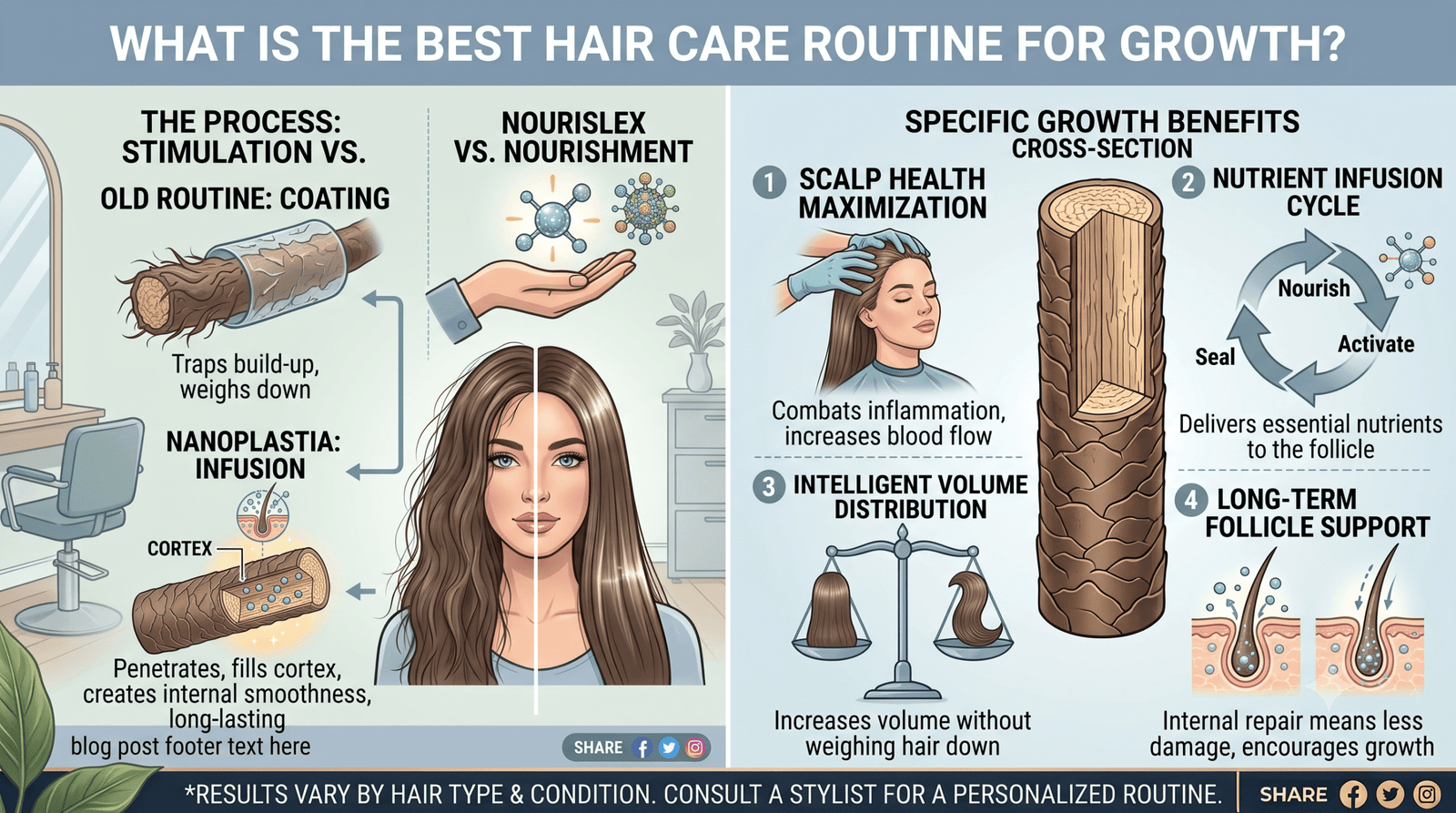
What Is the Best Hair Care Routine for Growth?
Growing healthy, strong, and beautiful hair is not only about using expensive hair products. A consistent hair care routine for growth can help keep the scalp healthy, reduce unnecessary hair damage, and maintain the length you grow.
Hair growth itself is influenced by factors such as genetics, age, hormones, nutrition, overall health, and scalp condition. While a hair-care routine cannot completely change your natural growth rate, taking proper care of your scalp and hair can help create better conditions for healthy-looking growth and reduce breakage.
So, what is the best hair care routine for hair growth? The key is to keep your scalp clean, minimize damage, provide adequate conditioning, protect your hair from heat and chemicals, and maintain healthy lifestyle habits.
1. Keep Your Scalp Clean
A healthy hair-care routine starts with the scalp.
Regular shampooing helps remove excess oil, sweat, dead skin cells, dirt, and product buildup. However, how often you should wash your hair depends on your scalp and hair type.
People with an oily scalp may need more frequent washing, while those with dry or curly hair may be able to wash less frequently.
Choose a gentle shampoo that suits your scalp and avoid aggressively scratching or rubbing the scalp while washing.
2. Use Conditioner After Shampoo
Conditioner is an important step for reducing dryness and improving hair manageability.
Shampoo cleans the hair and scalp, while conditioner helps make the hair feel smoother and easier to detangle. This can be particularly helpful because excessive tangling and rough handling can contribute to hair breakage.
Apply conditioner mainly to the lengths and ends if your hair becomes oily easily. People with dry or curly hair may benefit from more conditioning throughout the lengths.
3. Massage the Scalp Gently
A gentle scalp massage can be a relaxing addition to your routine.
Use your fingertips rather than your fingernails and avoid aggressive rubbing. A gentle massage may help distribute natural oils and make your hair-care routine more enjoyable.
However, scalp massage should not be considered a guaranteed method for dramatically increasing hair growth.
4. Don’t Ignore Hair Oil
Hair oiling is a popular practice in many Indian hair-care routines. Depending on the oil and your hair type, it can help condition the hair and reduce the feeling of dryness.
You can apply a small amount of suitable oil to the scalp or hair lengths according to your preference and wash it out afterward.
Avoid leaving heavy oil on the scalp for excessively long periods if it causes itching, irritation, or buildup. If you have a scalp condition, consult a dermatologist before introducing new oils or treatments.
5. Use a Hair Mask Regularly
A hair mask can provide additional conditioning for dry, rough, or damaged-looking hair.
It does not directly make hair follicles grow faster, but maintaining well-conditioned hair can help reduce dryness and breakage.
Depending on your hair type and the product you use, a hair mask can be included once a week or as recommended by the product manufacturer.
6. Reduce Heat Styling
Frequent use of high heat from straighteners, curling irons, and blow dryers can damage the hair shaft and contribute to dryness and breakage.
If you use heat styling tools:
- Use the lowest effective temperature.
- Avoid excessive heat exposure.
- Use a heat-protective product.
- Do not repeatedly style the same section of hair.
- Give your hair breaks between heat-styling sessions.
Reducing breakage is important when your goal is to grow longer hair because damaged ends can make it difficult to retain length.
7. Avoid Tight Hairstyles
Repeatedly wearing very tight ponytails, buns, braids, or other hairstyles that pull strongly on the hair can contribute to traction-related hair loss.
Try to vary your hairstyles and avoid excessive tension, particularly around the hairline.
Loose hairstyles and gentle hair accessories can help reduce unnecessary pulling.
8. Be Gentle With Wet Hair
Wet hair can be more fragile and prone to breakage.
After washing, avoid aggressively rubbing your hair with a towel. Instead, gently squeeze out excess water and use a soft towel or microfiber towel if preferred.
When detangling, start from the ends and gradually work upward. Use a wide-tooth comb when appropriate, especially if your hair is prone to tangling.
9. Trim Damaged Ends When Needed
Haircuts do not make the follicles grow faster, but trimming severely damaged or split ends can help maintain the appearance and manageability of your hair.
If your ends are frequently splitting or breaking, regular trims can help prevent damaged sections from becoming more difficult to manage.
The ideal trimming frequency depends on your hair type, styling habits, and condition of the ends.
10. Protect Your Hair From the Sun and Environment
Environmental exposure can affect the condition of your hair.
If you spend a lot of time outdoors, consider protecting your hair with a hat, scarf, or other suitable covering.
If your hair is colored or chemically treated, additional protection may be particularly useful because treated hair can be more vulnerable to dryness and damage.
11. Eat a Balanced Diet
Healthy hair growth also depends on adequate nutrition.
A balanced diet should provide sufficient protein, vitamins, minerals, and other nutrients required for normal body functions.
Protein is particularly important because hair is primarily made of a protein called keratin.
Instead of relying automatically on hair-growth supplements, focus first on a varied and balanced diet. Taking supplements unnecessarily may not improve hair growth if you are not deficient in a particular nutrient.
If you experience significant hair loss or suspect a nutritional deficiency, a healthcare professional can help identify the underlying cause.
12. Manage Stress and Get Enough Sleep
Hair health is connected to overall health.
Significant physical or emotional stress can sometimes contribute to temporary increased hair shedding. Maintaining regular sleep, physical activity, balanced nutrition, and stress-management habits can support overall well-being.
If you notice sudden or excessive shedding, it is important to look beyond your hair products and consider whether an underlying health issue may be involved.
A Simple Weekly Hair Growth Routine
A practical routine can be kept simple:
Daily:
- Avoid tight hairstyles.
- Handle hair gently.
- Protect hair from unnecessary heat.
- Maintain a balanced diet and healthy lifestyle.
Wash days:
- Shampoo according to your scalp and hair type.
- Apply conditioner.
- Detangle gently.
- Avoid aggressive towel drying.
Weekly:
- Use a suitable hair mask if your hair needs additional conditioning.
- Oil your hair if it suits your scalp and hair type.
As needed:
- Trim damaged ends.
- Reduce chemical or heat treatments.
- Consult a professional if you notice unusual hair loss.
Best Hair Care Routine for Different Hair Types
For Dry Hair
Focus on moisturizing shampoos, regular conditioning, hair masks, and minimizing excessive heat. Avoid washing with very hot water.
For Oily Hair
Focus on keeping the scalp clean and choosing lightweight products. Avoid applying excessive amounts of heavy oils or conditioners directly to the scalp if they make it greasy.
For Curly Hair
Curly hair often benefits from additional conditioning and gentle detangling. Avoid excessive brushing and choose products designed for your curl pattern and level of dryness.
For Fine Hair
Choose lightweight products and avoid excessive layering. Conditioner can be applied mainly to the lengths and ends to reduce the chance of weighing the hair down.
Common Hair Growth Mistakes to Avoid
1. Expecting instant results: Hair growth takes time and depends on many factors.
2. Overusing hair products: More products do not automatically mean healthier hair.
3. Excessive heat styling: Frequent high heat can increase breakage.
4. Tight hairstyles: Constant tension can damage the hairline and contribute to hair loss.
5. Ignoring the scalp: A good hair routine should include appropriate scalp care.
6. Taking supplements without a reason: Supplements are not a universal solution for hair growth.
7. Ignoring excessive hair loss: Persistent or sudden hair loss may require professional evaluation.
Final Verdict: What Is the Best Hair Care Routine for Growth?
The best hair care routine for hair growth is one that supports a healthy scalp, minimizes breakage, and protects your hair from unnecessary damage.
A simple routine of regular cleansing, conditioning, gentle handling, occasional intensive conditioning, limited heat styling, balanced nutrition, and scalp care can help you maintain healthier-looking hair and retain length.
Remember that hair growth happens from the follicles beneath the scalp, so products applied to the hair shaft cannot guarantee faster growth. If you are experiencing sudden, severe, or persistent hair loss, consulting a dermatologist is more appropriate than simply changing hair products.
Consistency is the real secret. Instead of looking for a quick fix, build a routine that you can comfortably follow over time.
Frequently Asked Questions
1. What is the best routine for hair growth?
A good routine includes regular scalp cleansing, conditioner, gentle handling, limited heat styling, appropriate scalp care, and a balanced diet.
2. Does oiling make hair grow faster?
Oiling can help condition the hair and reduce dryness, but it should not be considered a guaranteed method for increasing the natural rate of hair growth.
3. How often should I wash my hair for growth?
There is no universal schedule. Wash according to your scalp and hair type. An oily scalp may need more frequent washing than a dry scalp.
4. Is a hair mask good for hair growth?
A hair mask does not directly increase follicle growth, but it can provide conditioning and help reduce dryness and breakage, supporting better length retention.
5. Can trimming make hair grow faster?
Trimming does not make hair grow faster from the scalp. However, removing damaged ends can help improve the appearance and manageability of the hair.
6. Is conditioner important for hair growth?
Conditioner does not directly stimulate hair growth, but it can improve manageability and reduce friction and breakage, which can help with retaining hair length.
7. How can I reduce hair breakage?
Use conditioner, detangle gently, reduce heat styling, avoid tight hairstyles, protect the hair from excessive environmental exposure, and handle wet hair carefully.
8. Can diet affect hair growth?
Yes. Adequate nutrition supports normal hair growth. A balanced diet containing sufficient protein and essential nutrients is important for overall hair health.
9. When should I see a dermatologist for hair loss?
If hair loss is sudden, excessive, persistent, or accompanied by scalp symptoms, a dermatologist can help identify the underlying cause and recommend appropriate treatment.
10. How long does it take to see hair growth results?
Hair growth is gradual, so meaningful changes generally take time. The timeline varies depending on genetics, health, hair-care habits, and the cause of any hair loss or breakage.