
Vitamin C Serum Benefits: How to Get Brighter and Radiant Skin
-
Dokmai London
- Posted on
- 0 comments
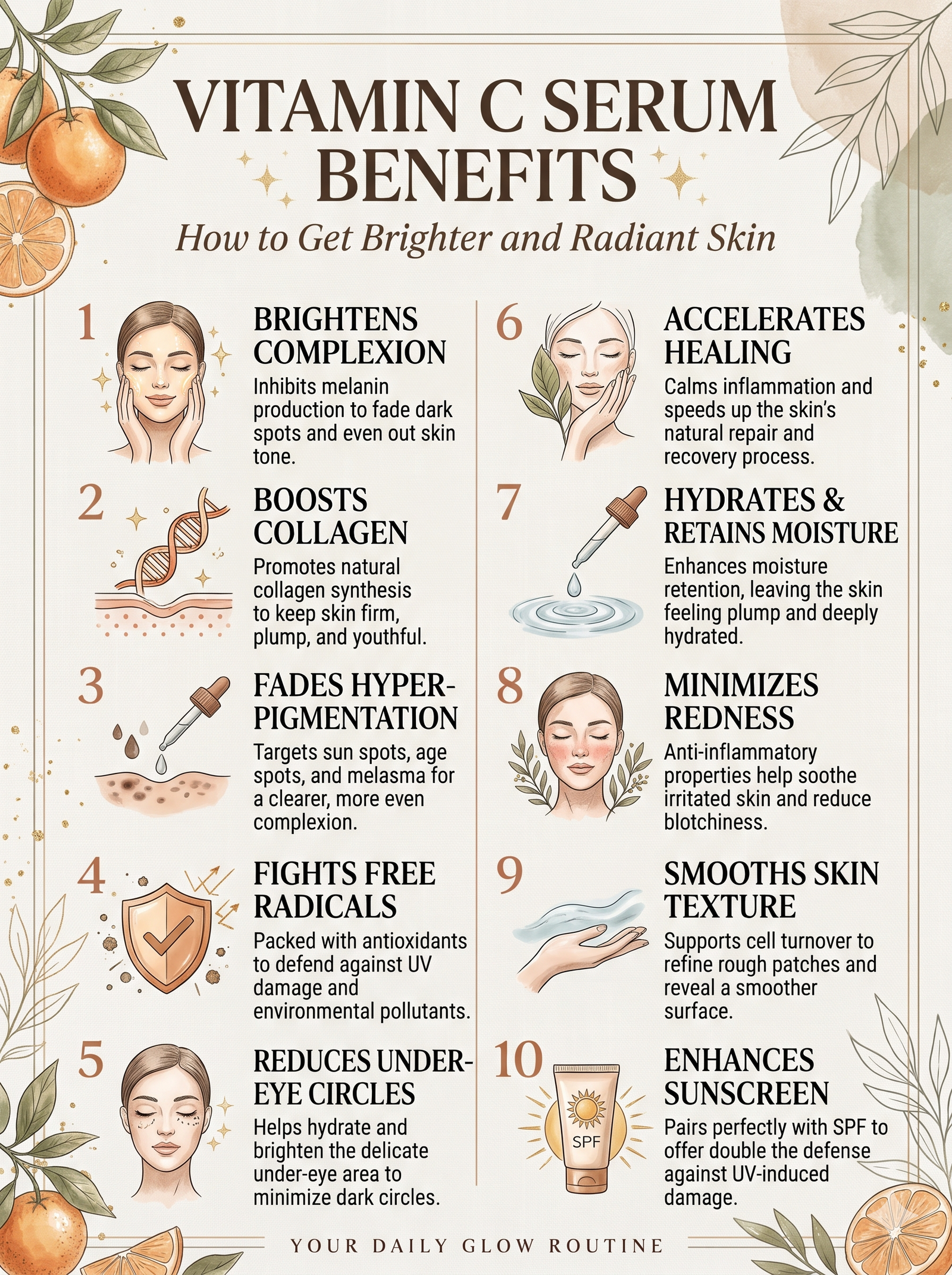
Vitamin C serum is one of the most popular skincare essentials for achieving brighter, healthier, and more radiant-looking skin. Known for its antioxidant properties and skin-enhancing benefits, Vitamin C serum has become an important part of modern skincare routines. Whether we want to improve dullness, reduce the appearance of dark spots, support collagen production, or achieve a naturally glowing complexion, Vitamin C can make a valuable addition to our daily skincare regimen.
At Dokmai London, we believe that healthy-looking skin begins with consistent care and the right skincare ingredients. Understanding how Vitamin C works, how to use it correctly, and which skin concerns it can address helps us make better skincare choices.
In this comprehensive guide, we explore the major Vitamin C serum benefits, its role in achieving brighter skin, and the best ways to incorporate it into our everyday routine.
What Is Vitamin C Serum?
Vitamin C serum is a lightweight skincare product formulated with Vitamin C, an antioxidant that helps protect the skin against oxidative stress caused by environmental factors such as pollution and ultraviolet (UV) exposure.
Unlike heavier creams, serums are generally designed with lightweight formulations that spread easily across the skin. Depending on their formulation, they may contain different forms of Vitamin C, along with hydrating and skin-supporting ingredients.
One of the most researched forms is L-Ascorbic Acid, a potent form of Vitamin C commonly used in skincare products. Other derivatives include Sodium Ascorbyl Phosphate, Magnesium Ascorbyl Phosphate, and Ascorbyl Glucoside.
Vitamin C serums are commonly used to:
- Improve the appearance of dull and uneven skin.
- Reduce the appearance of dark spots and pigmentation.
- Support natural collagen production.
- Provide antioxidant protection.
- Improve the appearance of fine lines.
- Promote a brighter and more radiant-looking complexion.
Top 10 Vitamin C Serum Benefits for Skin
1. Helps Brighten Dull and Tired-Looking Skin
One of the biggest reasons people include Vitamin C serum in their skincare routine is its ability to improve the appearance of dull skin.
Environmental exposure, dead skin cell accumulation, dehydration, and uneven pigmentation can make the complexion appear tired and less radiant.
Vitamin C helps support a more even-looking complexion by influencing melanin production. With regular use, it may help reduce the appearance of dullness and reveal brighter-looking skin.
How it helps:
- Improves the appearance of dull skin.
- Supports a more radiant complexion.
- Helps improve uneven-looking skin tone.
- Promotes a fresher and healthier appearance.
For those looking to achieve naturally glowing skin, Vitamin C serum can be a valuable addition to a consistent skincare routine.
2. Helps Reduce the Appearance of Dark Spots and Pigmentation
Dark spots and pigmentation are common skin concerns that can develop due to sun exposure, hormonal changes, inflammation, and acne marks.
Vitamin C is known for its ability to interfere with certain steps involved in melanin production. This makes it a useful skincare ingredient for improving the appearance of hyperpigmentation.
Regular application may help fade the appearance of:
- Dark spots.
- Post-acne marks.
- Sunspots.
- Uneven skin tone.
- Mild pigmentation.
However, pigmentation concerns can have different underlying causes, and results vary depending on the individual and formulation.
For better results, we should combine Vitamin C serum with daily sunscreen application.
3. Supports Natural Collagen Production
Collagen is an important structural protein that helps maintain skin firmness, elasticity, and smoothness.
As we age, natural collagen production gradually decreases. Environmental stress and prolonged UV exposure can also contribute to collagen breakdown.
Vitamin C plays an essential role in collagen synthesis. It supports the enzymes involved in producing and maintaining collagen within the skin.
Using a properly formulated Vitamin C serum may help:
- Support skin firmness.
- Improve the appearance of fine lines.
- Maintain smoother-looking skin.
- Support healthy skin structure.
- Promote a youthful-looking complexion.
Vitamin C is therefore an important ingredient in skincare routines focused on maintaining healthy-looking skin as we age.
4. Provides Antioxidant Protection Against Environmental Stress
Our skin is exposed to several environmental factors every day, including pollution, sunlight, and other sources of oxidative stress.
These factors can contribute to the formation of free radicals, unstable molecules that may damage skin cells and accelerate visible signs of ageing.
Vitamin C is a powerful antioxidant that helps neutralise free radicals.
Its antioxidant properties make it a useful ingredient for supporting the skin against everyday environmental stress.
Important: Vitamin C does not replace sunscreen. For effective daytime protection, we should use a broad-spectrum SPF 30 or higher sunscreen every morning.
5. Helps Improve the Appearance of Fine Lines and Wrinkles
Fine lines and wrinkles are natural parts of the ageing process. However, environmental exposure, reduced collagen production, and dehydration can make them more noticeable.
Vitamin C supports collagen synthesis and provides antioxidant benefits that help maintain healthier-looking skin.
With consistent use, Vitamin C serum may help improve:
- The appearance of fine lines.
- Uneven skin texture.
- Early visible signs of ageing.
- Skin smoothness.
- Overall skin radiance.
For an effective anti-ageing routine, Vitamin C can be combined with moisturising ingredients such as hyaluronic acid.
6. Helps Improve Uneven Skin Tone
Uneven skin tone can occur when melanin is distributed irregularly across different areas of the skin.
This may result in darker patches, post-acne marks, and an inconsistent complexion.
Vitamin C helps regulate processes involved in melanin production, which may gradually improve the appearance of uneven skin tone.
When used consistently, it can support a more balanced and radiant-looking complexion.
7. Supports Skin Hydration When Formulated with Hydrating Ingredients
Vitamin C itself is not primarily a moisturising ingredient. However, many Vitamin C serums contain additional ingredients that support skin hydration.
Depending on the formulation, these may include:
- Hyaluronic Acid.
- Glycerin.
- Aloe Vera.
- Vitamin E.
- Panthenol.
These ingredients can help maintain moisture levels and improve the overall feel of the skin.
For people experiencing dryness, choosing a Vitamin C serum with hydrating ingredients can be particularly beneficial.
8. Helps Improve the Appearance of Acne Marks
Acne may leave behind dark marks even after active breakouts have healed. These marks are commonly known as post-inflammatory hyperpigmentation.
Vitamin C may help improve the appearance of these marks by supporting more even pigmentation.
It can be particularly useful for people who experience:
- Dark acne marks.
- Uneven skin tone after breakouts.
- Dullness caused by post-acne pigmentation.
- Mild discoloration.
However, Vitamin C is not a primary acne treatment and does not replace ingredients specifically designed to manage active acne.
9. Promotes a Healthier-Looking Skin Texture
Healthy skin is not only about brightness. Smoothness and texture also contribute to an attractive complexion.
Vitamin C supports collagen synthesis and helps protect the skin from oxidative stress. These properties may contribute to improvements in the appearance of skin texture over time.
For better results, we should maintain a routine that includes gentle cleansing, moisturising, sun protection, and consistent skincare application.
10. Helps Maintain a Youthful and Radiant Complexion
Vitamin C combines several important skincare benefits in one ingredient.
Its antioxidant properties, role in collagen production, and ability to improve the appearance of uneven pigmentation make it a popular choice for maintaining healthy-looking skin.
Regular use can support a brighter, smoother, and more refreshed appearance.
How to Use Vitamin C Serum for Best Results
Using Vitamin C serum correctly is important for achieving its potential skincare benefits.
Here is a simple step-by-step routine.
Step 1: Cleanse Your Face
Start by washing your face with a gentle cleanser to remove dirt, excess oil, sweat, and impurities.
Choose a cleanser suitable for your skin type.
Step 2: Apply Vitamin C Serum
After cleansing, gently pat your face dry.
Apply approximately 2–3 drops of Vitamin C serum to your face and neck, following the product instructions.
Spread it gently without rubbing aggressively.
Avoid direct contact with your eyes.
Step 3: Apply Moisturiser
Once the serum has been absorbed, apply a suitable moisturiser.
Moisturiser helps maintain hydration and supports the skin barrier.
Step 4: Finish with Sunscreen
During the daytime, always apply a broad-spectrum sunscreen with SPF 30 or higher.
Sunscreen is particularly important when your skincare goals include reducing the appearance of pigmentation and protecting against premature ageing.
Morning vs Night: When Should We Apply Vitamin C Serum?
Vitamin C serum can generally be used in the morning or evening, depending on the formulation and individual skin tolerance.
| Morning Routine | Night Routine |
|---|---|
| Cleanser | Cleanser |
| Vitamin C serum | Vitamin C serum |
| Moisturiser | Moisturiser |
| SPF 30+ sunscreen | No sunscreen needed indoors at night |
Our recommendation: Morning application is particularly convenient because Vitamin C provides antioxidant support alongside sunscreen.
Which Skin Types Can Use Vitamin C Serum?
Vitamin C can be suitable for many skin types. However, the right formulation and concentration are important.
For Oily Skin
People with oily skin may prefer lightweight, non-greasy serum formulations that absorb comfortably without leaving a heavy residue.
For Dry Skin
A Vitamin C serum containing hydrating ingredients such as hyaluronic acid or glycerin may be a suitable option.
Always follow with a moisturiser.
For Combination Skin
Lightweight formulations are often convenient for combination skin because they can be applied across different facial areas without feeling excessively heavy.
For Sensitive Skin
Sensitive skin may respond better to gentler Vitamin C derivatives or lower concentrations.
We recommend starting with a patch test and introducing the serum gradually.
If irritation occurs, discontinue use.
How Long Does Vitamin C Serum Take to Show Results?
The time required to notice results depends on the formulation, concentration, consistency of application, and individual skin condition.
Here is a general expectation:
| Duration | Possible Improvements |
|---|---|
| 1–2 weeks | Skin may begin to feel more refreshed and hydrated, depending on the formulation |
| 3–4 weeks | Some people may notice improvements in skin radiance |
| 6–8 weeks | Gradual improvements in the appearance of uneven skin tone may become noticeable |
| 8–12 weeks | More visible improvements in certain dark spots and pigmentation may occur |
These timelines are estimates, not guaranteed results. Some pigmentation concerns may take considerably longer to improve.
Consistency and daily sunscreen use are essential.
Common Mistakes to Avoid When Using Vitamin C Serum
Even a good skincare product may not deliver the desired experience if we use it incorrectly.
Here are some common mistakes to avoid.
1. Using Too Much Serum
Applying excessive amounts does not necessarily provide better results. Follow the manufacturer’s recommended quantity.
2. Skipping Sunscreen
Vitamin C does not replace sunscreen. Daily sun protection is important for preventing further UV-related skin damage.
3. Choosing the Wrong Formulation
A high concentration is not automatically better. Skin tolerance and formulation stability matter.
4. Using Expired or Oxidised Serum
Vitamin C formulations can become less effective when exposed to air, light, and heat. Store the product according to its packaging instructions.
If the serum changes significantly in colour, smell, or texture, check the manufacturer’s guidance before continuing use.
5. Expecting Overnight Results
Skincare requires patience. Improvements in pigmentation and skin appearance generally take consistent use over several weeks.
Can We Use Vitamin C Serum Every Day?
Yes, many people can use Vitamin C serum daily, provided their skin tolerates the formulation.
For beginners, starting with two or three applications per week may help assess skin tolerance. Gradually increase usage according to the product instructions.
People with sensitive or easily irritated skin should choose a suitable formulation and avoid introducing several strong active ingredients simultaneously.
If irritation persists, discontinue use and consult a dermatologist.
Can Vitamin C Serum Be Combined with Other Skincare Ingredients?
Vitamin C can be incorporated into many skincare routines alongside other beneficial ingredients.
Here are some common combinations:
| Ingredient | Potential Benefit |
|---|---|
| Hyaluronic Acid | Supports skin hydration |
| Vitamin E | Provides additional antioxidant support |
| Niacinamide | Supports the skin barrier and improves uneven skin appearance |
| Sunscreen | Protects against UV-related skin damage |
| Ceramides | Help maintain the skin barrier |
When combining active ingredients such as retinol or exfoliating acids, introduce them carefully to avoid irritation.
How to Choose the Best Vitamin C Serum for Glowing Skin
Choosing the right serum is just as important as using it consistently.
Before purchasing a Vitamin C serum, consider these factors:
1. Vitamin C Concentration: L-Ascorbic Acid formulations commonly contain concentrations between 5% and 20%. Beginners may prefer starting with a lower concentration.
2. Formulation Stability: Vitamin C can be sensitive to light and air. Look for packaging designed to protect the formula.
3. Additional Ingredients: Ingredients such as Vitamin E, hyaluronic acid, and ferulic acid may complement Vitamin C in certain formulations.
4. Skin Compatibility: Select a formulation according to your skin type and sensitivity.
5. Packaging: Opaque, airtight packaging can help protect sensitive Vitamin C formulations from environmental exposure.
Why Add Dokmai London Vitamin C Serum to Your Skincare Routine?
At Dokmai London, skincare is about combining thoughtful formulations with consistent everyday care.
A Vitamin C serum can be a valuable addition to a skincare routine designed to improve the appearance of dullness, uneven skin tone, and visible signs of ageing.
When choosing a Vitamin C serum from Dokmai London, always check the product label for its ingredients, formulation, concentration, and recommended usage instructions.
For a complete skincare routine, combine your serum with a suitable face wash, moisturiser, and sunscreen.
Our goal is to encourage healthy skincare habits that help maintain a fresh, radiant, and well-cared-for complexion.
Frequently Asked Questions About Vitamin C Serum
1. What are the main benefits of Vitamin C serum?
Vitamin C serum helps brighten dull-looking skin, improves the appearance of dark spots, supports collagen production, provides antioxidant protection, and promotes a more even-looking complexion.
2. Can Vitamin C serum remove dark spots?
Vitamin C may help reduce the appearance of dark spots and pigmentation by influencing melanin production. However, results depend on the cause and severity of pigmentation.
3. Can we apply Vitamin C serum daily?
Yes. Many people can use Vitamin C serum daily. Beginners should start gradually and follow the product’s instructions.
4. Is Vitamin C serum good for oily skin?
Yes. People with oily skin can generally use Vitamin C serum. Lightweight, non-comedogenic formulations may be preferable.
5. Can Vitamin C serum make skin glow?
Vitamin C can help improve the appearance of dullness and uneven skin tone, contributing to a brighter and more radiant-looking complexion.
6. Should we apply Vitamin C serum before or after moisturiser?
Generally, apply Vitamin C serum after cleansing and before moisturiser. Follow the specific product instructions if they recommend a different application method.
7. Can Vitamin C serum be used with sunscreen?
Absolutely. Vitamin C serum and sunscreen work well together in a morning skincare routine. Vitamin C provides antioxidant support, while sunscreen helps protect the skin against UV radiation.
8. Is Vitamin C serum suitable for sensitive skin?
Some formulations may be suitable for sensitive skin, particularly gentler Vitamin C derivatives. However, patch testing is recommended before regular use.
9. At what age should we start using Vitamin C serum?
There is no universal age at which everyone needs to start using Vitamin C serum. Adults may consider incorporating it into their skincare routine depending on their skin concerns and preferences.
10. Can Vitamin C serum be used at night?
Yes. Vitamin C serum can be used during the morning or evening, depending on the formulation and individual preference.
Final Thoughts: Make Vitamin C Serum a Part of Your Daily Skincare Routine
Achieving brighter and healthier-looking skin does not require an unnecessarily complicated skincare routine. Sometimes, choosing the right ingredients and using them consistently can make a meaningful difference.
Vitamin C serum offers multiple skincare benefits, including antioxidant protection, support for collagen production, and improvements in the appearance of dark spots, uneven skin tone, and dullness.
Whether your goal is to achieve a radiant glow, maintain smoother-looking skin, or improve the appearance of pigmentation, Vitamin C can be an excellent ingredient to consider.
At Dokmai London, we believe that beautiful skin begins with informed choices, quality skincare, and consistency.
Give your skin the care it deserves and make every day a step towards a brighter, healthier-looking complexion.