
Salicylic Acid vs Glycolic Acid: Which Is Better for Your Skin?
-
Dokmai London
- Posted on
- 0 comments
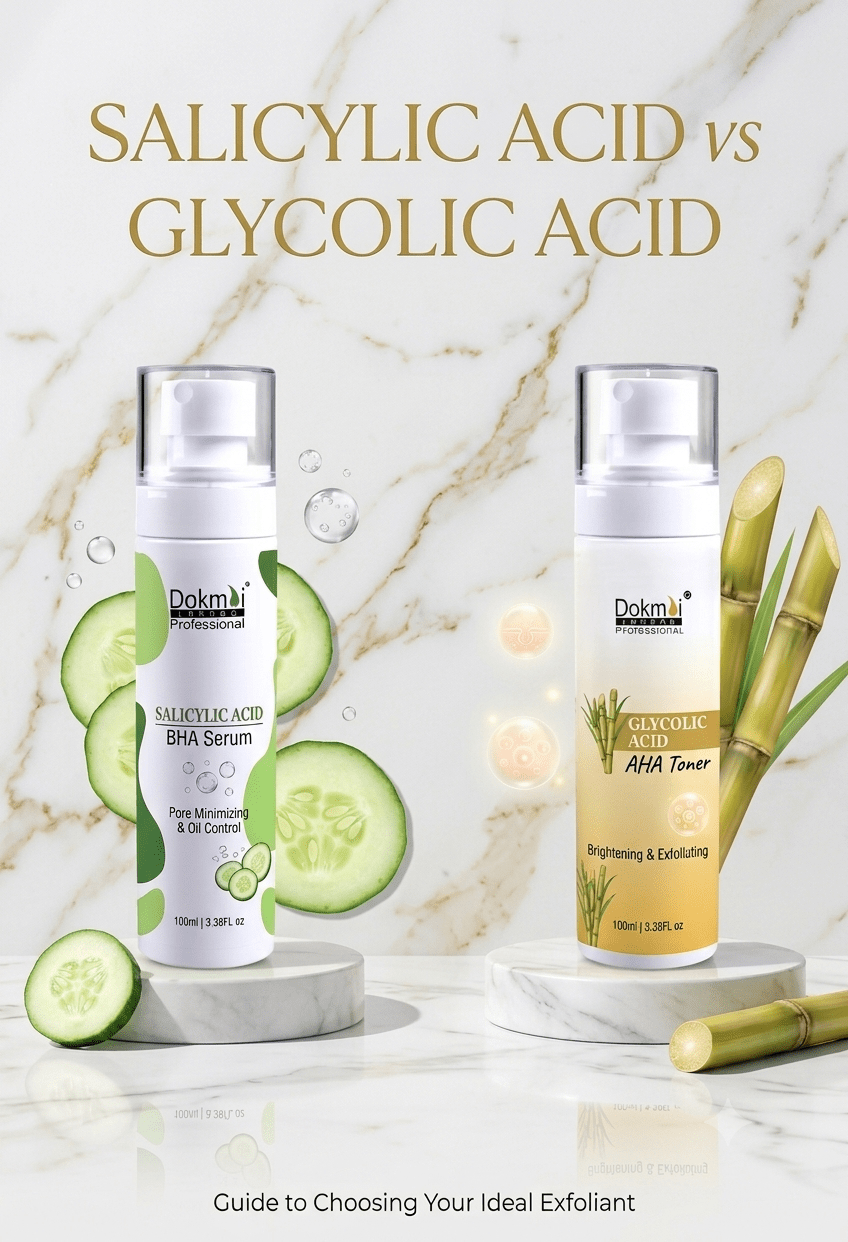
When it comes to exfoliating acids in skincare, Salicylic Acid vs Glycolic Acid are two of the most popular ingredients recommended by skincare professionals. Both help improve skin texture, reduce blemishes, and promote healthier-looking skin, but they work in different ways.
If you’re wondering Salicylic Acid vs Glycolic Acid – which one is better?, the answer depends on your skin type and your skincare goals. Salicylic Acid is best known for treating oily and acne-prone skin, while Glycolic Acid is widely used to brighten dull skin, improve texture, and reduce the appearance of pigmentation.
In this comprehensive guide, we’ll compare both ingredients, explain how they work, and help you decide which one is right for your skincare routine.
What Is Salicylic Acid?
Salicylic Acid is a Beta Hydroxy Acid (BHA) that is oil-soluble. This means it can penetrate deep into the pores to remove excess oil, dead skin cells, and impurities.
Because of this ability, Salicylic Acid is especially popular for people with oily and acne-prone skin.
Benefits of Salicylic Acid
- Helps unclog pores
- Reduces blackheads and whiteheads
- Controls excess oil
- Supports clearer-looking skin
- Gently exfoliates dead skin cells
- Helps reduce the appearance of acne
Salicylic Acid is commonly found in cleansers, toners, serums, and spot treatments.
What Is Glycolic Acid?
Glycolic Acid is an Alpha Hydroxy Acid (AHA) derived from sugar cane. Unlike Salicylic Acid, it is water-soluble and primarily works on the skin’s surface.
Its small molecular size allows it to exfoliate efficiently, making it an excellent ingredient for improving skin brightness and texture.
Benefits of Glycolic Acid
- Removes dead skin cells
- Improves skin texture
- Brightens dull skin
- Helps reduce the appearance of pigmentation
- Promotes smoother-looking skin
- Supports healthy skin renewal
Glycolic Acid is commonly used in toners, serums, creams, and exfoliating treatments.
Salicylic Acid vs Glycolic Acid: Key Differences
| Feature | Salicylic Acid | Glycolic Acid |
|---|---|---|
| Type | Beta Hydroxy Acid (BHA) | Alpha Hydroxy Acid (AHA) |
| Solubility | Oil-soluble | Water-soluble |
| Main Action | Cleans inside pores | Exfoliates the skin surface |
| Best For | Oily & acne-prone skin | Dull & uneven skin tone |
| Helps With | Acne, blackheads, excess oil | Texture, pigmentation, brightness |
| Skin Type | Oily, combination | Normal, dry, combination |
| Exfoliation | Inside pores | Surface exfoliation |
Which Acid Is Better for Acne?
If your primary concern is acne, Salicylic Acid is usually the better choice.
It works by:
- Dissolving excess oil
- Keeping pores clear
- Reducing blackheads
- Helping prevent clogged pores
- Supporting clearer skin
People with oily or acne-prone skin often benefit from incorporating Salicylic Acid into their routine.
Which Acid Is Better for Glowing Skin?
If your goal is brighter, smoother skin, Glycolic Acid is often the preferred option.
It helps:
- Remove dull, dead skin cells
- Improve skin texture
- Support a more even-looking complexion
- Enhance natural radiance
Because it exfoliates the skin’s surface, Glycolic Acid can leave the skin looking fresher and more luminous.
Which Acid Is Better for Oily Skin?
For oily skin, Salicylic Acid is generally more effective because it can penetrate oil-filled pores and help regulate excess sebum.
Benefits include:
- Less shine
- Cleaner pores
- Reduced congestion
- Improved skin clarity
Which Acid Is Better for Dry Skin?
People with dry skin often tolerate Glycolic Acid better, especially when paired with hydrating ingredients such as Hyaluronic Acid or Ceramides.
After exfoliation, it’s important to use a moisturizer to help maintain the skin barrier.
Can Salicylic Acid Help with Blackheads?
Yes. Salicylic Acid is widely recognized for helping improve the appearance of:
- Blackheads
- Whiteheads
- Congested pores
Its oil-soluble nature allows it to work where these concerns begin—inside the pores.
Can Glycolic Acid Help with Pigmentation?
Yes. Glycolic Acid is commonly used to improve the appearance of:
- Sun spots
- Post-acne marks
- Uneven skin tone
- Dull skin
Regular use may promote a brighter and smoother complexion over time.
Can You Use Salicylic Acid and Glycolic Acid Together?
Yes, but with caution.
Both ingredients exfoliate the skin, so using them together can increase the risk of irritation, especially if you’re new to active skincare.
A beginner-friendly approach is:
Morning
- Gentle cleanser
- Vitamin C serum (optional)
- Moisturizer
- Sunscreen
Evening (Alternate Nights)
- Night 1: Salicylic Acid
- Night 2: Hydrating routine
- Night 3: Glycolic Acid
- Repeat as tolerated
If your skin becomes irritated, reduce the frequency of use.
Best Ingredients to Pair with These Acids
Hyaluronic Acid
Helps replenish hydration after exfoliation.
Ceramides
Support the skin barrier and reduce moisture loss.
Niacinamide
Helps calm the skin, balance oil, and strengthen the barrier.
Vitamin C
Can help improve skin brightness but is often best used separately from strong exfoliating acids if your skin is sensitive.
Common Mistakes to Avoid
When using exfoliating acids, avoid:
- Over-exfoliating
- Using multiple strong acids on the same day
- Skipping moisturizer
- Forgetting sunscreen
- Applying acids to broken or irritated skin
- Expecting overnight results
Start slowly and increase frequency only if your skin tolerates it well.
Lifestyle Tips for Healthy Skin
Skincare products work best when supported by healthy habits.
- Drink enough water daily.
- Eat a balanced diet rich in fruits and vegetables.
- Get 7–8 hours of sleep every night.
- Wear sunscreen every day.
- Manage stress through regular exercise or relaxation.
Frequently Asked Questions (FAQs)
Which is better for acne: Salicylic Acid or Glycolic Acid?
Salicylic Acid is generally preferred for acne-prone and oily skin because it helps unclog pores and reduce excess oil.
Which acid is better for pigmentation?
Glycolic Acid is commonly used to improve the appearance of uneven skin tone and post-acne marks through surface exfoliation.
Can beginners use these acids?
Yes, but beginners should introduce them gradually and avoid using both on the same night until their skin builds tolerance.
Is sunscreen necessary?
Absolutely. Both Salicylic Acid and Glycolic Acid can make the skin more sensitive to sunlight, so daily sunscreen is essential.