
How Often Should You Use a Hair Mask? Expert Hair Care Guide
-
Dokmai London
- Posted on
- 0 comments
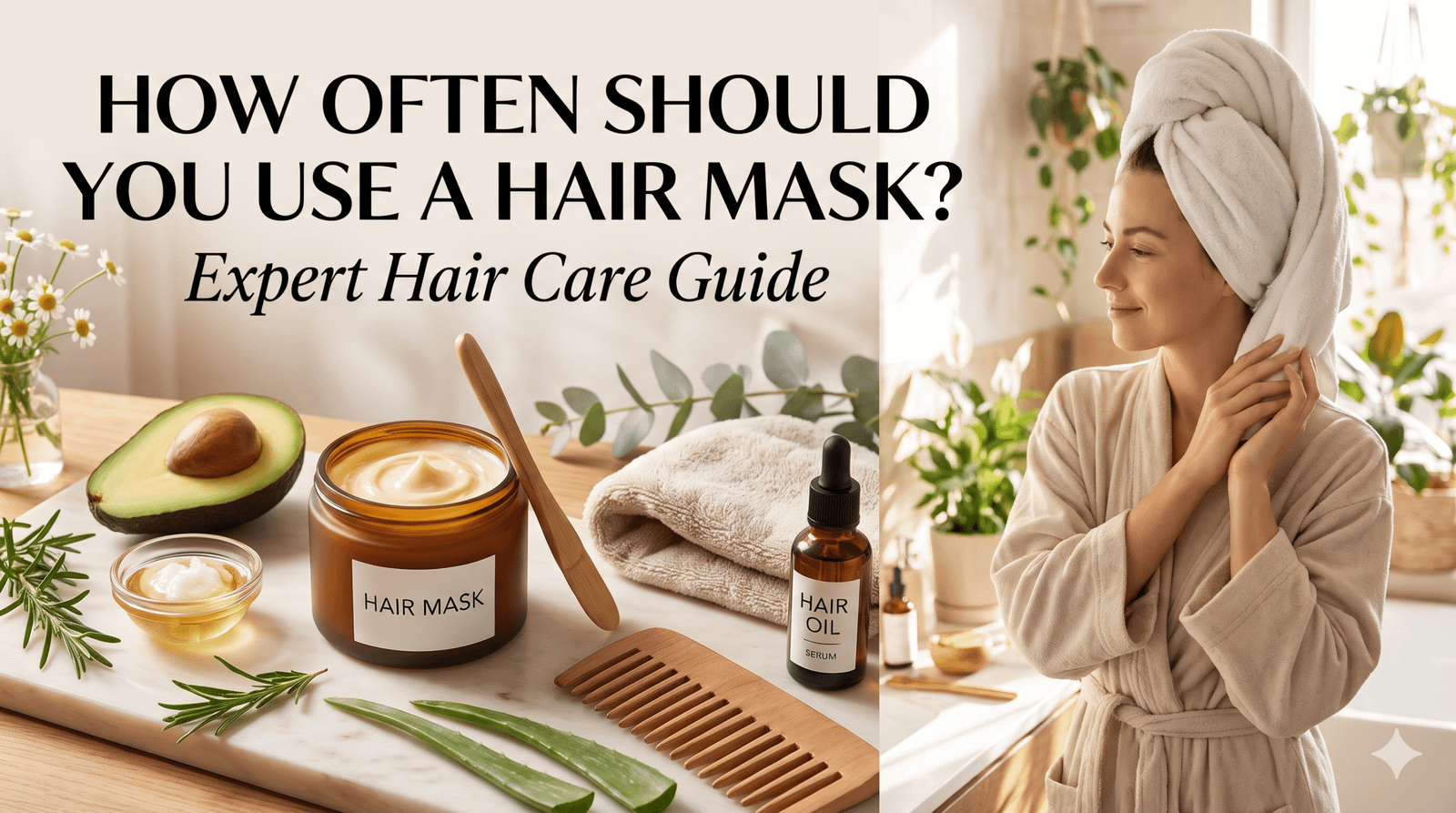
Healthy, shiny, smooth, and manageable hair requires more than regular shampooing and conditioning. While shampoo helps cleanse the scalp and conditioner improves softness, a hair mask provides deeper conditioning and targeted care to address dryness, frizz, damage, roughness, and breakage.
However, one common question in hair care is: How often should you use a hair mask? Should you apply it every time you wash your hair, once a week, or only when your hair feels dry?
The ideal frequency depends on several factors, including your hair type, scalp condition, hair texture, lifestyle, and the level of damage your hair has experienced.
In this expert hair care guide, we will explain how often to use a hair mask, how to choose the right formula, how to apply it correctly, and how to build an effective hair care routine for healthier-looking hair.
What Is a Hair Mask and Why Is It Important?
A hair mask is an intensive conditioning treatment designed to improve the appearance, softness, and manageability of hair. Compared with regular conditioners, hair masks are often formulated with a richer combination of conditioning agents, oils, proteins, humectants, and other beneficial ingredients.
They help address common hair concerns such as:
- Dryness and rough hair texture.
- Frizz and flyaways.
- Hair that feels weak or brittle.
- Damage caused by heat styling.
- Hair affected by colouring and chemical treatments.
- Lack of softness and shine.
- Tangled and difficult-to-manage hair.
Depending on its formulation, a hair mask can provide moisture, improve smoothness, reduce friction during combing, and make hair easier to style.
Regular use of a suitable hair mask can become an important part of a balanced hair care routine.
How Often Should You Use a Hair Mask?
For most hair types, using a hair mask once or twice a week is a practical starting point.
However, there is no single frequency that works for everyone. Hair that is naturally dry or chemically treated may benefit from more frequent conditioning, while fine or oily hair may need lighter treatments less often.
Here is a general guide:
| Hair Type | Recommended Frequency |
|---|---|
| Normal hair | Once a week |
| Dry hair | 1–2 times a week |
| Frizzy hair | 1–2 times a week |
| Oily hair | Every 1–2 weeks |
| Fine hair | Once every 1–2 weeks |
| Curly hair | 1–2 times a week |
| Chemically treated hair | 1–2 times a week |
| Bleached or damaged hair | 1–2 times a week, depending on the formula |
Important: Always follow the product instructions. Some intensive protein treatments are designed for occasional use rather than frequent application.
How Often Should You Use a Hair Mask According to Your Hair Type?
Choosing the right hair mask is only half the process. Understanding your hair type helps determine how frequently you should use it.
1. Hair Mask for Dry Hair
Dry hair often lacks sufficient lubrication and may feel rough, dull, and difficult to manage. It can also become more prone to tangling and breakage.
For dry hair, applying a moisturising hair mask once or twice a week can help improve softness and manageability.
Look for ingredients such as:
- Shea butter.
- Argan oil.
- Coconut oil.
- Glycerin.
- Aloe vera.
- Panthenol.
These ingredients can help condition the hair and improve its feel.
Avoid using excessive amounts of heavy products, especially if your hair is fine or easily weighed down.
2. Hair Mask for Oily Hair
Oily hair generally results from excess sebum production on the scalp. Applying heavy conditioning products directly to the roots can make the hair appear greasy.
If you have oily hair, use a lightweight hair mask once every one or two weeks.
For better results:
- Apply the mask mainly to the mid-lengths and ends.
- Avoid applying rich masks directly to the scalp.
- Choose lightweight conditioning formulas.
- Rinse thoroughly after the recommended processing time.
Remember that oily scalp and dry hair lengths can occur together. In such cases, focus conditioning treatments on the dry areas.
3. Hair Mask for Curly Hair
Curly and coily hair often experiences dryness because natural scalp oils may not travel easily along its bends and twists.
This can make curls appear frizzy, rough, and less defined.
Using a suitable moisturising hair mask once or twice a week can help improve softness, reduce tangling, and make curls easier to manage.
Look for ingredients such as:
- Shea butter.
- Coconut oil.
- Argan oil.
- Aloe vera.
- Conditioning agents.
Choose a formula that provides sufficient moisture without leaving your curls heavy or greasy.
4. Hair Mask for Fine Hair
Fine hair can become weighed down easily, especially when rich masks are applied in excessive quantities.
For fine hair, using a lightweight hair mask once every one or two weeks is often sufficient.
Follow these tips:
- Choose lightweight conditioning formulas.
- Apply a small quantity.
- Concentrate on the ends.
- Avoid heavy application near the roots.
- Rinse thoroughly.
The objective is to improve softness and manageability without sacrificing natural volume.
5. Hair Mask for Chemically Treated Hair
Hair colouring, bleaching, smoothening, and other chemical services can affect the hair’s structure and leave it feeling dry or rough.
Chemically treated hair may benefit from a suitable conditioning mask once or twice a week.
Look for products containing conditioning ingredients, moisturisers, and ingredients designed for chemically treated hair.
For severely damaged hair, professional assessment can help determine whether a moisture-focused treatment, protein treatment, or another salon service is appropriate.
How Often Should You Use a Hair Mask for Damaged Hair?
Damaged hair requires a more targeted approach.
Regular heat styling, bleaching, colouring, excessive brushing, and chemical treatments can contribute to cuticle damage and increased breakage.
For damaged hair, a conditioning hair mask can be used once or twice weekly, depending on its formulation and your hair’s response.
We recommend focusing on three important areas.
Moisture: Moisturising ingredients help improve softness and reduce the feeling of dryness.
Conditioning: Conditioning agents help smooth the hair surface, reduce friction, and improve manageability.
Protein: Protein-based treatments may temporarily improve the feel and strength of some damaged hair. However, excessive use can leave certain hair types feeling stiff or rough.
A balanced routine is more beneficial than repeatedly applying intensive treatments.
What Happens If You Use a Hair Mask Too Often?
Although hair masks can improve hair texture, using them excessively does not necessarily provide better results.
Over-conditioning or using unsuitable formulas may cause certain problems.
1. Hair May Feel Heavy
Rich hair masks can leave fine hair looking flat, especially when applied in large quantities.
2. Excess Product Build-Up
Some formulations may leave residue if used too frequently or not rinsed properly.
This can make hair feel coated, dull, or difficult to style.
3. Reduced Hair Volume
Applying heavy conditioning products near the roots may reduce natural volume and make hair appear greasy.
4. Protein Overuse
Frequent use of certain protein-heavy treatments may leave some hair types feeling stiff, rough, or less flexible.
5. Unnecessary Product Use
Using a hair mask more often than recommended may not provide additional benefits. It is better to follow a consistent routine based on your hair’s actual needs.
How to Apply a Hair Mask Correctly for the Best Results
Even a high-quality hair mask may not deliver its intended results if it is applied incorrectly.
Follow these steps to get the most out of your hair treatment.
Step 1: Wash Your Hair
Begin by cleansing your hair with a suitable shampoo.
Choose a shampoo according to your scalp condition and hair requirements.
Shampoo helps remove dirt, excess oil, sweat, and product residue.
Step 2: Remove Excess Water
After rinsing your shampoo, gently squeeze excess water from your hair.
Use a soft towel if necessary.
Hair should be damp rather than dripping wet so that the mask is not unnecessarily diluted.
Step 3: Apply the Hair Mask
Take an appropriate amount of product and distribute it evenly through the mid-lengths and ends.
Use your fingers or a wide-tooth comb to spread the mask gently.
Avoid applying heavy masks directly to the scalp unless the product is specifically designed for scalp application.
Step 4: Leave It on for the Recommended Time
Allow the hair mask to work according to the manufacturer’s instructions.
Most regular conditioning masks require approximately 5–20 minutes, although processing times vary by product.
Leaving a mask on longer does not automatically improve its performance.
Step 5: Rinse Thoroughly
Rinse your hair with water until the product is completely removed.
Avoid using excessively hot water, as it can contribute to dryness and discomfort.
Step 6: Dry and Style Your Hair
Gently remove excess water with a soft towel.
Apply a suitable leave-in conditioner or heat protectant if needed.
Use a hair dryer at an appropriate temperature and avoid excessive heat styling.
What Ingredients Should You Look for in a Hair Mask?
The ingredients in a hair mask determine its conditioning properties and suitability for different hair concerns.
Here are some commonly used ingredients and their benefits.
| Ingredient | Hair Care Benefits |
|---|---|
| Argan Oil | Helps condition hair and improve softness |
| Coconut Oil | Helps reduce protein loss in some hair types |
| Shea Butter | Provides rich conditioning |
| Aloe Vera | Helps improve moisture and softness |
| Glycerin | Acts as a humectant |
| Panthenol | Helps improve hair smoothness and manageability |
| Hydrolysed Keratin | Helps condition and temporarily improve the feel of damaged hair |
| Vitamin E | Provides antioxidant properties in cosmetic formulations |
| Ceramides | Help support hair surface conditioning |
When selecting a hair mask, consider your hair texture, current condition, and the overall formulation rather than relying on a single ingredient.
Hair Mask vs Hair Conditioner: What Is the Difference?
Many people use hair masks and conditioners interchangeably. However, they serve slightly different purposes in a hair care routine.
| Feature | Hair Conditioner | Hair Mask |
|---|---|---|
| Main Purpose | Regular conditioning | Intensive conditioning |
| Usage | Usually after every shampoo | Usually 1–2 times weekly |
| Texture | Generally lighter | Often richer |
| Application Time | Usually 1–3 minutes | Depends on formulation |
| Best For | Everyday softness and detangling | Additional conditioning and targeted care |
Should you use both?
Yes, depending on your hair’s needs and the product instructions.
A simple routine is to use conditioner after regular shampooing and replace it with a hair mask on your designated treatment day if the mask provides sufficient conditioning.
You do not necessarily need to layer both products during every wash.
Can You Use a Hair Mask Every Day?
For most people, using a traditional intensive hair mask every day is unnecessary.
Daily application of rich conditioning products may make certain hair types feel heavy or coated.
However, some lightweight products are specifically formulated for more frequent use.
The best approach is to check the manufacturer’s instructions and observe how your hair responds.
If your hair feels greasy, limp, or coated, reduce the frequency or switch to a lighter formula.
How to Build the Perfect Weekly Hair Mask Routine
A consistent routine is more important than applying multiple treatments without a clear purpose.
Here is a simple weekly hair care schedule.
| Day | Hair Care Routine |
|---|---|
| Monday | Shampoo and conditioner |
| Tuesday | Leave-in conditioning if needed |
| Wednesday | Regular hair care |
| Thursday | Shampoo and moisturising hair mask |
| Friday | Gentle styling and heat protection |
| Saturday | Regular hair care |
| Sunday | Rest day or regular cleansing as needed |
This is only an example. Adjust your washing and treatment schedule according to your scalp condition, hair texture, and lifestyle.
Professional Hair Mask Treatments at a Salon
While home hair masks are useful for regular maintenance, professional salon treatments can provide a more personalised conditioning experience.
At a professional salon, hair experts can assess your hair texture, chemical history, porosity, and visible damage before recommending a suitable treatment.
Professional hair treatments may include:
- Deep conditioning treatments.
- Hair spa treatments.
- Moisture repair treatments.
- Protein-based conditioning services.
- Colour-protecting treatments.
- Specialised smoothing and shine treatments.
At NS4 Salon, professional hair care services can help clients choose treatments according to their individual hair requirements.
A proper consultation is important before selecting intensive treatments, especially for chemically processed or severely damaged hair.
Common Hair Mask Mistakes You Should Avoid
To get better results from your hair care routine, avoid these common mistakes:
- Applying too much product: Excessive application does not necessarily improve results.
- Applying rich masks to an oily scalp: This may make the roots look greasy.
- Ignoring product instructions: Every formulation has different application requirements.
- Using protein treatments excessively: Too much protein-focused treatment may make some hair feel stiff.
- Not rinsing properly: Product residue can affect hair texture and appearance.
- Expecting permanent repair: Hair masks mainly improve conditioning and the appearance of hair. They cannot permanently reverse severe structural damage.
- Using unsuitable products: A mask designed for thick, dry hair may not be appropriate for fine hair.
Avoiding these mistakes can help you maintain a more effective and manageable hair care routine.
Frequently Asked Questions About Hair Masks
1. How many times a week should I use a hair mask?
Most people can start with once a week. Dry, curly, frizzy, or chemically treated hair may benefit from twice-weekly application, depending on the product formulation.
2. Should I apply a hair mask before or after shampooing?
Most conventional rinse-off hair masks should be applied after shampooing. However, some pre-shampoo masks are specifically designed to be used before washing.
Always follow the product instructions.
3. Can I leave a hair mask overnight?
Only leave a hair mask overnight if its manufacturer specifically recommends overnight use. Regular rinse-off masks should not automatically be treated as overnight products.
4. Can a hair mask reduce frizz?
Yes. Conditioning hair masks can help smooth the hair surface, improve softness, and reduce the appearance of frizz.
The results depend on the ingredients and the condition of your hair.
5. Is a hair mask suitable for coloured hair?
Yes. Many hair masks are formulated for coloured hair. Choose a suitable colour-care formula to help maintain softness and manageability.
6. Can I use a hair mask instead of conditioner?
You can use a hair mask instead of conditioner on treatment days if the product instructions allow it. For regular washing, a lightweight conditioner may be more convenient.
7. How long does it take to see results from a hair mask?
Many people notice improved softness, smoothness, and manageability after the first application. Consistent use can help maintain these cosmetic benefits.
8. Should I use a hair mask on my scalp?
Most hair masks are intended for the hair lengths rather than the scalp. Apply them to the scalp only when the product is specifically formulated for that purpose.
9. Is a hair mask good for hair growth?
Hair masks are primarily conditioning treatments. They do not directly stimulate hair growth or treat the underlying causes of hair loss. However, improving hair manageability and reducing breakage may help retain length.
10. Can men use hair masks?
Absolutely. Hair masks are suitable for both men and women. The right product depends on hair type, texture, and condition rather than gender.
Conclusion: Find the Right Hair Mask Routine for Healthy-Looking Hair
Using a hair mask regularly can be an effective way to improve hair softness, smoothness, shine, and manageability. However, the key to achieving good results is choosing the right formula and using it at the correct frequency.
For most hair types, once or twice a week is a suitable starting point. Dry, curly, frizzy, and chemically treated hair may require additional conditioning, while fine and oily hair generally benefits from lighter products and less frequent application.
We recommend understanding your hair’s individual needs, following product instructions, avoiding excessive treatments, and maintaining a consistent hair care routine.
Remember, healthy-looking hair is not achieved through excessive product use but through the right care, consistency, and professional guidance.
Whether you are dealing with dryness, frizz, dullness, or chemically treated hair, choosing the right hair mask can make an important difference in your everyday hair care routine.
Give your hair the care it deserves with a routine designed around its unique needs.