
Hair Care Routine for Hair Growth: A Complete Guide to Stronger, Healthier Hair
-
Dokmai London
- Posted on
- 0 comments
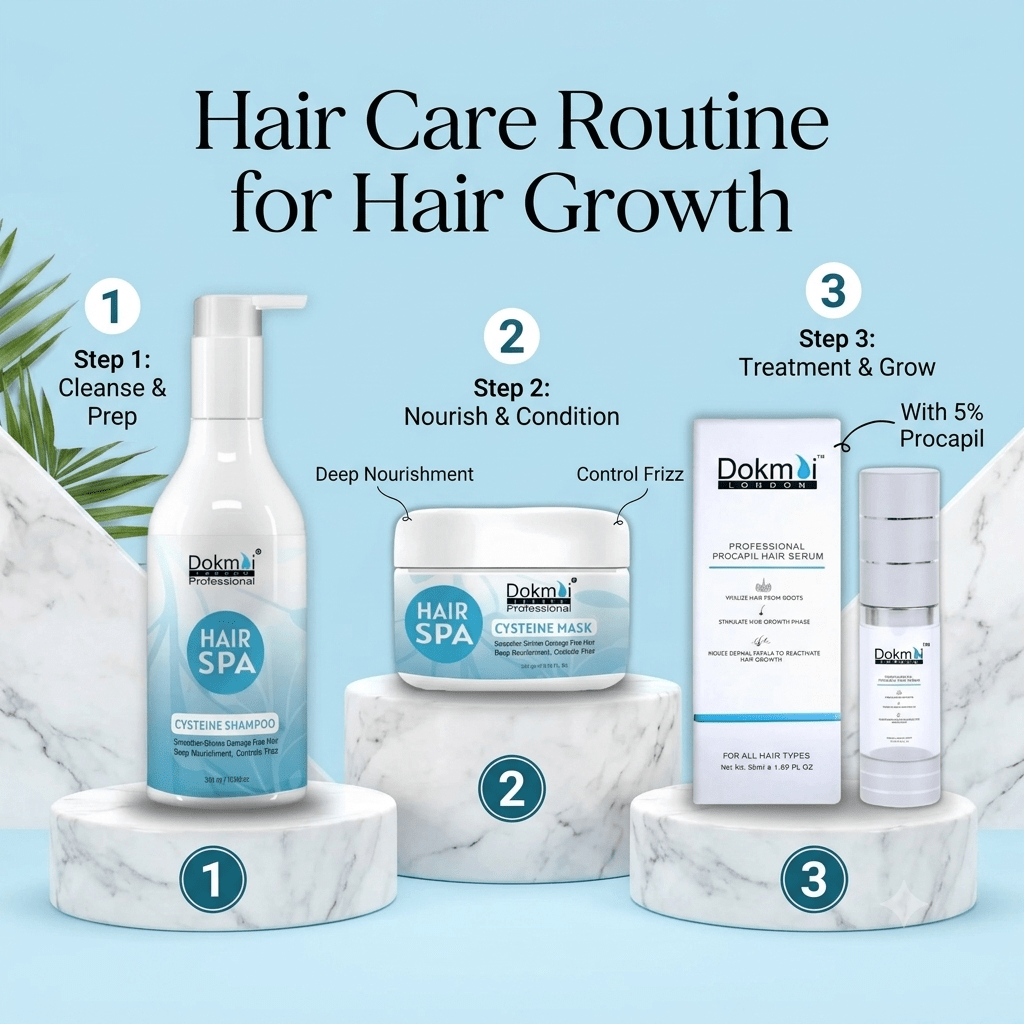
Healthy, long, and strong hair is something many people aspire to achieve. While genetics play an important role in hair growth, your daily hair care routine, nutrition, lifestyle, and scalp health can significantly influence how healthy your hair looks and feels.
If you’re struggling with hair fall, slow hair growth, breakage, or dull hair, following a consistent hair care routine for hair growth can help improve the overall health of your hair and scalp. Although no product can make hair grow overnight, healthy habits and proper care create the ideal environment for stronger, healthier hair.
In this comprehensive guide, you’ll learn the best hair care routine, essential ingredients, common mistakes to avoid, and expert tips to support natural hair growth.
Understanding Hair Growth
Hair grows in a natural cycle consisting of three phases:
1. Anagen (Growth Phase)
This is the active growth stage and can last several years.
2. Catagen (Transition Phase)
Hair growth slows, and the follicle begins to shrink.
3. Telogen (Resting Phase)
The hair eventually sheds, making room for new hair growth.
Losing 50–100 hairs per day is generally considered a normal part of this cycle.
Why Healthy Hair Care Matters
A good hair care routine helps:
- Reduce hair breakage
- Maintain scalp health
- Improve hair strength
- Minimize split ends
- Keep hair hydrated
- Support healthier-looking hair
While it may not change your natural growth rate, it can reduce damage so your hair retains more length over time.
Step 1: Keep Your Scalp Clean
Healthy hair starts with a healthy scalp.
Wash your hair according to your hair type:
- Oily scalp: 2–3 times per week (or as needed)
- Dry scalp: 1–2 times per week
- Normal hair: 2–3 times per week
Choose a gentle shampoo that removes excess oil and buildup without over-drying your scalp.
Step 2: Condition Every Wash
Conditioner helps replace moisture lost during shampooing.
Benefits include:
- Softer hair
- Reduced tangles
- Less breakage
- Improved shine
- Better manageability
Apply conditioner mainly to the mid-lengths and ends rather than directly on the scalp unless the product is designed for scalp use.
Step 3: Massage Your Scalp
A gentle scalp massage may help improve blood circulation to the scalp and promote relaxation.
Massage your scalp for 5–10 minutes several times a week using your fingertips.
Some people choose to use lightweight hair oils before shampooing, though results vary from person to person.
Step 4: Use Hair Oil Wisely
Hair oil helps nourish and protect the hair shaft.
Popular options include:
- Coconut oil
- Argan oil
- Almond oil
- Rosemary-infused carrier oils (used appropriately)
- Jojoba oil
Apply oil to the scalp and hair lengths before washing if it suits your hair type.
Step 5: Protect Your Hair from Heat
Frequent use of styling tools can weaken the hair shaft.
If you use:
- Hair dryers
- Straighteners
- Curling irons
Always apply a heat protectant beforehand and use the lowest effective temperature.
Step 6: Trim Split Ends Regularly
Split ends don’t stop hair growth, but they can travel up the hair shaft and cause breakage.
Trim your hair every 8–12 weeks to keep it healthy and manageable.
Best Ingredients for Healthy Hair Growth
Biotin
Biotin (Vitamin B7) supports healthy hair as part of overall nutrition, particularly in people with a deficiency.
Food sources include:
- Eggs
- Nuts
- Seeds
- Whole grains
Keratin
Keratin is the primary protein that makes up your hair.
Keratin-based hair care products may help improve the appearance of damaged hair by making it smoother and less prone to breakage.
Rosemary
Rosemary is a popular ingredient in scalp care products.
Some research suggests rosemary oil may support hair growth when used consistently, but more studies are needed. Always dilute essential oils appropriately before applying them to the skin.
Caffeine
Caffeine is commonly included in shampoos and scalp products designed to support healthy-looking hair.
Aloe Vera
Aloe Vera helps soothe the scalp and provides lightweight hydration.
Argan Oil
Rich in antioxidants and fatty acids, Argan Oil helps improve hair softness and shine.
Eat a Hair-Healthy Diet
Healthy hair starts from within.
Include foods rich in:
Protein
Hair is primarily made of protein.
Good sources include:
- Eggs
- Fish
- Chicken
- Lentils
- Beans
Iron
Iron supports healthy oxygen transport throughout the body.
Sources include:
- Spinach
- Lentils
- Lean meats
Omega-3 Fatty Acids
Found in:
- Salmon
- Walnuts
- Flaxseeds
These healthy fats support overall scalp health.
Vitamin C
Vitamin C helps your body absorb iron and supports collagen production.
Good sources include:
- Oranges
- Kiwi
- Strawberries
- Bell peppers
Zinc
Zinc contributes to normal hair health.
Sources include:
- Pumpkin seeds
- Chickpeas
- Cashews
Daily Hair Care Tips
- Drink plenty of water.
- Avoid tight hairstyles that pull on the hair.
- Sleep on a silk or satin pillowcase to reduce friction.
- Comb gently using a wide-tooth comb, especially on wet hair.
- Avoid excessive chemical treatments.
- Protect your hair from prolonged sun exposure.
Small habits can make a noticeable difference over time.
Common Hair Care Mistakes
Avoid these habits:
- Overwashing your hair
- Using very hot water
- Brushing aggressively when wet
- Skipping conditioner
- Excessive heat styling
- Frequent bleaching or chemical treatments
- Ignoring scalp health
Healthy hair is about consistency rather than quick fixes.
Lifestyle Habits That Support Hair Growth
Get Enough Sleep
Aim for 7–8 hours of quality sleep each night.
Manage Stress
Chronic stress can contribute to increased hair shedding in some individuals.
Try:
- Walking
- Yoga
- Meditation
- Regular exercise
Stay Hydrated
Adequate hydration supports overall body and scalp health.
Frequently Asked Questions (FAQs)
How often should I wash my hair?
It depends on your hair type. Most people wash their hair 2–3 times per week, while oily scalps may require more frequent washing.
Can hair oil make hair grow faster?
Hair oils can improve scalp and hair condition and reduce breakage, but there is limited evidence that they significantly increase the natural rate of hair growth.
Does trimming hair make it grow faster?
No. Trimming doesn’t affect hair growth at the scalp, but it helps prevent split ends and breakage, allowing hair to maintain its length.
How long does it take to notice healthier hair?
Hair grows gradually—typically around 1–1.25 cm (about half an inch) per month on average, though this varies by individual. Improvements in hair strength and shine may become noticeable within several weeks of consistent care.
Final Thoughts
A consistent hair care routine for hair growth focuses on creating the best conditions for healthy hair rather than promising instant results. Cleanse your scalp gently, condition regularly, nourish your hair with a balanced diet, minimize heat damage, and protect your hair from unnecessary breakage.
Healthy lifestyle habits—including adequate sleep, stress management, hydration, and proper nutrition—play an equally important role in maintaining strong, healthy hair.
For everyday care, consider using gentle, nourishing hair products that support scalp health and reduce breakage. If you’re experiencing sudden, severe, or persistent hair loss, it’s important to consult a dermatologist or healthcare professional to identify and treat any underlying causes.