
Sulphate-Free Shampoo vs Regular Shampoo: Which Is Better for Your Hair?
-
Dokmai London
- Posted on
- 0 comments
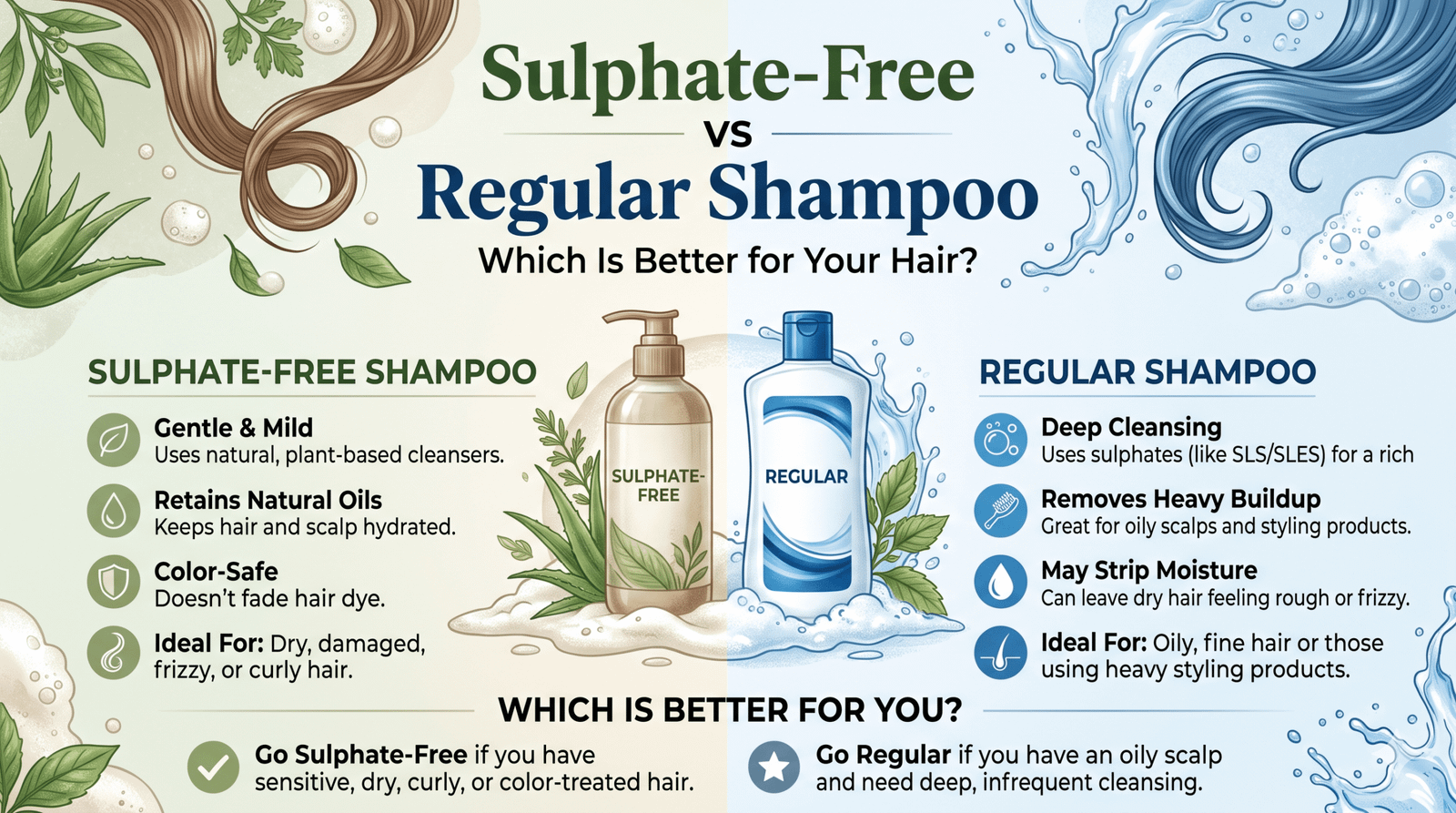
Choosing the right shampoo is essential for maintaining healthy, clean, and beautiful hair. With so many hair care products available, one common question is whether sulphate-free shampoo is better than regular shampoo. Both types cleanse the scalp and hair, but they differ in their cleansing ingredients, lather, and suitability for different hair types.
If you have dry, frizzy, coloured, chemically treated, or damaged hair, understanding these differences can help you choose the right shampoo for your hair care routine.
What Is a Sulphate-Free Shampoo?
A sulphate-free shampoo is formulated without commonly used sulphate-based cleansing agents, such as Sodium Lauryl Sulphate (SLS) and Sodium Laureth Sulphate (SLES).
These ingredients are often used in regular shampoos because they help remove oil, dirt, sweat, and product buildup while creating a rich lather.
Sulphate-free shampoos generally use alternative cleansing agents that may provide a gentler cleansing experience, depending on the overall formulation.
Benefits of Sulphate-Free Shampoo
- Gentle cleansing: Some formulations are less stripping and may be suitable for dry or sensitive scalps.
- Helps maintain moisture: Can reduce excessive dryness associated with harsh cleansing.
- Suitable for coloured hair: May help preserve hair colour, depending on the formula and washing routine.
- Supports chemically treated hair: Often a suitable option for keratin-treated, smoothened, or otherwise chemically processed hair.
- Helps manage frizz: Reducing excessive dryness may make hair feel smoother and easier to manage.
However, sulphate-free does not automatically mean irritation-free. Other ingredients, fragrance, and the complete formulation also affect how a shampoo performs.
What Is a Regular Shampoo?
Regular shampoos commonly contain sulphate-based surfactants, although not all regular shampoos use them. These cleansing agents help remove excess oil, dirt, sweat, and styling product residue from the scalp and hair.
Regular shampoos are available in many formulations, ranging from deep-cleansing products to moisturising and colour-protecting varieties.
Benefits of Regular Shampoo
- Effective cleansing: Can remove excess oil, dirt, and styling product buildup.
- Rich lather: Many sulphate-based shampoos produce a generous foam.
- Suitable for oily scalps: Some formulas work well for people who need stronger cleansing.
- Removes heavy residue: Can be useful after using waxes, gels, oils, or other styling products.
- Wide product selection: Available for different scalp conditions, hair textures, and styling needs.
The main consideration is choosing a formula that cleans effectively without leaving your hair or scalp feeling excessively dry.
Sulphate-Free Shampoo vs Regular Shampoo: Key Differences
| Feature | Sulphate-Free Shampoo | Regular Shampoo |
|---|---|---|
| Cleansing action | Often gentler, depending on the formula | Can provide stronger cleansing |
| Lather | May produce less foam | Often produces more foam |
| Dry hair | Often a good option | Depends on the formulation |
| Oily scalp | Can work with the right cleanser | Some formulas may be more effective |
| Coloured hair | Often a suitable choice | Some formulas may fade colour faster |
| Keratin-treated hair | Often preferred | Depends on treatment instructions and formula |
| Product buildup | Depends on cleansing strength | Stronger formulas may remove heavy residue more effectively |
| Frizz management | May help reduce dryness-related frizz | Moisturising formulas can also help manage frizz |
Important: A shampoo’s overall formulation matters more than the sulphate-free label alone. Cleansing strength, conditioning ingredients, and your scalp’s needs all play a role.
Which Shampoo Is Better for Different Hair Types?

1. Dry and Frizzy Hair
Sulphate-free shampoo is often a good starting point because some formulas cleanse without removing as much natural oil. Look for conditioning ingredients and follow with a moisturising conditioner.

2. Oily Scalp
Choose a shampoo that effectively removes excess oil. A regular shampoo may work well, but a suitably formulated sulphate-free shampoo can also cleanse oily hair. Wash as often as your scalp requires.

3. Coloured Hair
A colour-safe sulphate-free shampoo can be a useful choice to help maintain colour vibrancy. Washing less frequently and using lukewarm water may also help.

4. Keratin-Treated or Smoothened Hair
Consider a sulphate-free shampoo recommended by your salon or treatment manufacturer. Follow the specific aftercare instructions because treatment requirements vary.

5. Curly and Wavy Hair
Sulphate-free shampoos may help reduce dryness in some curl patterns. Pair your shampoo with a conditioner designed for curly hair to improve softness and manageability.
Does Sulphate-Free Shampoo Help Reduce Hair Fall?
Sulphate-free shampoo does not directly treat the underlying causes of hair loss. However, if your hair becomes dry, tangled, or prone to breakage, a gentler shampoo and suitable conditioner may help reduce breakage during washing and combing.
It is important to understand the difference between hair breakage and hair shedding. Breakage occurs when the hair shaft snaps, while shedding involves hair falling from the follicle. Persistent or excessive shedding may require evaluation by a dermatologist.
For a hair care routine, choose products based on your scalp condition, hair texture, and any chemical treatments rather than relying on a single ingredient claim.
How to Choose the Right Shampoo for Your Hair
Follow these simple steps when selecting a shampoo:
- Identify your scalp type: Determine whether your scalp is oily, dry, sensitive, or balanced.
- Consider your hair condition: Dry, damaged, curly, and colour-treated hair may benefit from a conditioning formula.
- Check the ingredients: Look at the cleansing agents and conditioning ingredients rather than relying only on the front-label claims.
- Consider your salon treatments: If you have had keratin, smoothening, or colouring services, follow the recommended aftercare instructions.
- Observe how your hair responds: If your scalp feels uncomfortable or your hair becomes excessively dry, consider changing your product.
Tips for Using Sulphate-Free Shampoo Correctly
- Wet your hair and scalp thoroughly before applying shampoo.
- Massage gently into the scalp using your fingertips.
- Add a little water if the shampoo does not spread easily; less foam does not necessarily mean less cleansing.
- Rinse thoroughly to remove product residue.
- Apply conditioner mainly to the mid-lengths and ends if your scalp tends to become oily.
- Use a clarifying shampoo occasionally if you experience stubborn buildup and your hair or scalp tolerates it.
Frequently Asked Questions (FAQs)
1. Is sulphate-free shampoo better than regular shampoo?
Neither is universally better. Sulphate-free shampoo may suit dry, curly, coloured, or chemically treated hair, while a regular shampoo may be helpful for oily scalps or heavy product buildup. Your hair and scalp needs should guide your choice.
2. Can I use sulphate-free shampoo every day?
Yes, if the formula suits your scalp and hair and frequent washing is necessary. However, washing frequency should depend on your scalp’s oiliness, activity level, and product use.
3. Does sulphate-free shampoo make hair smoother?
It may help hair feel smoother when it reduces excessive dryness. Conditioning ingredients and your overall hair care routine also influence smoothness and shine.
4. Is sulphate-free shampoo suitable after keratin treatment?
It is often recommended, but the correct choice depends on the treatment used. Follow the instructions provided by your salon or treatment manufacturer.
5. Does sulphate-free shampoo cause less hair fall?
It does not prevent hair loss caused by hormonal changes, nutritional deficiencies, medical conditions, or other underlying factors. It may help reduce dryness-related breakage for some people.
6. How long does it take to see results from sulphate-free shampoo?
You may notice differences in hair softness, dryness, or manageability after a few washes. Results vary depending on your hair condition, shampoo formulation, and washing routine.
Final Verdict: Which Shampoo Should You Choose?
Sulphate-free shampoo can be a great option if you want a gentler cleansing experience, particularly for dry, frizzy, coloured, or chemically treated hair. Regular shampoo can also be an excellent choice when you need effective oil removal or help managing product buildup.
The best shampoo is one that cleans your scalp effectively while leaving your hair comfortable, manageable, and healthy-looking.
If you are building a hair care routine, explore suitable options from Dokmai London, and select a shampoo according to your hair type, scalp needs, and salon treatment requirements.
Healthy hair starts with the right cleansing routine. Choose your shampoo wisely and give your hair the care it deserves.