
How to Make Hair Smooth and Shiny: Shampoo, Hair Mask and Serum Guide
-
Dokmai London
- Posted on
- 0 comments
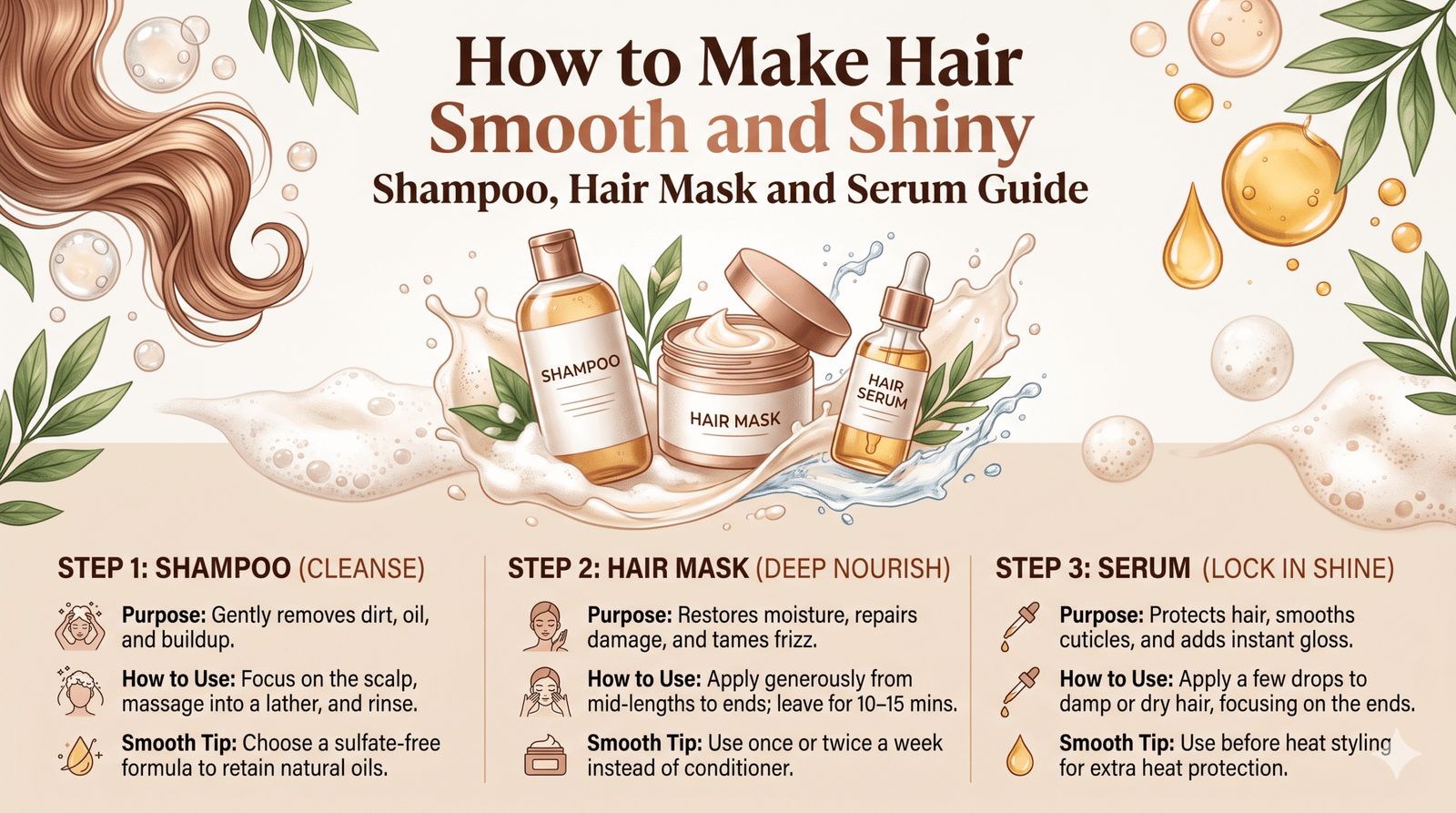
Smooth, shiny, and manageable hair is a common hair care goal. However, daily exposure to pollution, heat styling, sunlight, harsh cleansing products, and chemical treatments can leave hair looking dull, rough, frizzy, and difficult to manage. The good news is that a consistent hair care routine using the right shampoo, nourishing hair mask, and smoothing hair serum can help improve hair texture, enhance shine, and reduce frizz.
To make hair smooth and shiny, we need to understand our hair type, choose suitable hair care products, and follow a routine that protects the hair cuticle from unnecessary damage. Healthy-looking hair does not depend on one expensive product. Instead, it comes from combining gentle cleansing, regular conditioning, appropriate nourishment, and protection against environmental and styling damage.
In this comprehensive guide, we explore how to make hair smooth and shiny naturally and with the help of hair care products, how to choose the best shampoo for smooth hair, how to use a hair mask and serum, and which everyday habits can help maintain long-lasting shine.
1. Why Does Hair Become Dry, Frizzy, and Dull?
Before building an effective hair care routine, we should understand why hair loses its smoothness and natural shine.
Each strand of hair has an outer protective layer called the cuticle. When the cuticle lies relatively flat, the hair surface reflects light more evenly, creating a smooth and shiny appearance. When the cuticle becomes rough or damaged, hair may look dull, feel coarse, and become more prone to tangling and breakage.
Several factors can affect hair smoothness:
- Frequent heat styling: Excessive use of straighteners, curling irons, and high-temperature blow dryers can damage the hair structure.
- Harsh shampoos: Cleansers that are unsuitable for our hair or scalp may leave the lengths feeling dry.
- Lack of conditioning: Hair that does not receive adequate conditioning may become rough, tangled, and difficult to comb.
- Chemical treatments: Bleaching, colouring, straightening, and other chemical processes can weaken the hair fibre.
- Environmental exposure: Sunlight, wind, pollution, and humidity can contribute to dryness, frizz, and loss of manageability.
- Rough handling: Aggressive towel drying, brushing wet hair forcefully, and tight hairstyles can increase breakage.
- Product buildup: Excessive styling products and insufficient cleansing can leave residue that affects the appearance of the hair.
Understanding these causes helps us select products that address our hair’s specific needs rather than following a routine that may not suit us.
2. Choose the Best Shampoo for Smooth and Shiny Hair
Shampoo is the foundation of an effective hair care routine. Its primary purpose is to cleanse the scalp and remove excess oil, sweat, dirt, and product residue. The right shampoo can leave the scalp fresh while helping the hair remain manageable.
However, a shampoo alone cannot permanently repair damaged hair or guarantee silky-smooth results. We should choose a formula that cleanses effectively without leaving our hair excessively dry.
What Ingredients Should We Look for in a Shampoo?
When choosing a shampoo for smooth and shiny hair, we should consider the following ingredients and their functions.
1. Glycerin
Glycerin is a humectant that attracts and helps retain moisture. It can support hair hydration and improve the feel of dry strands, although its effects may vary depending on humidity and the complete formula.
2. Panthenol
Panthenol, also known as provitamin B5, is used in many hair care products to condition the hair, improve softness, and enhance manageability.
3. Conditioning agents
Ingredients such as cationic conditioning agents help reduce friction between hair strands, making hair easier to detangle and comb. They can also improve smoothness and reduce the appearance of frizz.
4. Hydrolysed proteins
Hydrolysed proteins, including hydrolysed wheat or keratin proteins, may help condition the hair surface and temporarily improve the feel of damaged strands.
5. Silicones
Certain silicones help coat the hair fibre, reduce friction, improve shine, and protect against some forms of mechanical damage. They are useful in many smoothing formulations when selected appropriately for the hair type.
6. Mild cleansing agents
Shampoos containing suitable cleansing agents can remove dirt and excess oil while maintaining a comfortable scalp. The best formula depends on scalp oiliness, hair texture, styling habits, and product buildup.
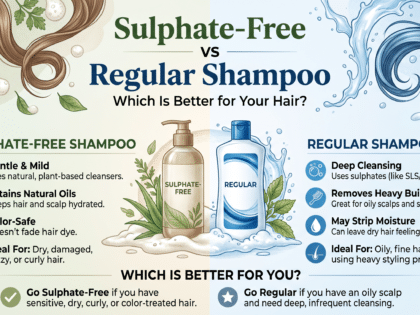
Sulphate-Free Shampoo vs Regular Shampoo
A sulphate-free shampoo may be useful for people whose hair feels dry after washing, those with colour-treated hair, or those who prefer a gentler cleansing experience.
However, sulphates are not automatically harmful. Some sulphate-containing shampoos can be suitable for oily scalps and people who need stronger cleansing.
| Hair concern | Shampoo selection |
|---|---|
| Dry and rough hair | Moisturising or conditioning shampoo |
| Frizzy hair | Smoothing shampoo |
| Oily scalp | Effective cleansing shampoo suited to frequent washing |
| Colour-treated hair | Shampoo formulated for colour-treated hair |
| Fine, flat hair | Lightweight shampoo that does not leave excessive residue |
| Curly hair | Moisturising shampoo suited to curly hair |
| Product buildup | Occasional clarifying shampoo, as needed |
How to Shampoo Hair Correctly
The way we wash our hair matters almost as much as the shampoo we choose.
- Wet the scalp and hair thoroughly with lukewarm water.
- Apply a suitable amount of shampoo to the scalp.
- Massage gently with the fingertips rather than scratching with the nails.
- Allow the lather to cleanse the lengths as it rinses through them.
- Rinse thoroughly to remove all shampoo residue.
- Follow with conditioner, focusing on the mid-lengths and ends.
We should avoid aggressively rubbing the hair lengths together because wet hair is more vulnerable to stretching and breakage.
3. Use a Hair Mask for Soft, Silky, and Manageable Hair
A hair mask for dry and frizzy hair is a useful addition to a routine when regular conditioner does not provide enough softness or manageability.
Hair masks are typically formulated with a combination of conditioning agents, emollients, oils, silicones, and other ingredients that help smooth the hair surface. Depending on the formula, they may improve softness, reduce tangling, and make the hair look shinier.
Although hair masks can improve the appearance and feel of damaged hair, they cannot permanently restore severely damaged hair fibres to their original condition.
Benefits of Using a Hair Mask
Improves softness: Conditioning ingredients help reduce roughness and make hair feel smoother.
Helps control frizz: Smoothing agents reduce friction between strands and improve manageability.
Enhances shine: A smoother hair surface reflects light more evenly, creating a shinier appearance.
Makes detangling easier: Hair masks can help reduce knots and the force needed to comb through the hair.
Supports damaged-looking hair: Conditioning formulations can temporarily improve the feel of hair affected by heat styling, colouring, and dryness.
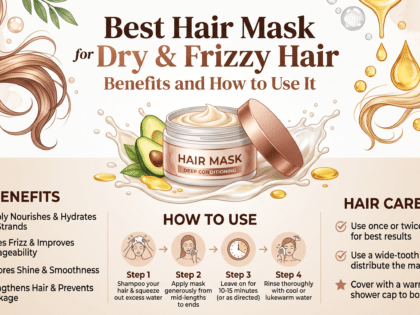
How to Use a Hair Mask for Best Results
To get the most from a hair mask, we should follow the instructions on the product label.
- Shampoo the hair and rinse thoroughly.
- Gently squeeze out excess water.
- Apply the mask evenly to the mid-lengths and ends.
- Distribute the product using the fingers or a wide-tooth comb, if appropriate.
- Leave it on for the recommended time.
- Rinse thoroughly unless the product is specifically designed to be left in the hair.
Most hair masks do not need to be applied directly to the scalp unless the product label recommends scalp application.
How Often Should We Use a Hair Mask?
The ideal frequency depends on the hair type and the mask’s formulation.
- Dry or chemically treated hair: Once or twice a week may be helpful.
- Normal hair: Once a week may be sufficient.
- Fine hair: Use a lightweight mask less frequently if the hair becomes flat or greasy.
- Curly or coarse hair: A conditioning mask may be useful weekly or according to the hair’s needs.
Using more product than recommended does not necessarily provide better results. Excessive application may leave some hair types weighed down or coated.
4. Apply Hair Serum for Instant Smoothness and Shine
Hair serum is one of the most convenient products for improving the appearance of smooth, glossy hair. Unlike shampoo, which primarily cleanses, or a rinse-out mask, which provides conditioning during washing, a hair serum is often designed to remain on the hair.
A hair serum for frizzy hair can help smooth the hair surface, reduce friction, improve shine, and make the lengths easier to manage.
Many smoothing serums contain silicones, lightweight oils, or other conditioning ingredients. The best choice depends on whether our hair is fine, thick, curly, dry, or chemically treated.
Benefits of Hair Serum
- Helps reduce the appearance of frizz and flyaways.
- Improves shine and gives hair a polished finish.
- Helps strands glide against one another, supporting easier detangling.
- Can make dry ends look smoother.
- May help reduce friction from brushing and styling.
- Some formulations provide heat protection when specifically labelled for that purpose.
It is important to remember that not every hair serum is a heat protectant. We should check the product label before using a serum before blow-drying or heat styling.
How to Apply Hair Serum Correctly
The correct application technique helps us achieve shine without making the hair greasy.
Step 1: Start with a small amount. Use the quantity recommended by the manufacturer. For many products, a small amount is sufficient to begin with.
Step 2: Spread the serum between the palms. This helps distribute it more evenly.
Step 3: Apply to the lengths and ends. Concentrate on areas that look dry, rough, or frizzy.
Step 4: Avoid the scalp unless directed otherwise. Applying too much serum near the roots can make the hair look oily or flat.
Step 5: Comb gently if necessary. Use a wide-tooth comb or a suitable brush to distribute the product.
Step 6: Adjust the quantity. Thick or long hair may need more product than fine or short hair.
Some serums are designed for damp hair, while others work best on dry hair. Following the instructions on the label gives the most reliable results.
5. The Best Hair Care Routine for Smooth and Shiny Hair
For consistently smooth-looking hair, we should use shampoo, conditioner, hair masks, and serum in the correct order.

Step 1: Cleanse with shampoo
Wash the scalp with a shampoo suited to its oiliness and sensitivity. Avoid using very hot water and harsh scrubbing.

Step 2: Condition the lengths
Apply conditioner to the mid-lengths and ends. Leave it on as directed and rinse thoroughly.

Step 3: Use a hair mask regularly
Replace or supplement your regular conditioning step according to the mask’s instructions. Avoid layering multiple heavy products unnecessarily.

Step 4: Finish with hair serum
Apply a small amount to damp or dry lengths, depending on the formulation, to help control frizz and enhance shine.
Morning Hair Care Routine
In the morning, we can gently detangle the hair, apply a small amount of serum if needed, and use a suitable styling product to manage flyaways.
If we use a blow dryer or straightener, we should use an appropriate heat protectant and select the lowest effective temperature.
Night-Time Hair Care Routine
At night, we should remove tangles gently and avoid sleeping with hair tightly pulled back. A smooth pillowcase may help reduce friction for some people.
Hair does not need to be washed every day unless our scalp, lifestyle, or product use requires it. Washing frequency should be based on individual needs rather than a fixed rule.
6. Natural Ways to Make Hair Smooth and Shiny
Along with suitable hair care products, everyday habits can help maintain softer and more manageable hair.
Use Lukewarm Water
Very hot water can increase dryness for some people and may make the scalp uncomfortable. Lukewarm water is generally a practical choice for washing hair.
A final cool-water rinse may feel refreshing, but there is limited evidence that it independently produces a major improvement in hair shine.
Reduce Heat Styling
Frequent exposure to high temperatures can damage the hair cuticle and weaken the hair fibre. We should limit unnecessary straightening and curling, use an appropriate heat protectant, and avoid repeatedly passing hot tools over the same section.
Dry Hair Gently
Instead of rubbing wet hair vigorously with a towel, we should gently squeeze out excess water using a soft towel or microfibre towel.
Allowing the hair to air-dry when practical can also reduce heat exposure.
Choose a Suitable Hairbrush
A wide-tooth comb can help detangle wet hair, particularly when conditioner has been applied. We should start at the ends and work gradually upwards to reduce pulling and breakage.
Maintain a Balanced Diet
Hair requires adequate nutrition for normal growth. Protein, iron, zinc, and other nutrients play important roles in maintaining healthy hair.
We should aim for a balanced diet that includes suitable sources of protein, vegetables, fruit, whole grains, and healthy fats. Supplements should not be used routinely for hair growth unless a deficiency or specific need has been identified.
Protect Hair from Sun Exposure
Extended sun exposure may contribute to hair dryness and colour changes. Wearing a hat and using hair products formulated for UV protection may help reduce environmental damage.
7. How to Make Different Hair Types Smooth and Shiny
Not every hair type responds to the same combination of products. A routine should be adjusted to the texture, density, scalp condition, and level of damage.
| Hair type | Recommended approach |
|---|---|
| Dry hair | Moisturising shampoo, rich conditioner, and a nourishing mask |
| Frizzy hair | Smoothing conditioner, anti-frizz serum, and gentle drying |
| Fine hair | Lightweight conditioner and a small amount of serum |
| Curly hair | Moisturising products, gentle detangling, and frizz-control styling |
| Thick hair | Richer conditioning products and section-by-section serum application |
| Colour-treated hair | Colour-care shampoo, conditioner, and reduced heat exposure |
| Chemically damaged hair | Gentle handling, regular conditioning, and fewer chemical or heat treatments |
| Oily scalp with dry ends | Cleanse the scalp effectively and condition the lengths without overloading the roots |
How to Make Curly Hair Smooth Without Losing Its Natural Texture
Curly hair can be naturally more prone to dryness because scalp oils may not travel as easily along curved strands.
We should focus on gentle cleansing, consistent conditioning, careful detangling, and products designed to support curl definition. A lightweight leave-in conditioner or serum may help reduce frizz while preserving the natural curl pattern.
Smooth hair does not have to mean straight hair. Healthy-looking curls can also appear glossy, defined, and manageable.
How to Make Fine Hair Look Shiny Without Making It Greasy
Fine hair can become weighed down by heavy oils, rich masks, and excessive serum.
We should select lightweight formulas, concentrate conditioner on the ends, and begin with a small amount of finishing product. If the hair looks flat or greasy, reducing the quantity of serum may be more effective than changing the entire routine.
8. Common Hair Care Mistakes That Reduce Smoothness and Shine
Even high-quality products may not deliver the expected results when used incorrectly.
Using too much shampoo: Excessive amounts may make rinsing more difficult and can leave the hair feeling dry if the formula is too strong for the hair type.
Skipping conditioner: Shampooing without conditioning can leave hair more prone to tangling and friction.
Applying too much serum: Excess serum can create a greasy appearance, particularly on fine hair.
Using a hair mask every day without a need: Some masks can weigh hair down when used too frequently.
Rubbing wet hair with a towel: Vigorous rubbing increases friction and may contribute to breakage.
Using high heat repeatedly: Excessive heat can damage the hair fibre, even when the hair initially appears smoother after styling.
Expecting permanent repair from cosmetic products: Most shampoos, masks, and serums improve the appearance and feel of hair rather than permanently repairing structural damage.
Ignoring scalp problems: Persistent itching, scaling, inflammation, or unusual hair loss may require professional assessment rather than additional cosmetic products.
9. How Long Does It Take to Get Smooth and Shiny Hair?
The time required to notice an improvement depends on the hair’s condition, the products used, and daily styling habits.
- After the first wash: A suitable conditioner or smoothing serum may make hair feel softer and look shinier.
- Within one to two weeks: Consistent cleansing, conditioning, and reduced heat exposure may improve manageability and reduce tangling.
- Over several weeks: Better handling habits may help reduce ongoing mechanical damage and breakage.
- Over the longer term: Maintaining an appropriate routine can help preserve the condition of new growth and reduce avoidable damage to the lengths.
These time frames are general expectations, not guaranteed results. Severely damaged hair may not regain its original texture, and split ends cannot be permanently repaired by shampoo or serum. Trimming damaged ends may improve the overall appearance.
10. How to Choose the Right Hair Care Products for Best Results
Choosing the right products begins with identifying our main hair concern.
If our hair feels rough immediately after shampooing, we may benefit from a gentler cleanser or a more conditioning formula.
If our hair feels soft but still becomes frizzy in humid weather, a smoothing serum or suitable leave-in product may help.
If our hair tangles easily and feels dry through the lengths, a conditioning mask may provide additional softness and manageability.
If our scalp becomes oily quickly but the ends remain dry, we should select a shampoo for the scalp and apply conditioner mainly to the lengths.
We should also review the ingredient list, product directions, and suitability for colour-treated or chemically processed hair when relevant. A higher price does not automatically mean a better result.
For a practical hair care routine, we can begin with three essentials:
- A suitable shampoo to cleanse the scalp without excessive dryness.
- A conditioning hair mask or conditioner to improve softness and reduce tangling.
- A hair serum to smooth the hair surface, control frizz, and enhance shine.
Consistency is more important than using a large number of products. A simple routine that suits our hair type is often easier to maintain and evaluate.
11. Frequently Asked Questions About Smooth and Shiny Hair
Which shampoo is best for smooth and shiny hair?
The best shampoo depends on the scalp condition and hair type. Moisturising or smoothing shampoos may be suitable for dry, rough, or frizzy hair, while lightweight cleansing formulas may work better for fine or oily hair.
Can we use hair serum every day?
Many hair serums can be used daily when applied in suitable quantities and according to the label. However, fine hair may need less product, and some formulas are better suited to occasional use.
Should we apply hair serum to wet or dry hair?
Both methods can be appropriate. Some serums are designed for damp hair before styling, while others are intended for dry hair to control frizz and enhance shine. We should follow the product’s instructions.
Is a hair mask better than a conditioner?
Hair masks often provide more intensive conditioning than everyday conditioners, but this depends on the formulation. A conditioner is useful for regular detangling and softness, while a mask can provide additional conditioning when hair feels particularly dry or damaged.
Can we make hair silky smooth naturally?
Gentle washing, regular conditioning, reduced heat exposure, careful detangling, and a balanced diet can help support healthy-looking hair. Natural oils may improve lubrication and shine for some hair types, but they cannot permanently repair damaged hair fibres.
Does sulphate-free shampoo make hair shinier?
Not necessarily. Sulphate-free shampoos may be suitable for people who prefer gentler cleansing, but shine depends on the overall formulation, conditioning routine, hair condition, and styling habits.
How often should we wash our hair?
The ideal frequency depends on scalp oiliness, activity level, hair texture, and product use. Some people benefit from daily washing, while others need to wash less frequently. The goal is to keep the scalp clean without making the hair excessively dry.
Can a hair serum repair split ends?
A serum can temporarily smooth split ends and make them less noticeable, but it cannot permanently join the damaged hair fibres. Trimming split ends is the most reliable way to remove them.
Why is my hair still frizzy after using shampoo and serum?
Frizz may persist because of humidity, hair damage, insufficient conditioning, product buildup, or an unsuitable formula. We should review our washing technique, use an appropriate conditioner or mask, and avoid excessive heat styling.
What is the best routine for shiny hair at home?
A practical routine includes a suitable shampoo, regular conditioning, a hair mask when needed, gentle drying, and a small amount of serum. Limiting heat damage and avoiding rough handling can further improve the appearance of the hair.
Conclusion: Build a Consistent Routine for Smooth and Shiny Hair
Achieving smooth, shiny, and manageable hair requires a combination of suitable products and gentle hair care habits. The right shampoo cleanses the scalp, a hair mask or conditioner improves softness and manageability, and a hair serum helps control frizz and enhance shine.
We should select products according to our hair type, apply them correctly, and avoid unnecessary heat and mechanical damage. Fine hair may need lightweight formulas, while dry, curly, or chemically treated hair may benefit from richer conditioning products.
Rather than relying on a single miracle product, we should build a consistent routine that addresses our hair’s specific needs. With regular care, appropriate cleansing, effective conditioning, and careful styling, we can help our hair look smoother, shinier, and healthier every day.