
Aloe Vera Face Wash Benefits: How to Choose a Cleanser for Your Skin Type
-
Dokmai London
- Posted on
- 0 comments
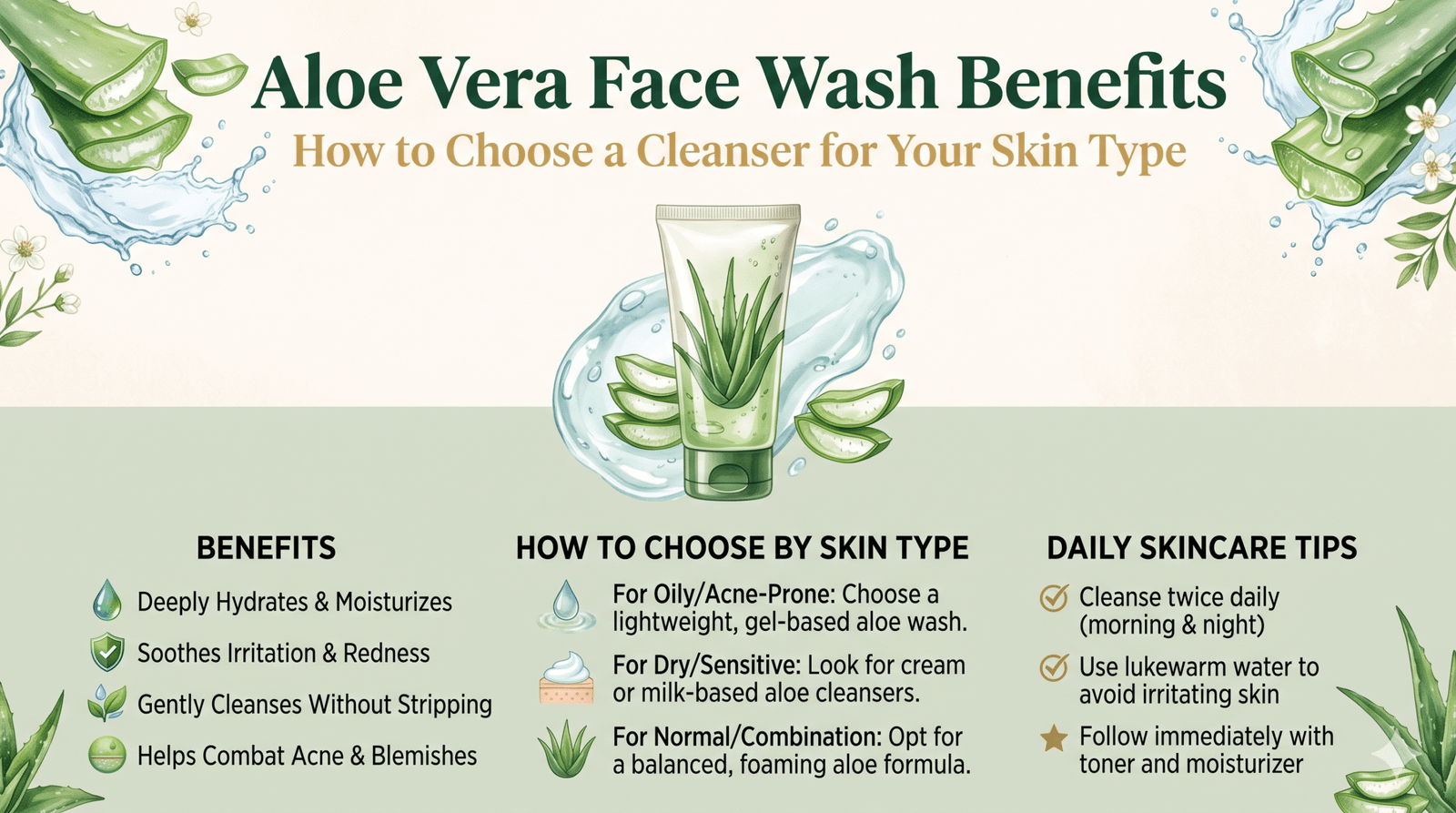
Choosing the right face wash is one of the most important steps in maintaining healthy, fresh-looking skin. With so many skincare products available, finding a cleanser that removes impurities without leaving the skin feeling dry or uncomfortable can be challenging. An aloe vera face wash is a popular choice for people looking for a gentle cleansing experience combined with the soothing properties of aloe vera.
Aloe vera has been widely used in skincare because of its moisturising and skin-conditioning properties. When incorporated into a facial cleanser, it can help support a comfortable cleansing routine while removing everyday dirt, excess oil, sweat, and product residue. However, the effectiveness of a face wash depends on its complete formulation, the concentration of its ingredients, and how well it suits your skin type.
In this comprehensive guide, we explore the benefits of aloe vera face wash, how to choose the right cleanser for your skin type, which ingredients to look for, and how to incorporate aloe vera into your daily skincare routine.
What Is Aloe Vera Face Wash?
An aloe vera face wash is a facial cleanser formulated with aloe vera extract, aloe leaf juice, or other aloe-derived ingredients. Its primary purpose is to cleanse the skin while providing a soothing and comfortable washing experience.
Aloe vera contains water, polysaccharides, and other naturally occurring compounds that contribute to its skin-conditioning properties. Depending on the formulation, these components may help the skin feel hydrated and refreshed after cleansing.
Unlike some harsh cleansers that can leave the skin feeling tight, a well-formulated aloe vera face wash can help maintain a more comfortable skin feel. However, the overall cleansing experience depends on the surfactants, moisturising agents, fragrance, and other ingredients used in the product.
A good aloe vera cleanser should ideally:
- Remove dirt, sweat, excess oil, and everyday impurities.
- Cleanse without excessively stripping the skin.
- Leave the face feeling fresh and comfortable.
- Suit your particular skin type and skincare needs.
- Fit easily into your morning and evening skincare routine.
When selecting an aloe vera face wash, we should look beyond the ingredient name and evaluate the entire formulation.
Top Benefits of Aloe Vera Face Wash for Healthy-Looking Skin
Aloe vera face wash can be a useful addition to a daily skincare routine when the formula is suitable for your skin. Let us explore its potential benefits in detail.
1. Helps Cleanse Dirt and Everyday Impurities
Throughout the day, the skin accumulates sweat, environmental particles, excess sebum, and residue from sunscreen or other skincare products. If these impurities are not removed effectively, the skin may feel greasy or uncomfortable.
An aloe vera face wash uses cleansing agents to lift and remove these substances from the skin’s surface. Aloe vera contributes primarily through its skin-conditioning properties, while the cleanser’s surfactants perform most of the cleansing work.
For the best results, choose a formula that removes impurities without leaving your skin feeling excessively dry or tight.
2. Supports Skin Hydration and Comfort
One of the commonly appreciated benefits of aloe vera in skincare is its ability to help the skin feel hydrated and comfortable.
Aloe-derived ingredients can contribute to a moisturised skin feel, although a cleanser is rinsed off after a short period of contact. For this reason, the hydrating effect of an aloe vera face wash depends heavily on the overall formula.
Ingredients such as glycerin, panthenol, and other humectants can complement aloe vera by helping attract and retain moisture in the outermost layer of the skin.
For people who experience tightness after washing their face, choosing a gentle aloe vera cleanser with moisturising ingredients may improve the cleansing experience.
3. Helps Soothe the Feeling of Skin Irritation
Skin can sometimes feel uncomfortable after exposure to dry weather, frequent washing, environmental conditions, or unsuitable skincare products.
Aloe vera is commonly used in skincare formulations because of its soothing and conditioning properties. A suitable aloe vera face wash may help the skin feel refreshed and comfortable after cleansing.
However, aloe vera face wash is not a medical treatment for eczema, rosacea, allergic reactions, or other inflammatory skin conditions. If irritation persists, it is better to identify the underlying cause and seek advice from a qualified dermatologist.
People with sensitive skin should also check the complete ingredient list because fragrance, essential oils, and certain preservatives may trigger irritation in susceptible individuals.
4. Helps Remove Excess Oil Without Over-Cleansing
Excess sebum can make the face appear shiny, particularly around the forehead, nose, and chin. A suitable facial cleanser helps remove excess oil and surface impurities.
An aloe vera face wash may be beneficial for oily skin when combined with effective but gentle cleansing agents.
The objective is not to remove every trace of natural oil. Sebum contributes to the skin’s protective barrier, and excessive cleansing can leave the skin feeling dry or irritated.
For oily skin, look for a lightweight cleanser that rinses cleanly without leaving a heavy residue.
5. Supports a Fresh and Smooth Skin Appearance
Regular cleansing helps remove surface buildup that can make skin appear dull or feel rough. When the skin is clean and comfortable, it may look fresher and feel smoother.
Aloe vera face wash can support this process as part of a consistent skincare routine.
However, cleansing alone cannot remove deep pigmentation, eliminate acne scars, or permanently transform skin texture. These concerns may require additional skincare ingredients or professional treatment, depending on their cause.
For a healthy-looking complexion, combine gentle cleansing with moisturising, sun protection, and suitable treatments for your specific concerns.
6. Can Complement an Acne-Prone Skincare Routine
People with acne-prone skin often need a cleanser that removes excess oil, sweat, and cosmetic residue without causing unnecessary irritation.
A gentle aloe vera face wash may serve as a basic cleanser if its formulation is non-comedogenic and suitable for acne-prone skin.
However, aloe vera itself is not an established substitute for proven acne treatments. Depending on the severity of acne, ingredients such as salicylic acid or benzoyl peroxide may be more appropriate.
When choosing a cleanser, avoid formulas that leave a heavy residue or cause persistent dryness. If acne is painful, severe, or leaving scars, consult a dermatologist.
7. Fits Easily into a Daily Skincare Routine
An aloe vera face wash can be used in a simple morning and evening skincare routine, provided it suits your skin and does not cause irritation.
In the morning, cleansing helps remove overnight sweat and excess oil. In the evening, it helps remove daily impurities and prepares the skin for moisturiser and other skincare products.
A consistent routine is generally more useful than frequently switching between different cleansers.
How to Choose Aloe Vera Face Wash According to Your Skin Type
The best face wash is not necessarily the one with the most ingredients or the strongest cleansing action. It is the one that effectively cleans your skin while maintaining comfort and supporting your skin barrier.

1. Aloe Vera Face Wash for Dry Skin
Dry skin often feels tight, rough, or flaky after cleansing. We recommend choosing a gentle, low-irritation cleanser containing aloe vera alongside moisturising ingredients such as glycerin or panthenol.
Avoid excessively harsh cleansers and products that consistently leave your skin feeling stripped. After washing, apply a moisturiser containing ingredients such as ceramides to support the skin barrier.

2. Aloe Vera Face Wash for Oily Skin
Oily skin benefits from a cleanser that removes excess sebum without causing excessive dryness. Look for a lightweight, rinse-off formula that does not leave a greasy film.
An aloe vera face wash may be suitable for daily cleansing, but it should not be expected to permanently reduce oil production. If clogged pores and blackheads are concerns, a suitable salicylic acid product may provide additional benefits.

3. Aloe Vera Face Wash for Combination Skin
Combination skin typically has an oilier T-zone and comparatively dry cheeks. The ideal cleanser balances effective cleansing with a comfortable, non-stripping finish.
Choose a gentle aloe vera face wash that works across the entire face. If your cheeks feel tight while your forehead remains oily, avoid increasing cleansing frequency and consider adjusting your moisturiser instead.

4. Aloe Vera Face Wash for Sensitive Skin
Sensitive skin can react to fragrance, essential oils, strong cleansing agents, and other ingredients. Choose a fragrance-free cleanser with a short, clearly disclosed ingredient list whenever possible.
Aloe vera does not automatically make a product suitable for sensitive skin. Patch-test a new product and discontinue use if you experience burning, persistent redness, itching, or swelling.

5. Aloe Vera Face Wash for Normal Skin
Normal skin generally benefits from a balanced cleanser that removes everyday impurities without leaving the skin uncomfortable.
A gentle aloe vera face wash can be a convenient everyday option. Select a formula that rinses easily, suits your preferences, and does not cause dryness or irritation.
Which Ingredients Should We Look for in an Aloe Vera Face Wash?
A product’s overall formulation is more important than any single highlighted ingredient. When comparing aloe vera cleansers, consider the following ingredients and their functions.
| Ingredient | Potential role in a cleanser |
|---|---|
| Aloe vera extract or leaf juice | Skin conditioning and a soothing skin feel |
| Glycerin | Helps attract moisture to the outer layer of skin |
| Panthenol | Helps condition skin and support moisture retention |
| Mild surfactants | Remove dirt, oil, and surface impurities |
| Ceramides | Support the skin barrier when included in a suitable formula |
| Niacinamide | May support the skin barrier and improve uneven-looking skin over time, depending on the formulation and exposure |
| Salicylic acid | Helps exfoliate inside pores in suitable acne-focused products |
Not every aloe vera face wash needs all these ingredients. In particular, ceramides and niacinamide may be more useful in certain leave-on products than in a cleanser that is quickly rinsed off.
We should also examine the fragrance, preservatives, and cleansing agents to determine whether a product is appropriate for our skin.
How to Use Aloe Vera Face Wash Correctly
Even a suitable cleanser may cause discomfort if we use it incorrectly or wash too frequently.
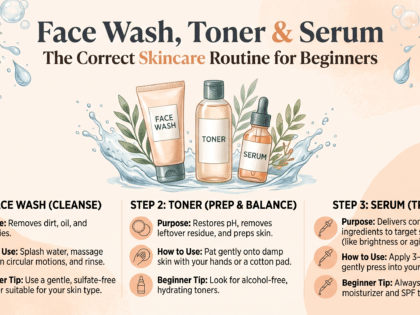
Follow these simple steps for an effective cleansing routine.
Step 1: Wet Your Face with Lukewarm Water
Begin by splashing your face with lukewarm water. Avoid very hot water because it can increase dryness and irritation, particularly in people with sensitive skin.
Step 2: Apply a Small Amount of Face Wash
Dispense an appropriate amount of aloe vera face wash into your palm. Follow the product’s directions and avoid using more cleanser than necessary.
Step 3: Massage Gently
Apply the cleanser to your face using your fingertips. Massage gently in circular motions, paying attention to areas where oil and impurities tend to accumulate.
Avoid vigorous rubbing, abrasive scrubbing, and excessive pressure around the eyes.
Step 4: Rinse Thoroughly
Rinse your face with lukewarm water until the cleanser has been completely removed. Residue around the hairline, nose, and jawline can sometimes contribute to discomfort.
Step 5: Pat Your Skin Dry
Use a clean, soft towel to pat your face dry. Avoid rubbing the skin aggressively.
Step 6: Apply Moisturiser and Sunscreen
Apply a suitable moisturiser after cleansing to help maintain skin hydration.
During the day, finish your routine with a broad-spectrum sunscreen of SPF 30 or higher. Sunscreen is particularly important if you are concerned about tanning, dark spots, and uneven skin tone.
For most people, washing the face twice daily is sufficient, although dry or sensitive skin may require a more personalised approach.
Aloe Vera Face Wash vs. Other Facial Cleansers
Understanding how aloe vera cleansers compare with other types of face wash can make product selection easier.
| Cleanser type | Best suited for | Main consideration |
|---|---|---|
| Aloe vera face wash | People seeking gentle cleansing and skin conditioning | Check the complete formulation |
| Salicylic acid cleanser | Some people with oily, congested, or acne-prone skin | May cause dryness or irritation |
| Cream cleanser | Dry or sensitive skin | Look for a formula that rinses comfortably |
| Foaming cleanser | People who prefer a fresh, lightweight cleansing feel | Some formulas may be too drying |
| Fragrance-free gentle cleanser | Sensitive or reactive skin | Fragrance-free does not guarantee zero irritation |
| Exfoliating cleanser | Selected skin concerns involving surface buildup | Frequent use may irritate the skin |
There is no single cleanser that is best for everyone. The most suitable option depends on your skin type, concerns, tolerance, and the ingredients used in the product.
Can Aloe Vera Face Wash Help with Pimples and Acne?
Aloe vera face wash may help remove excess oil and impurities that accumulate on acne-prone skin. A gentle cleanser can also help reduce irritation caused by aggressive washing.
However, aloe vera face wash alone is unlikely to be sufficient for treating persistent acne.
Acne develops through several mechanisms, including clogged hair follicles, excess sebum, inflammation, and the activity of acne-associated bacteria. A cleanser that contains aloe vera does not necessarily address all these factors.
For acne-prone skin, consider the following routine:
- Use a gentle cleanser suited to your skin.
- Select non-comedogenic moisturisers and sunscreen.
- Introduce proven acne treatments when appropriate.
- Avoid squeezing pimples or scrubbing the skin.
- Seek professional advice if acne is severe or persistent.
Salicylic acid and benzoyl peroxide are established options for certain types of acne, but suitability depends on individual circumstances and tolerance.
Can Aloe Vera Face Wash Remove Tan and Dark Spots?
Many people look for an aloe vera face wash to address tanning, dullness, and uneven skin tone. While cleansing helps remove surface impurities, it does not directly remove the excess pigment responsible for most dark spots.
Aloe vera may contribute to a comfortable skincare routine, but an aloe vera face wash should not be considered a proven tan-removal or pigmentation treatment.
For concerns about tanning and uneven skin tone, a more useful approach includes:
- Applying broad-spectrum SPF 30 or higher sunscreen every day.
- Reapplying sunscreen as directed, particularly after sweating or swimming.
- Using suitable skincare ingredients, such as niacinamide or vitamin C, if tolerated.
- Avoiding harsh scrubs and unverified skin-lightening products.
- Consulting a dermatologist for persistent pigmentation or melasma.
Consistency with sun protection is especially important because repeated ultraviolet exposure can worsen existing pigmentation.
Common Mistakes to Avoid When Using Aloe Vera Face Wash
To get the most from your skincare routine, avoid these common mistakes.
1. Choosing a Product Based Only on Its Aloe Vera Content
Aloe vera is only one component of a cleanser. The overall formula, cleansing agents, fragrance, and other ingredients all influence its suitability.
2. Washing Your Face Too Frequently
Excessive washing can disrupt the skin’s natural barrier and cause dryness, irritation, or a tight feeling. Cleanse as needed rather than repeatedly washing your face throughout the day.
3. Expecting Immediate Results for Every Skin Concern
A face wash can improve cleanliness and comfort, but it will not necessarily resolve acne, pigmentation, fine lines, or scarring.
4. Ignoring the Moisturiser Step
Cleansing is only one part of skincare. Applying a suitable moisturiser helps support hydration and reduce moisture loss.
5. Skipping Sunscreen
Aloe vera face wash does not replace sunscreen. Daily sun protection helps protect the skin from ultraviolet damage and supports efforts to manage uneven skin tone.
6. Ignoring Signs of Irritation
If a product causes persistent burning, itching, redness, or swelling, stop using it. Seek medical advice if symptoms are severe or do not improve.
How to Choose a Good Aloe Vera Face Wash Before Buying
Before purchasing an aloe vera face wash, evaluate the product using the following checklist.
- Skin type: Does the product suit dry, oily, combination, normal, or sensitive skin?
- Cleansing agents: Does the formula cleanse effectively without excessive stripping?
- Ingredient list: Are aloe vera and other ingredients clearly disclosed?
- Fragrance: Would a fragrance-free option be more appropriate for your skin?
- Additional ingredients: Does the formula contain useful moisturising or conditioning ingredients?
- Product claims: Are claims about acne, pigmentation, hydration, or skin brightening realistic?
- Usage directions: Are the instructions clear and suitable for regular use?
- Personal tolerance: Does the product leave your skin comfortable after rinsing?
We should also consider whether the face wash fits into our existing skincare routine. A simple cleanser that suits our skin consistently can be more useful than an expensive product with an unnecessarily complicated ingredient list.
Frequently Asked Questions About Aloe Vera Face Wash
1. Is aloe vera face wash good for daily use?
Yes, a well-formulated aloe vera face wash can be used daily if it suits your skin and does not cause irritation. Follow the manufacturer’s directions and adjust cleansing frequency if your skin becomes dry or sensitive.
2. Can we use aloe vera face wash on oily skin?
Yes. Aloe vera face wash may be suitable for oily skin when the formula effectively removes excess sebum without leaving the skin excessively dry. People with persistent clogged pores may benefit from an additional acne-focused treatment.
3. Is aloe vera face wash suitable for dry skin?
It can be suitable for dry skin if it contains gentle cleansing agents and does not strip away too much moisture. Formulas with glycerin or panthenol may offer a more comfortable cleansing experience.
4. Can aloe vera face wash brighten the skin?
Aloe vera face wash can help remove surface impurities, allowing the skin to look fresher. However, it is not a guaranteed skin-brightening or pigmentation treatment. Sunscreen and suitable leave-on skincare products are more relevant for managing uneven skin tone.
5. Does aloe vera face wash help reduce pimples?
It may support basic cleansing for acne-prone skin, but aloe vera alone is not a proven standalone acne treatment. Persistent or severe acne may require established treatments and advice from a dermatologist.
6. Can we use aloe vera face wash twice a day?
Many people can use a suitable cleanser in the morning and evening. If your skin becomes dry, tight, or irritated, consider reducing the frequency and choosing a gentler formula.
7. Is aloe vera face wash better than a regular face wash?
Not necessarily. Aloe vera face wash is not automatically better than other cleansers. The best choice depends on your skin type, the cleansing agents, additional ingredients, and how your skin responds to the formula.
8. Can sensitive skin use aloe vera face wash?
Some people with sensitive skin can use aloe vera cleansers comfortably. However, aloe vera does not eliminate the possibility of irritation from fragrance or other ingredients. A fragrance-free formula and a patch test are sensible precautions.
9. Should we moisturise after using aloe vera face wash?
Yes. Applying a suitable moisturiser after cleansing helps maintain hydration and supports the skin barrier. During the day, follow with sunscreen.
10. How long does it take to see results from aloe vera face wash?
The cleansing effect is immediate, but changes in dryness, comfort, or overall appearance depend on the product and your skin. Concerns such as acne and pigmentation may require separate treatments and several weeks of consistent care.
Conclusion: Is Aloe Vera Face Wash the Right Choice for Your Skin?
An aloe vera face wash can be a useful part of a balanced skincare routine, particularly for people who want gentle cleansing combined with skin-conditioning ingredients. Its potential benefits include removing everyday impurities, supporting a comfortable skin feel, and complementing a routine designed around hydration and skin-barrier care.
However, choosing the right cleanser requires more than looking for aloe vera on the label. We should consider our skin type, the cleansing agents, additional ingredients, fragrance, and the product’s overall formulation.
For dry skin, a gentle cleanser with moisturising ingredients may be preferable. For oily skin, a lightweight formula that removes excess sebum without over-drying can be a practical choice. For sensitive skin, fragrance-free products with a straightforward ingredient list may reduce the likelihood of irritation.
Most importantly, we should remember that healthy-looking skin depends on a consistent skincare routine, not a single product. Combine appropriate cleansing with moisturising, daily sunscreen, and targeted treatments when needed.
By selecting an aloe vera face wash that suits our individual needs and using it correctly, we can build a practical skincare routine that supports clean, comfortable, and healthy-looking skin.