
Best Hair Mask for Dry and Frizzy Hair: Benefits and How to Use It
-
Dokmai London
- Posted on
- 0 comments
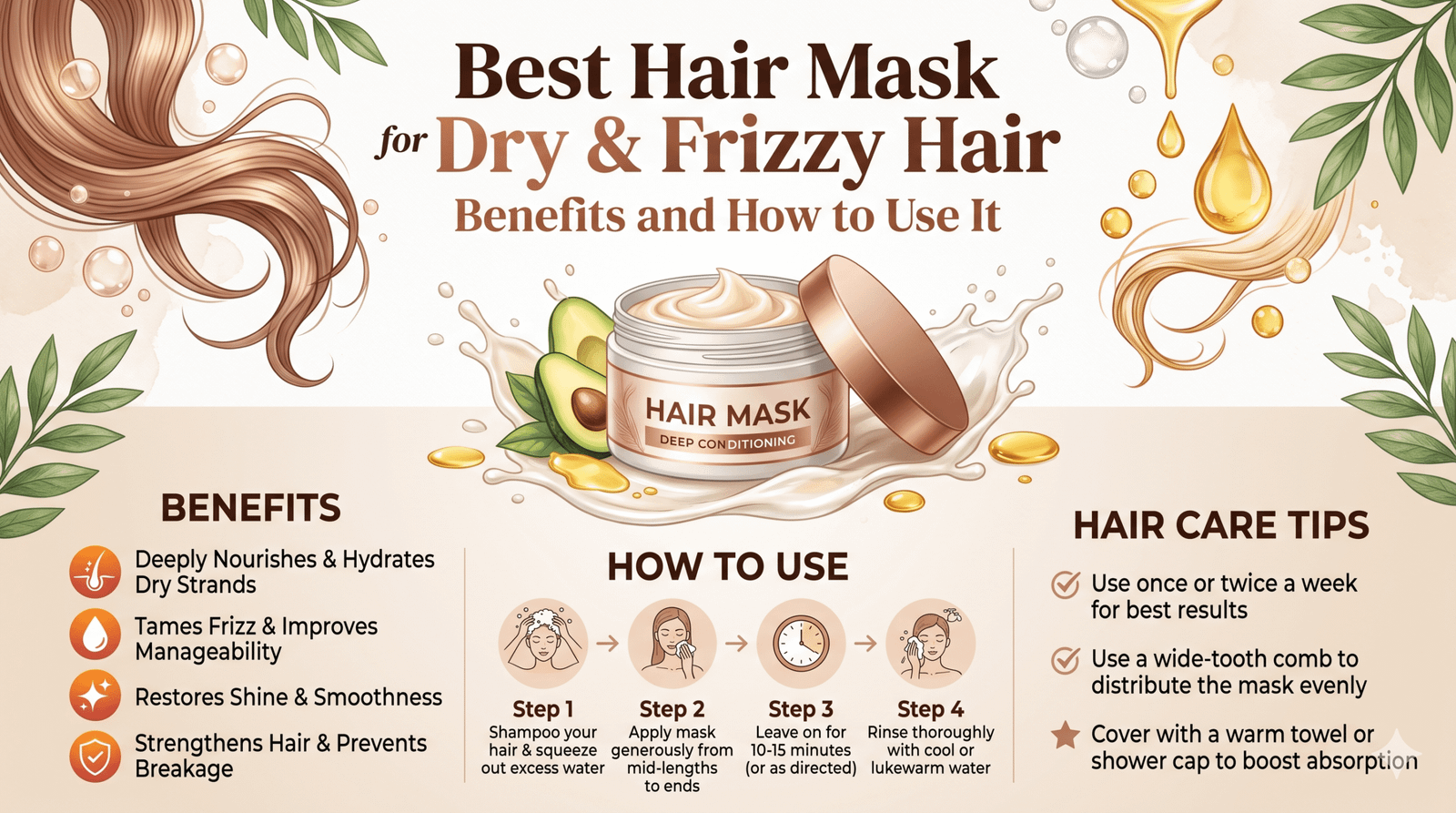
Dry and frizzy hair can make everyday styling challenging, leaving hair looking dull, rough, tangled, and difficult to manage. Factors such as heat styling, frequent shampooing, chemical treatments, environmental pollution, sun exposure, and humidity can contribute to moisture loss and damage to the hair’s outer protective layer. Fortunately, incorporating the best hair mask for dry and frizzy hair into a regular hair care routine can help improve softness, smoothness, shine, and manageability.
A hair mask is a conditioning treatment designed to provide more intensive care than a regular conditioner. Depending on its formulation, it may contain nourishing oils, conditioning agents, proteins, humectants, and other ingredients that help smooth the hair surface, reduce friction, and improve the appearance of damaged strands.
Choosing the right hair mask and applying it correctly can make a noticeable difference in how dry, frizzy hair looks and feels. In this guide, we explore the benefits of hair masks, the ingredients to look for, how to use a hair mask effectively, and the best practices for maintaining soft, healthy-looking hair.
What Is a Hair Mask for Dry and Frizzy Hair?
A hair mask for dry and frizzy hair is an intensive conditioning product formulated to improve the texture, softness, and manageability of hair that lacks moisture or feels rough. Unlike lightweight conditioners designed primarily for quick detangling, many hair masks contain richer conditioning ingredients that remain on the hair for several minutes.
Hair masks work mainly by coating and conditioning the hair fibre, smoothing raised areas of the cuticle, and reducing friction between individual strands. Some formulas also contain ingredients that help hair retain moisture, while protein-based treatments can temporarily improve the feel and strength of damaged hair.
Dry hair often feels coarse and appears dull because its surface does not reflect light as evenly as smooth hair. Frizzy hair, meanwhile, may develop when strands absorb moisture unevenly from the environment or when the cuticle becomes damaged.
Using an appropriate hair mask can help address these concerns by improving the hair’s surface condition and making it easier to comb, style, and maintain.
Benefits of Using the Best Hair Mask for Dry and Frizzy Hair
A well-formulated hair mask can offer several benefits when used consistently as part of a suitable hair care routine.
1. Helps Improve Hair Softness
One of the most noticeable benefits of a hair mask is improved softness. Conditioning ingredients form a thin layer over the hair shaft, helping reduce roughness and friction.
Ingredients such as fatty alcohols, conditioning agents, and plant oils can make the hair feel smoother and more flexible. This is particularly helpful for hair that feels coarse after frequent heat styling, colouring, or exposure to harsh environmental conditions.
Regular conditioning can also make hair easier to handle during brushing and styling.
2. Helps Reduce Frizz and Flyaways
Frizz occurs for several reasons, including humidity, dryness, hair damage, and natural hair texture. When the hair’s surface is rough or strands absorb moisture unevenly, the hair may become puffy and difficult to control.
A smoothing hair mask for frizzy hair can help by coating the hair fibre, reducing friction, and improving surface smoothness. Some formulas also contain silicones or other film-forming ingredients that help control flyaways and provide a smoother finish.
Although a hair mask cannot permanently change hair structure, it can improve manageability and make frizz easier to control.
3. Improves Hair Shine
Healthy-looking hair often appears shiny because its surface reflects light more evenly. Rough or damaged hair may scatter light, making it look dull.
Hair masks containing conditioning agents, oils, and smoothing ingredients can help create a more uniform hair surface. This may improve shine and give the hair a healthier-looking finish.
For best results, choose a mask suitable for your hair type and avoid applying excessive product near the roots, particularly if your hair is fine or naturally oily.
4. Helps Detangle Hair and Reduce Breakage During Combing
Dry hair can become tangled because individual strands create friction against one another. Excessive pulling during detangling may lead to breakage, especially when the hair is already weakened by chemical processing or heat damage.
Hair masks can improve slip, allowing a comb or fingers to move through the hair more easily. This helps reduce the mechanical stress associated with detangling.
For additional protection, use a wide-tooth comb and start detangling from the ends before gradually moving towards the roots.
5. Supports the Appearance of Damaged Hair
Heat styling, bleaching, colouring, and chemical straightening can alter the hair’s structure and leave it feeling rough or brittle.
Conditioning masks can temporarily improve the appearance and feel of damaged hair by smoothing the surface and reducing friction. Products containing hydrolysed proteins may also help improve the feel and manageability of damaged strands.
However, hair is made of non-living keratin fibres, so a cosmetic mask cannot permanently repair every form of structural damage. Severely split or broken ends may require trimming.
6. Helps Maintain Moisture and Flexibility
Hair that feels excessively dry may benefit from products containing humectants, emollients, and conditioning agents.
Humectants, such as glycerin, attract water under suitable conditions. Emollient ingredients help soften the hair, while conditioning agents can improve smoothness and reduce friction.
The combination of these ingredients can help hair feel more flexible and less rough. The best formula depends on your hair’s porosity, thickness, texture, and styling history.
Best Ingredients to Look for in a Hair Mask for Dry and Frizzy Hair
When selecting a hair mask, understanding the ingredients can help you choose a product that matches your hair’s specific needs.
| Ingredient | Main benefit |
|---|---|
| Argan oil | Helps soften hair and improve shine |
| Coconut oil | Can help reduce protein loss in certain hair types when used appropriately |
| Shea butter | Provides emollient conditioning, particularly for coarse hair |
| Glycerin | Attracts moisture under suitable environmental conditions |
| Panthenol (Provitamin B5) | Helps improve conditioning, softness, and manageability |
| Hydrolysed proteins | Can temporarily improve the feel and strength of damaged hair |
| Cationic conditioning agents | Help reduce static, friction, and tangling |
| Fatty alcohols | Provide emollient conditioning and improve product texture |
| Silicones | Help smooth the hair surface, improve slip, and reduce friction |
Argan Oil for Soft and Shiny Hair
Argan oil is widely used in hair care products because it contains fatty acids and other naturally occurring compounds that contribute to its emollient properties.
In a hair mask, argan oil can help soften dry strands, improve smoothness, and enhance shine. It may be particularly suitable for medium-to-coarse hair that needs additional conditioning.
Coconut Oil for Hair Conditioning
Coconut oil is commonly used in hair care because it can penetrate the hair fibre to some extent and may help reduce protein loss under certain conditions.
It can be useful for some people with dry or damaged hair, although the amount and frequency of application should depend on hair texture and tolerance.
Shea Butter for Coarse and Very Dry Hair
Shea butter provides rich emollient conditioning and can help coarse or tightly curled hair feel softer and more manageable.
However, richer formulas may weigh down fine hair. People with thin hair may prefer lightweight masks containing conditioning agents and smaller amounts of oils.
Hydrolysed Proteins for Damaged Hair
Hydrolysed proteins are broken-down protein ingredients used in many conditioning treatments. Depending on their formulation, they can temporarily improve the feel, body, and manageability of damaged hair.
Protein-rich products are not essential for everyone. If hair begins to feel unusually stiff or rough after repeated protein treatments, consider reducing their frequency and choosing a more moisturising conditioner instead.
How to Choose the Best Hair Mask for Your Hair Type
The most suitable hair mask depends on your hair’s texture, condition, and styling routine. A product that works well for thick, curly hair may be too heavy for fine, straight hair.
For Dry and Frizzy Hair
Choose a mask containing conditioning agents, fatty alcohols, and emollients. Ingredients such as argan oil, panthenol, and suitable smoothing agents may help improve softness and manageability.
Look for a formula that provides enough conditioning without leaving your hair greasy or limp.
For Curly and Wavy Hair
Curly and wavy hair often benefits from conditioning products that improve slip and reduce tangling.
Consider a richer mask containing shea butter, oils, or other emollient ingredients if your hair is coarse or highly porous. Apply the product evenly to the lengths and ends to help maintain definition and reduce the appearance of frizz.
For Fine and Thin Hair
Fine hair can become weighed down by heavy oils and butters. Choose a lightweight hair mask that focuses on conditioning, detangling, and smoothing.
Apply a small amount mainly to the mid-lengths and ends, and rinse thoroughly.
For Chemically Treated or Coloured Hair
Colouring, bleaching, and chemical straightening can increase dryness and damage.
Choose a mask designed for chemically treated hair, with conditioning agents and, where appropriate, hydrolysed proteins. Follow the product’s instructions and combine the treatment with gentle shampooing and reduced heat styling.
For Extremely Dry or Coarse Hair
Coarse hair may benefit from a richer conditioning formula containing several emollient ingredients.
Apply the mask carefully to ensure even coverage. If the product is designed for deep conditioning, leave it on for the recommended duration rather than assuming that a longer application will always provide better results.
How to Use a Hair Mask for Dry and Frizzy Hair
Correct application is important for achieving the best results from a hair mask. Follow these steps to incorporate the treatment into your routine.
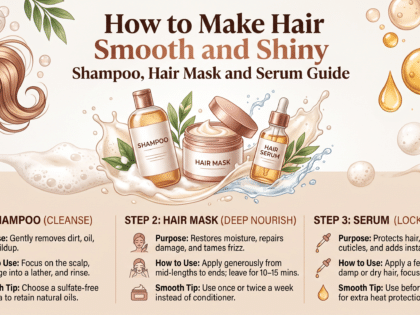
Step 1: Wash Your Hair with a Suitable Shampoo
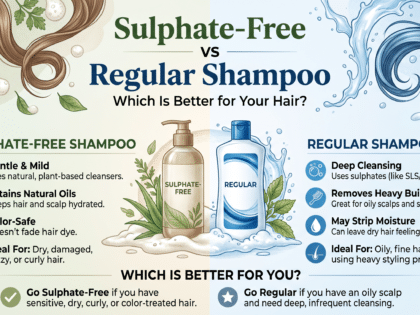
Start by washing your hair with a shampoo appropriate for your scalp and hair type. A gentle shampoo may be suitable for dry lengths, while an oily scalp may require more effective cleansing.
Concentrate shampoo on the scalp and allow the lather to cleanse the lengths as you rinse. Avoid aggressively rubbing or twisting the hair, as wet strands can be more vulnerable to mechanical damage.
Step 2: Remove Excess Water
After rinsing your shampoo, gently squeeze excess water from your hair.
You can use a soft towel to blot the hair without rubbing it vigorously. Removing excess water helps prevent the mask from becoming unnecessarily diluted and makes it easier to distribute the product evenly.
Step 3: Apply the Hair Mask to the Lengths and Ends
Take an appropriate amount of product and distribute it through the mid-lengths and ends.
Use your fingers or a wide-tooth comb to spread the mask evenly, following the manufacturer’s directions. The ends generally need more conditioning because they are older portions of the hair fibre and may have experienced more wear.
Avoid applying a rich mask directly to the scalp unless the product is specifically formulated for scalp use.
Step 4: Leave the Mask On for the Recommended Time
Most rinse-off hair masks require a few minutes of contact time, although the exact duration varies by product.
Follow the instructions on the packaging. Leaving a mask on significantly longer than recommended does not necessarily improve its performance and may lead to residue or unwanted heaviness.
Step 5: Rinse Thoroughly
Rinse your hair with lukewarm water until the product is removed.
Thorough rinsing helps prevent residue from making the hair feel coated, greasy, or flat. There is generally no need to use very hot water, which can increase discomfort and contribute to dryness in some hair care routines.
Step 6: Dry and Style Your Hair Gently
After rinsing, blot your hair with a soft towel and detangle it gently.
If you use a blow-dryer or other heated styling tool, apply a suitable heat protectant according to its instructions. Whenever possible, use moderate temperatures and avoid repeatedly passing heated tools over the same section.
The result should be hair that feels smoother, is easier to detangle, and appears more manageable.
How Often Should You Use a Hair Mask for Dry and Frizzy Hair?
The ideal frequency depends on the product formulation and your hair’s condition.
- Very dry or damaged hair: Consider starting with one or two treatments per week if the product instructions allow it.
- Normal hair with occasional frizz: One treatment per week may be sufficient.
- Fine or easily weighed-down hair: Start with once a week or less, using a small amount.
- Curly, coarse, or highly porous hair: You may benefit from more frequent conditioning, depending on how your hair responds.
These are starting points rather than fixed rules. If your hair feels soft, manageable, and clean, there may be no need to increase treatment frequency.
If your hair becomes limp, greasy, coated, or unusually stiff, reduce the amount used or adjust the frequency. Consistency and choosing the right formula are more important than applying a hair mask every day.
Hair Mask vs Hair Conditioner: What Is the Difference?
Hair masks and conditioners serve related purposes, but their formulations and recommended uses can differ.
| Feature | Hair mask | Regular conditioner |
|---|---|---|
| Main purpose | Intensive conditioning and improved manageability | Everyday conditioning and detangling |
| Texture | Often richer, although lightweight versions exist | Usually lighter |
| Application time | Commonly several minutes | Often one to a few minutes |
| Frequency | Usually occasional, depending on need | Commonly used after shampooing |
| Best suited for | Hair needing additional conditioning | Routine maintenance and detangling |
A hair mask is not automatically better than a conditioner simply because it is richer. Both can be useful, and the right choice depends on hair type, product formulation, and personal preference.
For many people with dry and frizzy hair, using a regular conditioner after shampooing and adding a mask periodically provides a practical balance of daily care and deeper conditioning.
Common Mistakes to Avoid When Using a Hair Mask
Even a well-formulated mask may not deliver the desired results if it is used incorrectly.
1. Applying Too Much Product
Using excessive product can leave hair heavy, greasy, or difficult to rinse. Begin with a small amount and add more only if necessary to cover the hair evenly.
2. Applying a Rich Mask to an Oily Scalp
Many rinse-off hair masks are designed for the lengths and ends rather than the scalp. Applying them at the roots can make fine hair look oily or flat.
Choose a scalp-specific treatment if you have a separate scalp concern.
3. Leaving the Mask On for Too Long
More time does not always mean better conditioning. Follow the product instructions and avoid unnecessarily extending the treatment.
4. Using Excessive Heat During Treatment
Some people cover their hair or use heat to intensify a treatment. However, additional heat is not necessary for most ordinary rinse-off masks and may increase the risk of damage if used improperly.
Use only the method recommended by the manufacturer.
5. Expecting Permanent Repair
Hair masks can improve the appearance and feel of dry, frizzy hair, but they cannot permanently restore severely damaged hair fibres or permanently eliminate split ends.
For long-term improvement, combine conditioning treatments with gentle handling, reduced heat exposure, and regular trimming when needed.
Additional Hair Care Tips to Control Dryness and Frizz
A hair mask works best when combined with habits that minimise damage and help maintain smoothness.
- Use a suitable shampoo: Select a cleansing product that works for your scalp without leaving your hair excessively dry.
- Condition after shampooing: A regular conditioner can improve detangling and reduce friction between washes.
- Limit excessive heat styling: Reduce the frequency of straightening and curling, and use a suitable heat protectant.
- Avoid rough towel drying: Gently blot the hair instead of rubbing it vigorously.
- Detangle carefully: Start at the ends and work upwards using a wide-tooth comb.
- Protect hair from environmental exposure: Consider suitable hair coverings when spending extended periods in strong sunlight or harsh weather.
- Choose products according to your hair type: Fine hair may need lighter conditioning, while coarse or curly hair may benefit from richer formulations.
- Maintain a balanced diet: Adequate nutrition supports normal hair growth, although supplements should not be expected to correct frizz directly unless a relevant deficiency exists.
If dryness is accompanied by scalp inflammation, persistent itching, sudden hair loss, or significant breakage, consider consulting a dermatologist to identify the underlying cause.
Can a Hair Mask Reduce Frizz Permanently?
No. A regular conditioning hair mask cannot permanently eliminate frizz because it does not permanently change the hair’s natural structure.
However, the right formula can provide temporary smoothing, reduce friction, improve softness, and make hair easier to style. Some products also contain ingredients that help manage humidity-related frizz for a period of time.
For longer-lasting results, use the mask consistently according to its directions and combine it with suitable shampoo, conditioner, and heat-protection products. Hair texture, humidity, chemical processing, and individual product response all influence the outcome.
Frequently Asked Questions About Hair Masks for Dry and Frizzy Hair
1. Which hair mask is best for dry and frizzy hair?
The best hair mask is one that matches your hair type and condition. Look for conditioning agents, fatty alcohols, and emollients such as argan oil or shea butter. Fine hair may benefit from a lightweight formula, while coarse or highly porous hair may need richer conditioning.
2. Can we use a hair mask every day?
Most rinse-off hair masks do not need to be used daily. Depending on the formulation, daily use may leave some hair types feeling heavy or coated. Follow the product instructions and begin with one treatment per week before adjusting according to your hair’s needs.
3. Should we apply a hair mask to wet or dry hair?
Most rinse-off hair masks are designed for clean, damp hair. Some treatments are formulated for dry hair, so it is important to check the product directions before applying one.
4. Can a hair mask help with split ends?
A hair mask can temporarily smooth the appearance of split ends and improve manageability, but it cannot permanently join split hair fibres. Trimming is the most reliable way to remove existing split ends.
5. Is a hair mask better than hair oil?
Hair masks and hair oils serve different purposes. A mask usually combines conditioning agents with other ingredients to improve softness and detangling, while an oil can provide lubrication, emollient benefits, and, in some cases, reduce protein loss. The most suitable option depends on your hair type and goals.
6. How long does it take to see results from a hair mask?
Many people notice improved softness, slip, and manageability after the first application. Results vary according to the formula and the condition of the hair. More consistent improvements in manageability depend on regular conditioning and reducing ongoing damage.
7. Can a hair mask be used on coloured hair?
Yes, provided the product is suitable for coloured or chemically treated hair. Look for a formula that offers conditioning and detangling benefits, and follow the manufacturer’s instructions.
8. Does a hair mask help with hair fall?
A conditioning mask may help reduce breakage caused by tangling and mechanical stress, but it does not treat every cause of hair loss from the scalp. Persistent or sudden hair loss should be assessed by a qualified healthcare professional.
Conclusion: Choose the Right Hair Mask for Smooth, Manageable Hair
Choosing the best hair mask for dry and frizzy hair can help improve softness, shine, detangling, and overall manageability. Ingredients such as argan oil, shea butter, glycerin, panthenol, conditioning agents, and hydrolysed proteins can provide different benefits depending on the formula and the condition of your hair.
For the best results, select a product that matches your hair type, apply it according to the manufacturer’s instructions, and use it at an appropriate frequency. Combine regular conditioning with gentle detangling, reduced heat styling, and a suitable shampoo and conditioner.
With a consistent and personalised hair care routine, we can help maintain smoother, softer, shinier, and more manageable hair while reducing the appearance of dryness and frizz.
Do you like this personality?