
Vitamin C Serum for Indian Skin: Benefits, Uses & How to Choose One
-
Dokmai London
- Posted on
- 0 comments
Why Vitamin C Serum Is Popular for Indian Skin
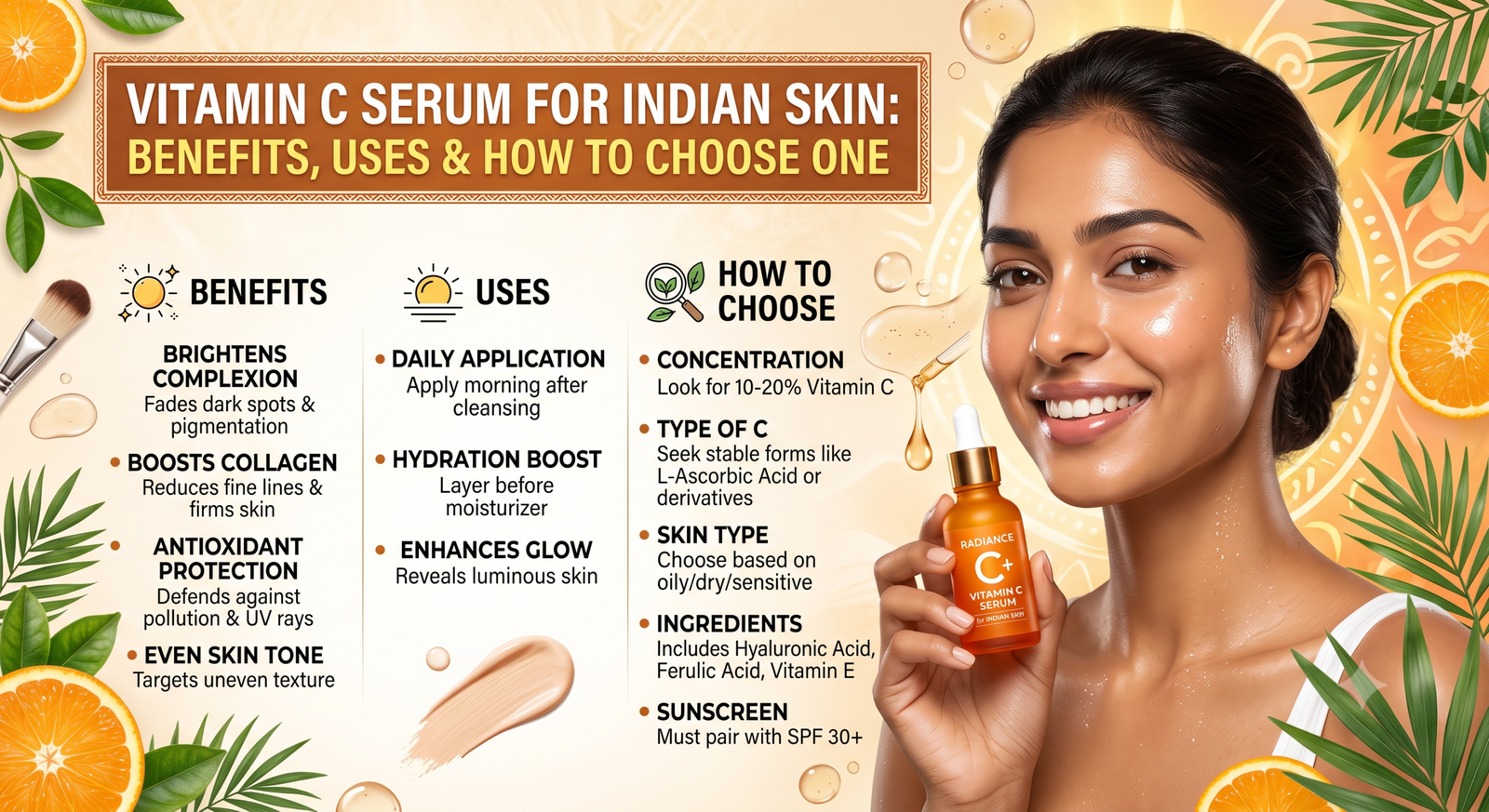
If your skin looks dull after a long day, develops dark spots after acne, or seems to lose its fresh appearance after regular sun exposure, you have probably come across vitamin C serum. It has become one of the most popular skincare ingredients because it combines antioxidant protection with potential benefits for pigmentation, collagen production, and overall skin appearance. For Indian skin, this ingredient can be particularly interesting because concerns such as uneven skin tone, post-acne marks, tanning, and pigmentation are common reasons people look for brightening skincare. However, choosing a vitamin C serum is not simply about picking the highest percentage printed on the bottle. The form of vitamin C, formulation stability, packaging, your skin type, and the other products in your routine can all influence how well it works. Current dermatology literature continues to support topical vitamin C for pigmentation and photoaging, while also emphasizing that formulation quality and stability matter considerably. A systematic review published in 2026 found that L-ascorbic acid remains the most clinically validated form, although several newer derivatives are being studied for improved stability and tolerability. That means the smartest approach is not to chase a trendy product but to understand what your skin actually needs and select a formula accordingly.
What Is Vitamin C Serum?
A vitamin C serum is a lightweight skincare product formulated to deliver vitamin C or a vitamin C derivative to the skin. The ingredient is naturally associated with antioxidant activity, meaning it can help counter oxidative stress generated by environmental factors such as ultraviolet radiation and pollution. The most extensively studied topical form is L-ascorbic acid, also called pure vitamin C, but modern skincare products may use derivatives such as sodium ascorbyl phosphate, magnesium ascorbyl phosphate, ascorbyl glucoside, tetrahexyldecyl ascorbate, or ascorbyl tetraisopalmitate. These different forms do not behave identically because their stability, solubility, penetration, and conversion within the skin can differ. L-ascorbic acid is highly active but relatively unstable, especially when exposed to oxygen, light, heat, or unsuitable formulation conditions. This is why two bottles that both say “vitamin C serum” can behave very differently on the skin. A good serum therefore needs more than an impressive ingredient list; it needs appropriate formulation, packaging, and storage. For someone buying a serum in India, this becomes even more important because high temperatures and prolonged exposure to heat can potentially accelerate deterioration of unstable formulas. Understanding the ingredient rather than simply following marketing claims makes it much easier to choose intelligently.
Why Indian Skin Can Benefit From Vitamin C
The phrase Indian skin covers a very broad range of skin tones, undertones, oil levels, sensitivities, and genetic characteristics, so there is no single vitamin C formula that is automatically perfect for everyone. Many Indian consumers, however, are concerned with visible pigmentation, post-inflammatory marks, uneven tone, and tanning. Melanin-rich skin can develop noticeable pigmentation after inflammation or environmental exposure, which makes gentle pigment-management strategies particularly relevant. Vitamin C can influence pigmentation pathways and has antioxidant properties that make it useful as part of a broader skincare routine. Research has also examined its role in reducing ultraviolet-induced pigmentation, although vitamin C should never be considered a substitute for sunscreen. In fact, sunscreen remains one of the most important parts of a pigmentation-focused routine, particularly for darker skin tones because visible light can also contribute to hyperpigmentation. A vitamin C serum can therefore be viewed as a supporting player rather than the entire team. If you use vitamin C in the morning and then skip sunscreen, you are undermining an important part of your routine. The goal should be simple: protect the skin from ongoing environmental stress while using carefully selected active ingredients to address concerns such as dullness, uneven tone, and visible signs of photoaging.
Vitamin C Serum Benefits for Skin
Vitamin C has several potential benefits, but results depend on the formulation, concentration, consistency of use, and individual skin characteristics. One of its most important functions is antioxidant activity, which helps the skin defend itself against oxidative stress. Topical vitamin C has also been studied for supporting collagen production, which makes it relevant to the appearance of fine lines and photoaged skin. Another major reason people use it is pigmentation. Research has found that topical vitamin C can have an antipigmenting effect, although visible changes may take consistent use and should not be confused with an instant skin-lightening effect. A systematic review examining vitamin C for melasma and photoaging found improvements in pigmentation and skin appearance across the available studies, while also emphasizing that larger and better-standardized studies are still needed. Vitamin C may also help create a brighter-looking complexion by improving the appearance of uneven tone rather than changing your natural skin colour. That distinction matters because healthy skincare should focus on improving skin quality and reducing unwanted pigmentation, not trying to alter your natural complexion. When used correctly, vitamin C can become a useful part of a balanced routine built around cleansing, moisturising, sun protection, and other targeted ingredients.
Vitamin C and Dark Spots
Dark spots are among the most common reasons people search for a vitamin C serum for Indian skin. These marks can appear after acne, irritation, insect bites, inflammation, or prolonged sun exposure, and they can be particularly persistent in skin that produces more melanin. Vitamin C has been investigated for its ability to influence melanin production and reduce pigmentation, making it a reasonable cosmetic ingredient for an uneven-tone routine. However, it is important to have realistic expectations. A serum is unlikely to erase deep pigmentation overnight, and some forms of discoloration may require professional diagnosis and treatment. Current dermatology guidance lists vitamin C among topical ingredients that may help fade dark spots, while emphasizing that sun protection is fundamental to managing hyperpigmentation. This is especially important because repeated sunlight exposure can encourage new pigmentation while making existing marks more noticeable. If you are treating post-acne marks, the routine should therefore address both the pigmentation and the acne or inflammation that caused it. Otherwise, you may continue developing new marks while trying to fade old ones. Think of vitamin C as part of the process rather than a magic eraser: consistency, gentle skincare, and daily sun protection usually matter more than simply increasing the strength of one serum.
Vitamin C for Tanning and Uneven Skin Tone
Tanning is another common reason Indian consumers consider antioxidant skincare. Sun exposure can increase melanin production, causing the skin to appear darker or less even than its usual tone. Vitamin C may help reduce UV-induced pigmentation and can contribute to a more even-looking complexion when used consistently. However, it does not provide enough protection to replace sunscreen. This is a crucial point because some people mistakenly assume that using an antioxidant serum in the morning gives them sufficient protection against sunlight. It does not. A better routine combines a suitable vitamin C product with broad-spectrum sunscreen, protective clothing, shade, and sensible sun exposure habits. For people particularly concerned about pigmentation, tinted sunscreen containing iron oxides can offer additional protection against visible light, which dermatologists recognize as relevant to hyperpigmentation, particularly in darker skin tones. Vitamin C can therefore fit nicely into an anti-tanning routine, but it should be considered an additional layer rather than the primary shield. If your goal is to maintain an even complexion, preventing repeated pigment stimulation is just as important as trying to improve pigmentation that has already developed.
Vitamin C and Collagen Support
Vitamin C is also widely used because of its relationship with collagen and the visible signs of skin aging. Collagen provides structural support to the skin, and environmental stress can contribute to collagen breakdown and photoaging over time. Topical vitamin C has been studied for its role in collagen synthesis and for improving signs associated with photoaged skin. This makes it relevant for people who are beginning to notice fine lines, rough texture, or a less radiant complexion. However, skincare marketing sometimes turns this scientific relationship into unrealistic promises about dramatic lifting or wrinkle removal. A serum cannot replace professional treatment, healthy lifestyle habits, or comprehensive sun protection. Its potential benefit is better understood as gradual support for skin quality when it is used consistently over time. The antioxidant action of vitamin C also makes sense in a daily environmental-defense routine because modern skin is exposed to sunlight, pollution, and other oxidative stressors. If you are in your 20s or 30s and want to build a preventative skincare routine, vitamin C can be one useful option, particularly when your main goals are brightness, pigmentation management, and early photoaging prevention. The key is to choose a stable product and use it consistently rather than switching between multiple aggressive products.
Which Type of Vitamin C Should You Choose?
The word “vitamin C” on a label does not tell you the complete story. L-ascorbic acid is the classic and most extensively studied form, but it is also more difficult to formulate because it can oxidize relatively easily. Stable derivatives were developed partly to address this problem, although they may differ in how effectively they penetrate the skin or are converted into active vitamin C. Current evidence continues to support L-ascorbic acid strongly, while newer research is also investigating lipophilic and other derivative forms. For someone with resilient skin who wants a well-studied option, an appropriately formulated L-ascorbic acid serum can be considered. For someone with sensitive skin, a derivative may offer a more comfortable starting point. Ingredients such as sodium ascorbyl phosphate, magnesium ascorbyl phosphate, ascorbyl glucoside, tetrahexyldecyl ascorbate, and ascorbyl tetraisopalmitate can appear in different formulations. The important point is not that one derivative is universally superior. Instead, match the vitamin C form to your skin tolerance, goals, and the quality of the formulation. A stable, well-formulated moderate-strength product that you can use consistently is often more practical than a very strong serum that repeatedly causes irritation.
What Vitamin C Percentage Is Best?
When shopping for a vitamin C serum, percentage is one of the first things people notice, but it should not be the only deciding factor. Traditional research and dermatology reviews commonly discuss topical L-ascorbic acid in the 10% to 20% range, with concentrations above approximately 20% not necessarily producing additional benefit and potentially increasing irritation. This means a 20% serum is not automatically twice as effective as a 10% serum. Skin tolerance also matters because irritation can damage the skin barrier and, in people prone to pigmentation, inflammation can potentially make discoloration more noticeable. If you are completely new to vitamin C, beginning with a moderate-strength formula can be a sensible approach. Experienced users with resilient skin may choose stronger formulations if they tolerate them well. Sensitive or reactive skin may do better with a gentler derivative or lower-strength product. The formulation’s pH, stabilizers, packaging, and overall ingredient combination can be just as important as the number printed on the front of the bottle. In other words, don’t shop for the biggest percentage; shop for the best balance between evidence, stability, tolerance, and your particular skincare goal.
| Vitamin C strength | Who may consider it | Key consideration |
|---|---|---|
| Lower/moderate strength | Beginners or sensitive skin | Usually easier to introduce gradually |
| Around 10% | Many routine users | Strong evidence base when well formulated |
| 10–20% L-ascorbic acid | Experienced users with good tolerance | Balance effectiveness and irritation |
| Above 20% | Not automatically necessary | Greater strength may increase irritation without proportional benefit |
How to Choose Vitamin C Serum for Oily Skin
Oily and acne-prone skin needs a vitamin C serum that fits comfortably into an already active routine. Look for a lightweight, non-greasy texture that layers easily under moisturiser and sunscreen. If you are prone to clogged pores, pay attention to the complete formulation rather than assuming that every serum will behave the same way. Some people with oily skin also experience acne-related pigmentation, so vitamin C may be attractive because it can address the appearance of uneven tone while providing antioxidant benefits. However, if your acne is active, do not pile several strong actives onto your face simply because each ingredient has a good reputation. Excessive exfoliation or irritation can compromise the skin barrier and potentially worsen the appearance of post-inflammatory marks. A simple routine may work better: gentle cleanser, vitamin C serum, moisturiser if needed, and sunscreen in the morning. At night, use your acne treatment or another targeted ingredient according to your skin’s tolerance. If you are using prescription acne medication, speak with your dermatologist before introducing additional active ingredients. The goal is not to make your routine complicated; it is to make it sustainable enough that your skin can benefit from it consistently.
How to Choose Vitamin C Serum for Dry or Sensitive Skin
Dry and sensitive skin requires a slightly different strategy because irritation can quickly become a bigger problem than the original concern. If your skin frequently stings, flakes, becomes red, or reacts to new products, jumping directly into a strong acidic L-ascorbic acid serum may not be the most comfortable approach. A stable vitamin C derivative can be worth considering because some derivatives are designed to provide better formulation stability and potentially improved tolerability. Look for a product that avoids an unnecessarily complicated combination of multiple strong acids, exfoliants, and fragrances if your barrier is already compromised. Before applying it across your entire face, perform a patch test according to the product’s instructions and introduce it gradually. Your moisturiser also becomes particularly important because maintaining a healthy skin barrier can improve your ability to tolerate active ingredients. If a vitamin C product causes persistent burning, significant redness, swelling, or worsening irritation, stop using it rather than assuming that discomfort means the product is “working.” A skincare ingredient should not require you to damage your barrier in order to achieve results. For sensitive skin, consistency with a gentle formula usually beats intensity with an aggressive one.
How to Use Vitamin C Serum Correctly
The simplest way to use vitamin C serum is to apply it after cleansing and before moisturiser and sunscreen in your morning routine. Dermatologists commonly recommend applying vitamin C after washing the face and before sunscreen, making it a convenient step in a daytime routine. Start with clean, dry skin unless the product’s instructions specifically say otherwise, then apply the recommended amount without rubbing aggressively. Allow the serum to settle before following with moisturiser and sunscreen. You do not need to cover your face in a thick layer; more product does not automatically mean better results. If you are new to the ingredient, begin a few times per week and gradually increase frequency if your skin remains comfortable. Once your skin tolerates the product well, daily use may be appropriate depending on the formulation and instructions. Keep the product away from direct contact with the eyes and avoid applying it to broken or severely irritated skin. Most importantly, use sunscreen during the day. Vitamin C and sunscreen perform different jobs, so one should not be used as a replacement for the other.
Can You Use Vitamin C Every Day?
For many people, vitamin C can be incorporated into a daily skincare routine, but frequency should depend on the specific formula and your skin’s response. Some well-formulated vitamin C products are intended for everyday use, while people with sensitive skin may need to start more slowly. If you notice persistent stinging, redness, dryness, or peeling, reduce frequency or stop temporarily and allow your skin barrier to recover. It is also useful to remember that skincare results are usually gradual. A systematic review of topical vitamin C for melasma and photoaging found evidence of improvement in pigmentation and skin appearance, but the researchers noted that long-term use may be required for noticeable changes. This is why judging a serum after only a few days can be misleading. Give your routine enough time while also taking progress photographs under similar lighting if you want a realistic comparison. If your main concern is stubborn melasma or significant pigmentation, professional assessment is sensible because those conditions can require targeted treatment. Daily vitamin C can be a useful cosmetic step, but it should not become an excuse to ignore persistent or medically significant skin changes.
Vitamin C Serum and Sunscreen: The Ideal Combination
If pigmentation is your main concern, the relationship between vitamin C and sunscreen deserves special attention. Vitamin C provides antioxidant and antipigmenting support, while sunscreen helps reduce the ongoing ultraviolet exposure that contributes to photoaging and pigmentation. Dermatology guidance emphasizes that effective treatment of dark spots begins with sun protection. For people with darker skin tones who are concerned about pigmentation, tinted sunscreen containing iron oxide can be particularly useful because visible light may worsen hyperpigmentation. A practical morning routine can therefore look like this: cleanse your face, apply vitamin C, use moisturiser if needed, and finish with a broad-spectrum sunscreen of at least SPF 30. Reapply sunscreen as recommended, especially when spending extended time outdoors, sweating, or swimming. Think of sunscreen as the roof over your skincare routine: your other products can still work, but they are being asked to perform under much harder conditions if you leave your skin unprotected. If you live in a sunny climate or spend significant time outdoors, this step becomes even more important. Vitamin C can support your routine, but consistent sun protection is one of the strongest habits for maintaining an even-looking complexion.
Vitamin C Serum Storage and Oxidation
One of the biggest practical issues with vitamin C is stability. L-ascorbic acid can degrade when exposed to oxygen, light, heat, and other unfavorable conditions, and oxidation can change the product’s colour and reduce its useful activity. This is why packaging is more than a cosmetic detail. Opaque or dark packaging, air-reducing containers, and carefully designed formulations can help protect unstable vitamin C from environmental exposure. Store your serum according to the manufacturer’s instructions and avoid leaving it on a hot windowsill, in direct sunlight, or in a place exposed to repeated high temperatures. If a clear serum gradually becomes yellow or brown, check the manufacturer’s guidance because colour changes can indicate oxidation. Do not assume that every colour change means exactly the same thing because formulas differ, but significant darkening is a reason to investigate before continuing to use the product. Current research continues to identify formulation stability as a major challenge for L-ascorbic acid products, which is why derivatives and specialized delivery systems are being explored. For Indian consumers, storage is especially worth considering during hot weather. Buying an expensive serum only to store it incorrectly can turn a promising product into a disappointing purchase.
Vitamin C Serum Mistakes to Avoid
One of the biggest mistakes is choosing a product solely because it has the highest concentration. Another is applying too many active ingredients simultaneously and then assuming that irritation proves the routine is effective. Some people also use vitamin C inconsistently, keep an oxidized bottle for months, skip sunscreen, or expect dramatic changes within a week. Another common mistake is using homemade vitamin C mixtures without knowing the concentration, pH, stability, preservation, or contamination risk. Skincare formulations are more complicated than mixing a powder with water in a kitchen bowl. If you are treating pigmentation, avoid aggressive scrubbing because irritation can contribute to additional discoloration. Do not apply vitamin C directly over severely damaged skin, and be cautious when combining it with multiple exfoliating acids or prescription treatments unless your dermatologist has advised you to do so. Finally, remember that darker marks can have different causes, and not every brown patch is simply “tanning.” Persistent, rapidly changing, unusual, or widespread pigmentation deserves professional assessment. A good skincare routine should make your skin healthier over time, not leave you constantly fighting redness, peeling, or sensitivity.
Vitamin C vs Other Brightening Ingredients
Vitamin C is not the only ingredient used for pigmentation and uneven tone. Niacinamide, azelaic acid, retinoids, kojic acid, glycolic acid, and other ingredients can also appear in brightening routines. The best choice depends on what is causing your pigmentation, how sensitive your skin is, whether acne is present, and whether you have a condition such as melasma. Vitamin C is particularly attractive when you want antioxidant support alongside pigmentation and photoaging benefits. Niacinamide may be useful when barrier support and oil balance are also priorities, while azelaic acid can be relevant to both acne and pigmentation. Retinoids have a strong role in several dermatological concerns but can initially irritate some users. Rather than creating a routine that contains every popular brightening ingredient, choose one or two evidence-based actives that address your primary concern. Dermatology guidance also warns that using multiple anti-aging products too quickly can irritate the skin. A calmer routine often makes it easier to identify what is helping and what is causing problems. If pigmentation is persistent, a dermatologist can help determine whether a cosmetic serum is appropriate or whether a more targeted treatment is necessary.
| Ingredient | Common skincare goal | Important consideration |
|---|---|---|
| Vitamin C | Antioxidant support, pigmentation, photoaging | Formulation stability matters |
| Niacinamide | Barrier support, oil control, uneven tone | Generally versatile |
| Azelaic acid | Acne and pigmentation | Can be useful for post-acne marks |
| Retinoids | Acne, texture, pigmentation, fine lines | May cause initial irritation |
| Glycolic acid | Exfoliation and uneven texture | Overuse may irritate |
| Kojic acid | Pigmentation | Can be irritating for some skin types |
How Long Does Vitamin C Take to Work?
Skincare rarely follows the instant-results timeline shown in advertisements. Vitamin C can provide antioxidant activity relatively quickly, but visible changes in pigmentation, texture, and photoaging generally require consistent use. Research on topical vitamin C and pigmentation suggests that noticeable improvements may require longer-term use, and study results vary according to formulation, concentration, treatment duration, and the condition being treated. If your goal is to reduce post-acne marks, think in terms of gradual improvement rather than overnight disappearance. Take a baseline photograph before beginning and compare your skin after several weeks under similar lighting. This can help you notice changes that are difficult to detect when you look at your face every morning. If your pigmentation becomes darker, your skin starts burning, or you develop significant irritation, do not simply increase the amount of serum. Instead, reconsider the formulation and the rest of your routine. Also remember that continuing sun exposure can make pigmentation more persistent, so sunscreen consistency has a direct influence on how successful your routine appears. Good skincare is more like gardening than painting: regular care creates gradual changes, while rushing the process can damage the very thing you are trying to improve.
Is Vitamin C Serum Safe for Indian Skin?
Vitamin C is generally considered a useful topical skincare ingredient, but “safe for everyone” would be an inaccurate promise. The most important factors are formulation, concentration, skin sensitivity, and how the ingredient is introduced. Some users experience dryness, irritation, redness, or stinging, particularly with stronger acidic formulations. People with sensitive or reactive skin may therefore prefer a derivative or lower-strength formula. If you have eczema, rosacea, significant acne, active dermatitis, or another skin condition, discuss active skincare ingredients with a dermatologist before creating an intensive routine. Pregnant or breastfeeding individuals should also consult their healthcare professional about their complete skincare regimen rather than relying on general internet recommendations. If you experience swelling, severe burning, blistering, or a significant reaction, discontinue the product and seek medical advice. Another safety consideration is buying from reputable sources. Extremely cheap or poorly labelled products may have uncertain formulation quality, storage history, or ingredient information. A well-designed product from a trustworthy manufacturer is generally a more sensible choice than chasing an unusually high concentration from an unknown source.
A Simple Vitamin C Routine for Indian Skin
For someone who wants to start without making skincare unnecessarily complicated, a basic routine is often enough. In the morning, cleanse gently, apply your vitamin C serum, use moisturiser if your skin needs it, and finish with broad-spectrum sunscreen. At night, cleanse again and use a simple moisturiser, adding other treatment products only when there is a clear reason to do so. If you are a beginner, use vitamin C a few mornings per week before moving toward more frequent application as your skin adapts. People with oily skin may prefer a lightweight serum and gel moisturiser, while dry skin may benefit from a more hydrating formula and richer moisturiser. If pigmentation is your primary concern, consider tinted sunscreen with iron oxide in addition to adequate SPF because visible light can contribute to darkening. Avoid changing five products simultaneously because you will not know which product is helping or irritating your skin. Most importantly, keep your routine consistent. A simple routine that you follow for months is generally more useful than an elaborate routine that you abandon after two weeks. Your skin does not need a shelf full of products; it needs the right products used regularly.
Who Should Consider a Dermatologist Instead?
A vitamin C serum is appropriate for many cosmetic skincare goals, but not every pigmentation problem should be handled with an over-the-counter serum. If you have persistent melasma, rapidly worsening pigmentation, widespread dark patches, unexplained skin colour changes, or marks that do not improve despite a consistent routine, professional evaluation can help. Melasma can be particularly stubborn and may require a combination of sun protection, topical medication, and sometimes procedures. Dermatologists can also distinguish between post-inflammatory hyperpigmentation, melasma, sun-related pigmentation, and other conditions that may look similar to an untrained eye. This distinction matters because the wrong treatment can cause irritation and potentially make pigmentation more noticeable. If your skin burns or stings whenever you apply skincare, that is another reason to simplify your routine and consider professional advice. Dermatology guidance emphasizes that treatment plans for melasma should be tailored to the individual’s skin tone, depth of pigmentation, and triggers. A cosmetic serum can be part of such a plan, but it should not be treated as a universal solution. When the underlying problem is diagnosed correctly, your skincare choices become much more targeted and practical.
Final Buying Checklist for Vitamin C Serum
Before purchasing a vitamin C serum for Indian skin, look beyond the front label. First, identify your primary goal: pigmentation, dullness, photoaging, or general antioxidant support. Next, check which vitamin C form the product contains and whether the manufacturer provides meaningful information about its concentration and formulation. If you are considering L-ascorbic acid, look for appropriate formulation and packaging because stability is a major issue. If you have sensitive skin, consider a well-formulated derivative or a lower-strength product rather than automatically selecting the strongest option available. Check the expiry date, packaging condition, storage instructions, and reputation of the seller. Avoid products that make unrealistic promises such as permanently changing your natural skin colour or removing every dark spot within days. Finally, make sure your routine includes sunscreen. A serum can be excellent, but it cannot compensate for repeated unprotected sun exposure. The smartest purchase is the one that fits your skin type, tolerance, goals, budget, and routine well enough that you can actually use it consistently. In skincare, the best product on paper is not necessarily the best product for your face.
Conclusion
Vitamin C serum can be a valuable addition to an Indian skincare routine, particularly when the goals are brighter-looking skin, improved appearance of uneven tone, antioxidant support, and gradual management of pigmentation and photoaging. The strongest evidence is associated with topical vitamin C, especially L-ascorbic acid, although newer derivatives continue to offer interesting options for stability and tolerability. The biggest lesson is that percentage alone does not determine quality. A stable formulation, suitable vitamin C form, appropriate concentration, good packaging, and compatibility with your skin type can make a much bigger practical difference. For Indian skin that is prone to pigmentation, daily sun protection should remain the foundation of the routine, with vitamin C working alongside it rather than replacing it. Start slowly if you are new to active skincare, avoid unnecessary combinations, and give the product enough time to show gradual results. If pigmentation is severe, persistent, or difficult to identify, professional dermatological advice is a better route than endlessly switching serums. With realistic expectations and consistent use, vitamin C can become a simple and useful part of a well-designed skincare routine.
FAQs About Vitamin C Serum for Indian Skin
1. Is vitamin C serum good for Indian skin?
Yes, vitamin C can be useful for Indian skin, particularly for people concerned about dullness, uneven tone, post-acne pigmentation, and signs of sun-related aging. However, Indian skin is diverse, so the ideal concentration and formulation depend on your individual skin type and sensitivity.
2. Which vitamin C percentage is best for beginners?
A moderate concentration can be a sensible starting point, especially if you have never used vitamin C before. L-ascorbic acid products are commonly formulated around 10–20%, but sensitive skin may benefit from a gentler derivative or lower-strength option.
3. Can vitamin C serum remove dark spots?
Vitamin C can help improve the appearance of pigmentation and dark spots over time, but it does not guarantee complete removal. Consistent sunscreen use is essential because sunlight and visible light can contribute to persistent pigmentation.
4. Can I use vitamin C serum every morning?
Many people can use vitamin C in the morning, particularly when the product is well tolerated. A common routine is cleanser, vitamin C serum, moisturiser if needed, and sunscreen. Beginners can start several times per week and increase frequency according to their skin’s response.
5. Should I use vitamin C serum before sunscreen?
Yes. Dermatologists commonly recommend applying vitamin C after cleansing and before sunscreen in the morning. Vitamin C and sunscreen have different functions, so using both can provide a more comprehensive approach to daytime skincare.