
Hibiscus Face Wash Benefits: Why Hibiscus Is Good for Your Skin
-
Dokmai London
- Posted on
- 0 comments
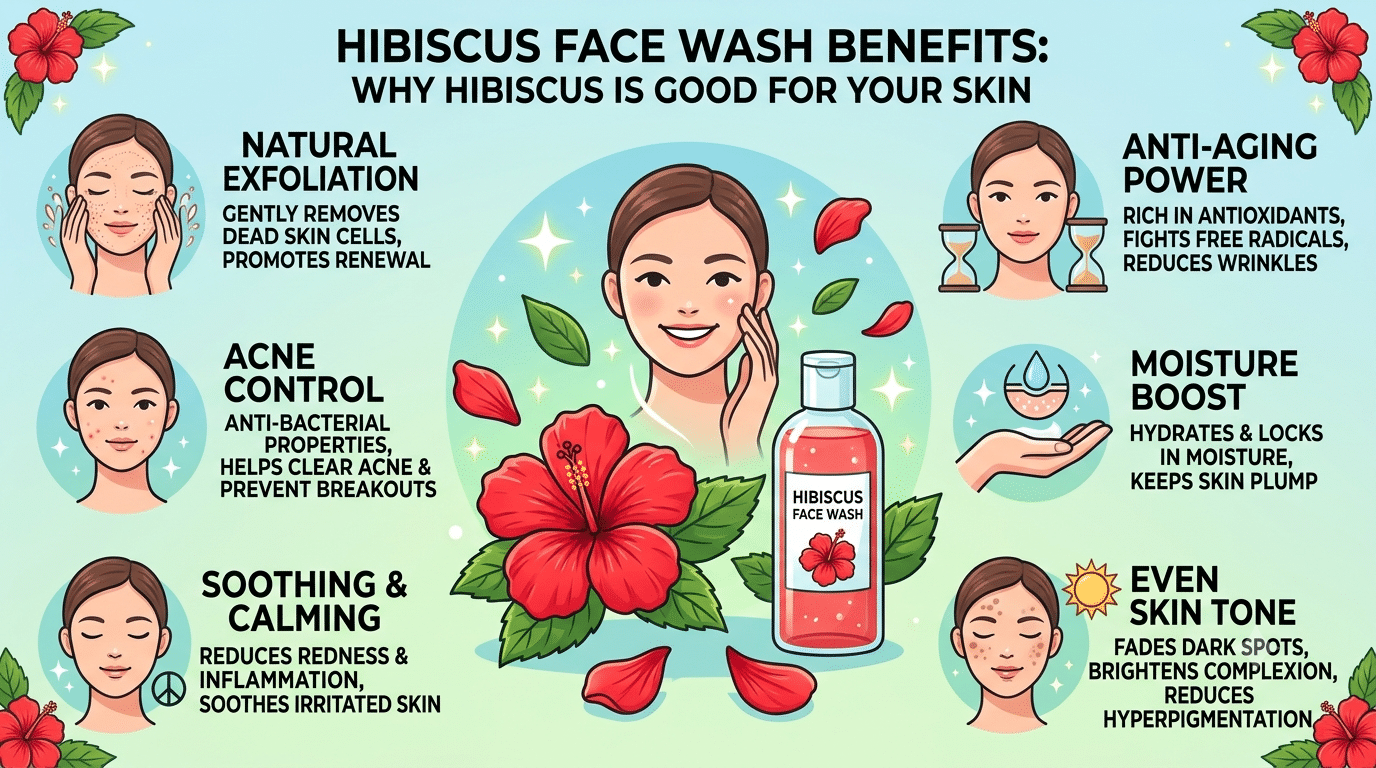
Hibiscus is becoming a popular ingredient in natural skincare, thanks to its plant-based antioxidants and skin-friendly compounds. From traditional beauty routines to modern facial cleansers, hibiscus is often associated with a fresh, healthy-looking complexion. But what exactly makes hibiscus useful for your skin, and can a hibiscus face wash really improve your daily skincare routine?
Hibiscus is not a miracle ingredient that can solve every skin concern, but its naturally occurring antioxidants and other plant compounds make it an interesting addition to a well-formulated skincare product. Research on different hibiscus species has explored antioxidant activity, skin hydration, collagen-related processes, and protection against certain forms of environmental stress. However, it is important to distinguish laboratory findings from proven benefits of a finished face wash used on human skin.
Whether you have oily skin, combination skin, or simply want a gentle botanical cleanser, understanding the potential hibiscus face wash benefits can help you choose products more thoughtfully. In this guide, we will explore how hibiscus may support your skin, what science says about it, how to use a hibiscus face wash correctly, and what precautions you should take before adding it to your routine.
What Is Hibiscus and Why Is It Used in Skincare?
Hibiscus is a flowering plant belonging to the Malvaceae family. Several species are used in traditional preparations, food products, personal care, and cosmetic research. One particularly well-known species is Hibiscus sabdariffa, often called roselle, while other species, including Hibiscus rosa-sinensis and Hibiscus syriacus, have also been investigated for their biological properties. The flowers, calyces, leaves, and other plant parts may contain different combinations of naturally occurring compounds, so the benefits of one hibiscus extract should not automatically be attributed to every hibiscus-based product.
In skincare, hibiscus is generally included as a botanical extract rather than as a complete substitute for cleansing ingredients. A face wash may contain hibiscus alongside water, mild surfactants, humectants, preservatives, fragrance, and other conditioning ingredients. The surfactants do the main job of lifting away sweat, excess oil, dirt, and cosmetic residue, while the botanical extract may provide additional formulation benefits. This distinction matters because a cleanser’s performance depends on its complete formula, not simply on the name of one plant printed on the label.
The Natural Compounds Found in Hibiscus
Different hibiscus species contain different concentrations of polyphenols, flavonoids, anthocyanins, organic acids, and other plant compounds. These substances have attracted scientific interest because some demonstrate antioxidant or other biological activity in laboratory testing. Research involving Hibiscus roseus, for example, identified phenolic acids and flavonoids in extracts from its leaves and flowers, while studies of Hibiscus sabdariffa have investigated compounds associated with oxidative-stress responses and collagen-related activity.
The important point is that a plant extract is not the same thing as a clinically proven skincare treatment. The amount of an active compound, extraction method, product stability, concentration, and time spent on the skin can all influence its practical effect. A hibiscus face wash may offer a pleasant cleansing experience and some potential botanical support, but claims such as guaranteed skin whitening, permanent acne removal, or dramatic wrinkle reduction require much stronger product-specific evidence.
1. Hibiscus May Provide Antioxidant Support
One of the most discussed hibiscus face wash benefits is its potential antioxidant activity. Antioxidants are substances that can help neutralize certain reactive molecules in appropriate chemical or biological settings. Skin is regularly exposed to environmental factors such as ultraviolet radiation and air pollution, which can contribute to oxidative stress. Because of this, researchers have investigated plant-derived antioxidants as possible ingredients for cosmetic formulations. Hibiscus extracts contain phenolic compounds and other constituents that may contribute to this activity.
A laboratory study on Hibiscus roseus found antioxidant activity in both leaf and flower extracts, with the flower extracts showing stronger activity in the assays used. That finding is interesting, but it does not mean that washing your face with any hibiscus cleanser will automatically protect your skin from every environmental aggressor. Laboratory antioxidant tests are useful for understanding the chemical potential of an ingredient, yet they do not measure the complete performance of a finished cosmetic on real people. A well-designed face wash can still be a useful part of a daily skincare routine, but it should be viewed as a cleanser with possible added benefits rather than a protective shield.
How Antioxidants Relate to Skin Health
Oxidative stress is one of several factors involved in visible skin aging and environmental damage. When reactive molecules interact with cellular components, they can contribute to biological changes that affect the skin over time. Antioxidant ingredients are therefore studied for their possible role in supporting the skin’s natural defenses. Hibiscus is attractive in this area because its extracts may contain several types of polyphenolic compounds rather than just one isolated substance.
Still, it is essential to keep expectations realistic. A face wash is rinsed off after a relatively short period, so the exposure of the skin to hibiscus extract is limited. The practical antioxidant effect of a particular cleanser will depend on its formulation, stability, and concentration. For everyday protection against sun-related damage, broad-spectrum sunscreen remains far more important than relying on a botanical cleanser.
2. It May Help Skin Look Fresh and Revitalized
A fresh-looking complexion often begins with effective cleansing. During the day, the skin collects sweat, oil, dust, sunscreen residue, and particles from the surrounding environment. If these materials remain on the skin for too long, the face may feel greasy or look tired. A properly formulated hibiscus face wash can help remove these impurities while offering the sensory appeal of a botanical skincare ingredient.
The hibiscus extract itself may contribute to the product’s overall conditioning or antioxidant profile, depending on the formula. However, the immediate feeling of freshness usually comes from the cleansing process, water, and the way the product interacts with the skin’s surface. This is why it is useful to look beyond marketing language. A product that leaves the face comfortable, clean, and not excessively tight may be more suitable for daily use than one that promises dramatic transformation but causes dryness.
If your skin looks dull because of accumulated oil, sweat, or residue, cleansing may make it appear brighter temporarily. That does not necessarily mean the product has changed pigmentation or removed long-standing dark spots. A cleaner appearance and a change in skin tone are two different things, and they should not be confused when evaluating skincare results.
3. Hibiscus May Support Skin Hydration
Hydration is another area of interest in hibiscus skincare research. Skin needs water to maintain a comfortable surface and support the function of its outer barrier. A face wash that removes too much oil or uses harsh cleansing agents can leave the skin feeling dry, tight, or uncomfortable. For that reason, a good cleanser should remove unwanted residue without unnecessarily disturbing the skin’s natural balance.
Research on Hibiscus sabdariffa and hibiscus-derived compounds has explored effects related to skin cells, oxidative stress, and extracellular matrix components. Some findings suggest that specific hibiscus compounds may influence processes associated with skin structure and hydration in laboratory models. However, these findings should not be interpreted as proof that every hibiscus face wash increases skin moisture or repairs a damaged barrier.
The Importance of a Balanced Skin Barrier
Your skin barrier acts much like a protective wall. It helps keep water inside the skin while limiting the entry of unwanted irritants. When that barrier becomes compromised, the skin may feel rough, flaky, tight, or more reactive than usual. Choosing a mild cleanser and applying moisturizer afterward can help support a comfortable skincare routine.
When shopping for a hibiscus face wash, look for a formula that matches your skin’s needs. Humectants such as glycerin can help attract water, while mild cleansing agents may be less disruptive than aggressive formulas for some users. If your skin is dry or sensitive, avoid assuming that a product is gentle simply because it contains a flower extract. The entire ingredient list and your personal response matter more than the botanical label.
4. Potential Benefits for Premature Skin Aging
Hibiscus is sometimes described as a “natural Botox” ingredient in beauty marketing, but that phrase is misleading. There is no established evidence that an ordinary hibiscus face wash produces effects equivalent to injectable botulinum toxin. The more reasonable scientific question is whether compounds found in hibiscus may support biological processes relevant to visible aging, such as oxidative stress, collagen breakdown, and skin-cell function.
Some studies have produced promising laboratory findings. Research on Hibiscus sabdariffa calyx extract reported antioxidant activity and effects on collagenase-related processes in experimental models. Another study on Hibiscus roseus examined phenolic compounds, antioxidant capacity, and anti-collagenase activity. These findings help explain why hibiscus is being explored in cosmetic research, but they do not establish that a rinse-off face wash can remove wrinkles or restore lost elasticity.
Collagen, Elasticity, and Environmental Stress
Collagen is an important structural protein that contributes to the skin’s firmness and support. Over time, natural aging and environmental exposure can affect collagen-related processes. Researchers are interested in ingredients that might reduce oxidative stress or influence enzymes involved in collagen degradation. Hibiscus extracts have been studied in this context, although the evidence varies by species, extract, and experimental method.
For someone using a hibiscus face wash, the most realistic expectation is basic cleansing with possible supportive cosmetic benefits. A cleanser cannot replace sunscreen, a suitable moisturizer, or evidence-based treatments for established wrinkles. If your goal is long-term skin aging prevention, daily sun protection and a consistent skincare routine are much more dependable foundations.
5. Hibiscus and the Appearance of Dull Skin
Dull skin can have several causes, including dehydration, accumulated surface residue, environmental exposure, and natural changes in the outermost skin cells. A face wash may help remove substances that make the skin look greasy or lackluster. When the surface is clean and comfortable, the complexion may appear more refreshed. Hibiscus adds an appealing botanical element to this routine and may contribute antioxidant compounds to the formula.
It is important, though, to avoid promising that hibiscus automatically brightens or lightens pigmentation. Some laboratory research on hibiscus extracts has examined pathways associated with melanin production, but laboratory observations do not establish that a particular face wash will fade dark spots in people.
If uneven tone is your main concern, consider the complete product rather than relying on hibiscus alone. Gentle cleansing, consistent sunscreen use, and carefully selected ingredients designed for pigmentation concerns may be more relevant. If a cleanser causes irritation, it can make some discoloration concerns appear worse, so comfort and tolerance should remain priorities.
6. Is Hibiscus Face Wash Good for Oily and Combination Skin?
A hibiscus face wash may be suitable for oily or combination skin if its cleansing system effectively removes excess sebum without leaving the skin excessively dry. Oily skin produces more sebum, which can mix with sweat, dead skin cells, and cosmetic residue. A suitable cleanser can help remove this buildup and leave the face feeling cleaner. However, the presence of hibiscus does not determine whether the formula is appropriate for oily skin.
For oily skin, consider a cleanser with a lightweight texture and mild surfactants. If the product contains additional ingredients such as niacinamide or salicylic acid, those may contribute more directly to particular skincare goals than the hibiscus extract itself. The best choice depends on the full formulation, the amount of oil your skin produces, and whether you experience sensitivity or breakouts.
Combination skin often needs a slightly different approach. The forehead, nose, and chin may become oily, while the cheeks feel normal or dry. Washing too aggressively can leave the drier areas uncomfortable. A balanced hibiscus cleanser may work well if it cleans the T-zone without stripping the rest of the face, but your own skin response is the best guide.
7. Can Hibiscus Face Wash Help With Acne-Prone Skin?
Hibiscus is sometimes promoted as an acne-supporting botanical because certain hibiscus extracts have demonstrated biological activity in laboratory research. However, there is not enough product-specific clinical evidence to say that a hibiscus face wash treats acne. Acne is influenced by several factors, including excess sebum, clogged pores, inflammation, and the activity of Cutibacterium acnes. A cleanser may help remove excess oil and surface impurities, but that is not the same as treating every process involved in acne.
For acne-prone skin, the cleansing base matters considerably. A gentle, non-comedogenic formula may be a sensible choice, particularly if your skin becomes irritated easily. Ingredients with more established roles in acne care, such as salicylic acid or benzoyl peroxide, may be appropriate in specific products, although they can also cause dryness or irritation and should be used according to product directions.
If you are using a hibiscus cleanser and experience persistent inflamed pimples, painful acne, or scarring, do not depend on the botanical ingredient alone. A dermatologist can help identify the type of acne and recommend a suitable treatment plan. The most useful role of a hibiscus face wash may simply be to support a consistent cleansing routine without aggravating the skin.
8. Hibiscus Face Wash and Uneven Skin Tone
Uneven skin tone can include sun-related pigmentation, post-inflammatory marks, freckles, and other changes in melanin production. Because hibiscus contains several naturally occurring plant compounds, researchers have explored whether some extracts influence biological pathways associated with pigmentation. In one study involving Hibiscus sabdariffa calyx extract, researchers reported effects on melanin-related pathways in experimental settings.
These results are interesting but should be interpreted carefully. A laboratory effect does not establish that a rinse-off product will visibly fade dark spots. The concentration of the extract, the time it remains on the skin, the stability of its compounds, and the condition being treated all matter. There is also no universal evidence that hibiscus face wash produces a predictable skin-lightening effect across different skin types.
If you want to improve uneven tone, begin with daily sunscreen and a gentle routine. Avoid harsh scrubbing or products that cause burning, since irritation can contribute to post-inflammatory pigmentation in some people. A hibiscus cleanser may be part of your routine, but it should not be marketed or understood as a guaranteed pigmentation treatment.
9. How Hibiscus Face Wash Compares With Other Botanical Cleansers
Botanical cleansers often feature ingredients such as aloe vera, green tea, chamomile, rose, turmeric, or hibiscus. Each plant has a different chemical profile, and the benefits associated with one extract cannot automatically be transferred to another. Green tea, for example, is widely studied for its polyphenols, while aloe is commonly used in formulations designed to provide a soothing skin feel. Hibiscus is particularly interesting for its phenolic compounds and antioxidant-related research.
The right cleanser is not necessarily the one with the longest list of plant extracts. A product containing many botanicals may still be unsuitable if it contains irritating fragrance, harsh cleansing agents, or ingredients that do not agree with your skin. A simple formula with a well-tolerated cleansing base may be a better everyday choice than a complicated product with impressive marketing claims.
What to Look for in a Finished Formula
When choosing a hibiscus face wash, consider the following factors:
- Cleansing ingredients: Look for a formula that removes oil and residue without leaving your skin uncomfortably tight.
- Skin type: Choose a texture and cleansing strength suitable for oily, combination, normal, dry, or sensitive skin.
- Additional ingredients: Glycerin, panthenol, or other conditioning ingredients may improve the skin feel of a formula.
- Fragrance: Fragrance is not automatically harmful, but it may be unsuitable for some sensitive users.
- Ingredient transparency: Check whether hibiscus extract is clearly identified and whether the manufacturer provides useful product information.
- Realistic claims: Be cautious of promises involving permanent whitening, instant wrinkle removal, or guaranteed acne cures.
- Feature
- Hibiscus face wash
- Basic gentle face was
- Main purpose
- Cleanse the skin
10. How to Use Hibiscus Face Wash Correctly
Even a well-formulated cleanser may cause discomfort if you use it too frequently or scrub too hard. The goal of cleansing is to remove unwanted residue while keeping the skin comfortable. A small amount of face wash is usually enough for the entire face, and lukewarm water is generally preferable to very hot water. Rubbing aggressively does not make the product more effective; it may instead increase irritation.
Begin by wetting your face with water. Apply the recommended amount of cleanser and massage it gently over the skin using clean fingertips. Pay attention to areas where oil and residue accumulate, such as the nose, forehead, and chin, but avoid vigorous scrubbing around the eyes. Rinse thoroughly and pat your face dry with a clean, soft towel.
A Simple Morning and Evening Routine
A straightforward routine can help you assess whether the product works for your skin.
Morning
- Cleanse with a suitable hibiscus face wash, if needed.
- Apply a moisturizer appropriate for your skin type.
- Finish with broad-spectrum sunscreen.
Evening
- Remove makeup or sunscreen residue using a suitable first cleansing step if necessary.
- Wash with your hibiscus face wash.
- Apply moisturizer or other skincare products suited to your needs.
You may not need to cleanse your face twice daily with the same intensity. Some people with dry or sensitive skin prefer a gentler morning routine, while those with oily skin may find regular cleansing more comfortable. Adjust according to your skin’s response and the product’s instructions.
11. Choosing the Right Hibiscus Face Wash for Your Skin Type
There is no single hibiscus face wash that is automatically perfect for everyone. Skin type, sensitivity, climate, lifestyle, and the rest of your skincare routine all influence what works best. A person living in a hot and humid environment may prefer a lightweight gel cleanser, while someone with dry skin may need a creamy or low-foaming formula. The hibiscus extract is only one part of that decision.
Skin type
What to consider in a hibiscus face wash
Oily
Mild cleansing, lightweight texture, effective removal of excess oil
Combination
Balanced cleansing that does not excessively dry the cheeks
Dry
Creamier texture, gentle cleansing, moisturizing support
Sensitive
Fragrance-free options, minimal irritants, patch testing
Normal
Comfortable cleansing with a formula that suits daily use
Acne-prone
Non-comedogenic formulation and, if needed, proven acne-focused ingredients
If you have sensitive skin, a product with a short ingredient list may make it easier to identify potential triggers. Plant extracts can cause reactions in some individuals, even when they are marketed as natural. If your skin is already irritated, introducing several new products at once can make it difficult to determine which one is responsible for a reaction.
12. Possible Side Effects and Safety Precautions
Hibiscus is a plant-derived ingredient, but “natural” does not automatically mean “risk-free.” Some people may experience irritation or an allergic reaction to botanical extracts, fragrance, preservatives, or other ingredients in a cleanser. Symptoms can include redness, itching, burning, swelling, or a rash. The risk depends on the particular extract and the complete product, so it is not possible to guarantee that every hibiscus face wash will suit every person.
Before applying a new product to your entire face, consider testing a small amount on an inconspicuous area of skin according to the manufacturer’s instructions. Stop using the product if you notice persistent discomfort or a reaction. If you experience significant swelling, breathing difficulty, or other signs of a serious allergic reaction, seek urgent medical attention.
Avoid getting the cleanser into your eyes. If it enters the eyes, rinse with clean water. People with known allergies to particular plants or cosmetic ingredients should review the label carefully. Those undergoing treatment for a skin condition may also wish to consult a dermatologist before adding a new botanical product.
13. Common Mistakes to Avoid
One common mistake is assuming that a hibiscus face wash will deliver the same results as a leave-on serum or a concentrated laboratory extract. A cleanser is designed primarily to wash away impurities, and its contact time with the skin is limited. Another mistake is using too much product or washing repeatedly in an attempt to achieve faster results. Excessive cleansing can leave the skin dry and uncomfortable, particularly when the formula is not designed for frequent use.
Some users also expect a botanical face wash to remove pigmentation, eliminate acne overnight, or reverse visible aging. These claims go beyond what the available evidence supports. Research on hibiscus is promising in certain experimental areas, but more human studies and product-specific testing are needed before strong cosmetic promises can be made.
A final mistake is ignoring the rest of the routine. Even a pleasant cleanser cannot compensate for inadequate sun protection, a lack of moisturizer, or the use of products that irritate your skin. Think of cleansing as the foundation of skincare rather than the entire building.
14. Hibiscus Face Wash vs. Hibiscus Powder and Homemade Remedies
Hibiscus powder and homemade hibiscus masks are sometimes promoted as natural alternatives to commercial cleansers. Although such preparations may be appealing, they do not necessarily provide the same consistency, stability, or safety testing as a finished cosmetic product. The concentration of plant compounds can vary, and homemade mixtures may not contain appropriate preservatives. Contamination is also a concern when water-based products are stored without suitable preservation.
A commercial hibiscus face wash is usually formulated with a defined cleansing system and ingredients selected for stability and usability. That does not mean every commercial product is perfect, but it may offer more predictable performance than an improvised mixture. A product’s packaging, manufacturing quality, ingredient list, and directions are important considerations.
If you choose to experiment with a homemade preparation, avoid harsh scrubbing, lemon juice, undiluted essential oils, or other potentially irritating ingredients. Do not assume that a natural recipe is safe simply because it has been shared widely online. For routine facial cleansing, a properly formulated product is generally the more practical option.
15. What Does Scientific Research Actually Tell Us?
Scientific research provides a useful foundation for understanding why hibiscus is being considered for skincare. Studies have examined antioxidant activity, phenolic compounds, collagen-related enzymes, oxidative stress, and certain skin-cell responses. For example, research on Hibiscus roseus found antioxidant and anti-collagenase-related activity in plant extracts, while studies of Hibiscus sabdariffa investigated effects associated with oxidative stress and skin-aging processes.
However, the strength of evidence varies. Laboratory studies may involve isolated cells, chemical assays, or animal models rather than people using a commercially available cleanser. A promising result in one setting does not prove that the same effect will occur after a brief facial wash. To establish a specific cosmetic claim, researchers would ideally need well-designed human studies involving the actual product, suitable controls, and meaningful outcome measurements.
The most accurate way to describe hibiscus is as a botanical ingredient with promising research potential, not as a universally proven treatment for skin problems. This approach allows consumers to appreciate its possible benefits without expecting results that science has not yet established.
16. How Long Does It Take to Notice Results?
The time needed to notice a difference depends on what you are evaluating. A cleanser may produce an immediate feeling of cleanliness after the first use. If the formula is well suited to your skin, you may also notice that your face feels comfortable and less greasy after regular use. These are practical cleansing outcomes rather than proof of long-term changes in collagen, pigmentation, or skin structure.
Changes in persistent skin concerns generally require more time and depend on the cause of the problem. A face wash alone may not produce a noticeable change in acne, dark spots, fine lines, or uneven tone. If a product causes dryness or irritation, you may see negative effects sooner than positive ones. That is why it is sensible to introduce new skincare products gradually and monitor how your skin responds.
Avoid judging a product solely by dramatic before-and-after claims. Lighting, camera settings, makeup, and editing can all change the appearance of skin. A more useful evaluation considers comfort, cleansing performance, irritation, and whether the product fits consistently into your routine.
17. Can Hibiscus Face Wash Replace Moisturizer or Sunscreen?
A hibiscus face wash cannot replace moisturizer or sunscreen. Its primary purpose is cleansing, while moisturizer helps support skin comfort and hydration. Sunscreen is designed to protect the skin from ultraviolet radiation when used correctly. Even if hibiscus extracts demonstrate antioxidant or UV-related activity in laboratory research, that does not make a face wash an adequate sun-protection product.
If you spend time outdoors, apply a broad-spectrum sunscreen with an appropriate SPF and reapply it as directed. This is especially important if you are concerned about sun-related pigmentation or premature visible aging. A cleanser can help remove sunscreen at the end of the day, but it should not be relied upon to provide meaningful protection during sun exposure.
For dry or dehydrated skin, moisturizer can be especially important after cleansing. Choose a product that suits your skin type and does not cause discomfort. The combination of gentle cleansing, moisturizing, and sun protection is generally more useful than depending on a single botanical ingredient.
18. Building a Complete Skincare Routine With Hibiscus
A successful skincare routine does not need to be complicated. Start with a cleanser that removes impurities without leaving your skin excessively dry. Follow it with a moisturizer that suits your skin’s needs, and use sunscreen during the day. If you have a specific concern such as acne, pigmentation, or persistent irritation, consider adding targeted products only after understanding what your skin can tolerate.
A hibiscus face wash can fit into this routine as a botanical cleansing option. Its main practical benefits will depend on the quality of its cleansing base and how well it suits your skin. The extract may offer additional cosmetic interest, but it should not distract you from the fundamentals of skincare.
Consistency is more valuable than constantly changing products. Give a new cleanser enough time to assess its everyday comfort, while remaining alert to irritation. If your skin becomes persistently red, itchy, painful, or unusually dry, stop using the product and seek professional advice when appropriate.
19. Frequently Asked Questions
1. Is hibiscus face wash good for everyday use?
A hibiscus face wash may be suitable for everyday use if its complete formula is gentle and compatible with your skin. The ideal frequency depends on your skin type, the product’s directions, and how your skin responds. If you notice tightness, dryness, or irritation, reduce use or choose a milder cleanser.
2. Does hibiscus face wash brighten the skin?
Hibiscus face wash may help the skin look fresher by removing surface oil, sweat, and residue. Some hibiscus extracts have been investigated for their effects on pigmentation-related pathways in laboratory research, but there is insufficient evidence to guarantee that a rinse-off cleanser will lighten dark spots or change your natural skin tone.
3. Can I use hibiscus face wash if I have oily skin?
Yes, it may be suitable for oily skin if the formula effectively removes excess oil without being overly harsh. Look for a cleanser that leaves your face comfortable rather than excessively tight. The presence of hibiscus alone does not determine whether a product is appropriate for oily skin.
4. Does hibiscus face wash remove acne and pimples?
A hibiscus face wash may help cleanse excess oil and surface impurities, but it is not established as a standalone acne treatment. If you have persistent breakouts, consider products with evidence-based acne ingredients or consult a dermatologist for guidance.
5. Is hibiscus face wash suitable for sensitive skin?
It may be suitable for some people with sensitive skin, but botanical extracts can trigger reactions in certain individuals. Look for a gentle formula, consider patch testing, and avoid using a new product on already irritated skin. Stop using it if you experience persistent burning, itching, or redness.
20. Conclusion
Hibiscus face wash benefits are best understood through a balanced view of skincare science and everyday cleansing. Hibiscus contains plant compounds that have demonstrated antioxidant and other potentially useful activities in laboratory research, making it an interesting ingredient for cosmetic formulations. Studies involving different hibiscus species have explored skin-aging-related processes, oxidative stress, and collagen-related activity, but these findings do not prove that every hibiscus cleanser will produce dramatic results.
For everyday skincare, the most practical advantages of a hibiscus face wash are its cleansing function, botanical appeal, and potential to fit into a comfortable routine. Choose a formula according to your skin type, use it gently, and remember that moisturizer and sunscreen remain essential parts of healthy skincare. If you have acne, pigmentation, or persistent irritation, look beyond marketing claims and consider products or professional advice suited to the specific concern.
Hibiscus can be a promising supporting ingredient, but a thoughtful skincare routine—not one plant extract alone—is what helps you care for your skin consistently.