
Rice Extract Benefits for Skin: How Rice-Based Skincare Supports a Natural Glow
-
Dokmai London
- Posted on
- 0 comments
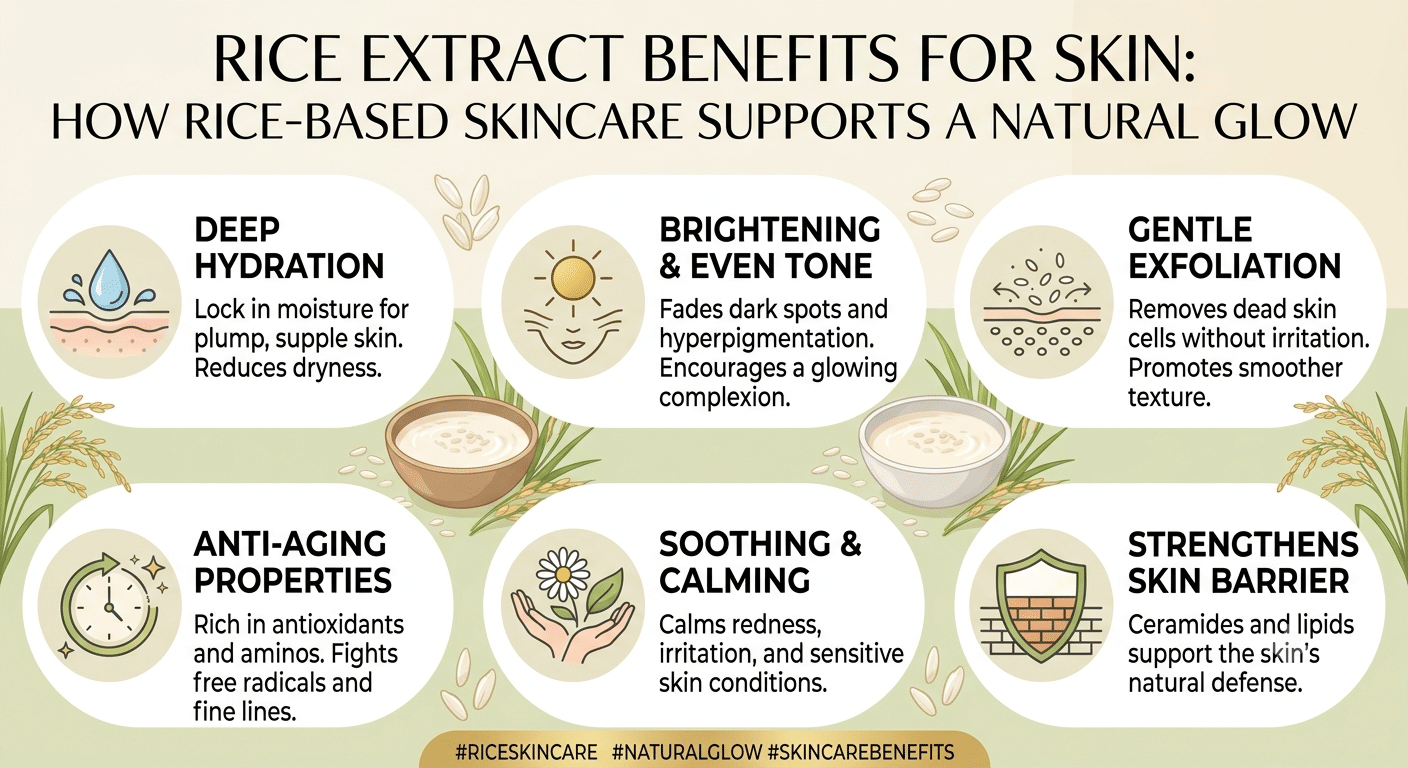
Rice has been part of beauty traditions for generations, but today it is no longer limited to homemade beauty rituals or traditional preparations. Rice extract, rice bran extract, rice peptides, rice ceramides, and rice-derived antioxidants are now appearing in cleansers, toners, essences, serums, moisturizers, masks, and other modern skincare products. The reason is fairly simple: rice contains a collection of naturally occurring compounds that may support several aspects of healthy-looking skin, including hydration, antioxidant protection, barrier function, and the appearance of uneven tone. Research on rice-derived ingredients has also expanded beyond traditional cosmetic claims, with studies examining their effects on skin hydration, pigmentation, oxidative stress, collagen-related processes, and transepidermal water loss. One clinical study involving 30 human volunteers found improvements in hydration and several skin appearance measures after 28 days of using formulations containing rice bran bioactive compounds, although the specific formulation and delivery system matter when interpreting those findings.
So, what does all of this mean if you are simply looking for skin that looks fresh, smooth, hydrated, and naturally radiant? Think of rice-based skincare less like a magic eraser and more like a supportive teammate. It may help create better conditions for the skin to maintain moisture, defend itself against oxidative stress, and appear more balanced over time. Rice-derived ingredients can contain compounds such as ferulic acid, gamma-oryzanol, phenolic compounds, phytosterols, peptides, and glucosylceramides, depending on the part of the rice used and the extraction process. A 2022 review of dermatological applications of rice products concluded that rice-derived ingredients have potential moisturizing, antioxidant, anti-inflammatory, photoprotective, and pigmentation-related applications, while also emphasizing that different rice components have different properties. This makes rice particularly interesting for people who prefer skincare built around gentle, plant-derived ingredients rather than relying exclusively on highly active synthetic ingredients.
What Is Rice Extract in Skincare?
Rice extract is a cosmetic ingredient made by processing rice or a particular part of the rice plant to obtain compounds that can be incorporated into skincare formulations. The exact composition depends heavily on whether the ingredient comes from the rice grain, rice bran, rice germ, rice husk, rice water, fermented rice, or rice oil. This distinction is important because saying that a product contains “rice” does not tell you exactly what benefits it can provide. For example, rice bran is particularly interesting because it contains lipids, antioxidants, phenolic compounds, vitamin-related components, and other bioactive substances. Rice-derived glucosylceramides have also been studied for their relationship with epidermal hydration and barrier function. Research published in 2026 identified previously undescribed acylated glucosylceramides from rice bran and reported that one of them significantly reduced transepidermal water loss in a reconstructed human epidermal model.
From a skincare perspective, this means “rice extract” should not be treated as one single standardized active ingredient. Two products can both advertise rice extract while containing completely different rice-derived compounds and concentrations. One might primarily provide antioxidant compounds, another might focus on rice peptides, while another could contain rice-derived ceramides or glucosylceramides. The formulation surrounding the ingredient also makes a difference because delivery systems can influence stability and how effectively ingredients interact with the skin. Researchers have even explored nanoemulsion systems for rice bran oil because some of its important bioactive compounds are lipophilic and can present formulation challenges. In other words, the quality and formulation of a rice-based skincare product matter just as much as the attractive ingredient name on the front of the bottle.
Rice Extract vs Rice Bran Extract
Although the names sound similar, rice extract and rice bran extract are not necessarily interchangeable. Rice bran is the outer layer removed during rice milling, and it contains a particularly diverse collection of compounds, including lipids and antioxidant-related substances. Several studies investigating rice and skin have specifically focused on rice bran because of its concentration of bioactive molecules. Research on rice bran compounds has found antioxidant activity, hydration-related effects, and potential influence on pigmentation and collagen-associated pathways in laboratory models.
Rice bran therefore deserves attention when discussing the potential benefits of rice-based skincare, but consumers should avoid assuming that every rice bran product will reproduce the findings from a research study. A laboratory extract, a purified compound, and a finished cosmetic cream can behave differently. The extraction method, concentration, stability, pH, delivery system, and combination with other ingredients can all influence performance. This is why it is more accurate to say that rice-derived ingredients show promising skincare potential rather than claiming that every rice product will automatically produce identical results.
Why Rice Has Become Popular in Modern Skincare
Modern skincare has increasingly embraced ingredients that combine multiple supportive properties without necessarily feeling aggressive on the skin. Rice fits nicely into that category because different rice-derived compounds can contribute to different skincare goals. Antioxidants can help address oxidative stress, moisturizing components can support hydration, and rice-derived lipids can contribute to barrier-focused formulations. A PubMed-indexed study on rice bran bioactive compounds found antioxidant activity in formulations containing compounds such as ferulic acid, gamma-oryzanol, and phytic acid, while human measurements indicated improved skin hydration in the tested formulations.
There is also a cultural element behind rice skincare. Rice has been associated with beauty practices across several Asian cultures for a long time, and modern cosmetic science has attempted to investigate some of the compounds behind those traditions. That does not mean every traditional rice remedy has been clinically proven, but it does explain why researchers continue to examine rice-derived ingredients. A review published in the Journal of Cosmetic Dermatology summarized evidence surrounding rice products and identified potential moisturizing, antioxidant, anti-inflammatory, pigmentation-related, and photoprotective properties among different rice-derived ingredients. The modern appeal of rice skincare therefore sits at the intersection of traditional beauty practices and contemporary ingredient research.
Key Skin-Loving Compounds Found in Rice
Rice is chemically more interesting than its simple appearance suggests. Depending on the rice component being studied, researchers have identified phenolic compounds, ferulic acid, gamma-oryzanol, peptides, glucosylceramides, ceramides, phytosterols, and other bioactive molecules. These compounds do not all perform the same function. Some have antioxidant properties, some interact with lipid structures involved in skin-barrier function, and others have been investigated for pigmentation or collagen-related activity.
Ferulic acid is particularly interesting because it is a plant-derived antioxidant that has been studied in connection with skin dullness and pigmentation. A randomized exploratory study published in 2026 evaluated a cream containing 1% ferulic acid derived from rice bran in 24 healthy women and reported a significant reduction in the melanin index on the treated side compared with placebo, along with participants’ reported improvement in the appearance of dark and yellowish dullness. This is useful evidence, but it should not be interpreted as proof that any ordinary rice extract product will produce the same outcome.
Rice Extract Benefits for Skin
One of the biggest reasons people turn to rice-based skincare is the possibility of achieving soft, hydrated, naturally radiant-looking skin without relying on an aggressive approach. Rice-derived ingredients may support several different dimensions of skin appearance at once, which makes them particularly attractive in everyday formulations. Studies have investigated rice ingredients for hydration, antioxidant activity, pigmentation, skin texture, elasticity, collagen-related pathways, and barrier function. In a 28-day human study, formulations containing rice bran bioactive compounds were associated with improvements in hydration, lightening, thickness, roughness, and elasticity measurements in 30 volunteers.
The important point is that these benefits should be viewed as potential or formulation-dependent benefits, rather than guarantees. Skin is a living biological system, and visible results depend on factors such as age, genetics, UV exposure, climate, existing skin conditions, lifestyle, and the rest of a skincare routine. A rice serum used twice a day alongside sunscreen and a moisturizer is not equivalent to applying raw rice water occasionally. The science is strongest when a specific ingredient, concentration, delivery system, and outcome have actually been studied. With that distinction in mind, rice-based skincare can be a useful ingredient category for people who want to support hydration, barrier health, antioxidant defense, and a more even-looking complexion.
Supports Skin Hydration
Hydration is one of the most practical reasons to consider rice-derived skincare. When skin retains adequate water, it generally appears smoother, softer, and more supple, while dehydration can make fine lines and rough texture look more pronounced. Rice-derived glucosylceramides have attracted particular attention because ceramide-related lipids play an important role in the structure and function of the skin barrier. Research examining glucosylceramides and ceramides isolated from rice found that certain molecules reduced transepidermal water loss in a reconstructed epidermal model, suggesting potential mechanisms for supporting epidermal moisturization.
A separate study investigating rice bran bioactive compounds in topical formulations also found improvements in human skin hydration using several measurement techniques. That does not mean rice extract should replace a conventional moisturizer, because effective moisturization usually involves a combination of humectants, emollients, and occlusive ingredients. Instead, rice-derived ingredients can be one component within a broader formulation designed to help the skin maintain a comfortable moisture balance. If your goal is a healthy glow, this matters because radiance often begins with hydration rather than pigmentation changes.
Helps Strengthen the Skin Barrier
The skin barrier acts much like a protective wall. It helps keep water inside while limiting the impact of external irritants and environmental stressors. When barrier function is compromised, skin can become dry, rough, tight, or more reactive. This is why ingredients that support barrier lipids are valuable in modern skincare.
Rice-derived ceramides and glucosylceramides are especially relevant here. Researchers have identified rice-derived molecules that influence transepidermal water loss, an important measurement associated with barrier function. A 2026 study on newly characterized rice-bran oryzaceramides found that one compound significantly improved barrier integrity in a reconstructed human epidermal model and reduced water loss. This is promising, although laboratory models do not automatically translate into identical effects when the ingredient is placed into every consumer skincare product.
For everyday skincare, barrier support can be especially useful when the skin feels dry or uncomfortable after cleansing, weather changes, air conditioning, or exposure to harsh products. A rice-based moisturizer or serum containing appropriate barrier-supporting ingredients can fit into a gentle routine. The goal is not to make the skin unnaturally “perfect”; it is to maintain the conditions under which healthy-looking skin can function normally.
Provides Antioxidant Support
Every day, skin encounters environmental stressors such as ultraviolet radiation, pollution, and other sources of oxidative stress. Antioxidants are interesting because they can help neutralize reactive molecules involved in oxidative processes. Rice bran contains several compounds that have demonstrated antioxidant activity in laboratory research, including phenolic compounds and ferulic acid. Studies have investigated rice bran extracts for their ability to reduce oxidative damage and influence antioxidant-related pathways in skin cells.
This is one reason rice-derived ingredients often appear in skincare products marketed around glow, environmental protection, and healthy-looking aging. However, antioxidant skincare should complement rather than replace sunscreen. A rice extract cannot be treated as a substitute for broad-spectrum UV protection. Daily sunscreen remains one of the most important steps for reducing UV-related skin damage, while antioxidant-rich products can be viewed as supportive additions to a comprehensive routine.
Helps Improve the Look of Dull Skin
Dull-looking skin can result from several factors, including dehydration, accumulated surface cells, environmental exposure, uneven pigmentation, and reduced skin reflectivity. Rice-based skincare may address some of these factors indirectly through hydration and antioxidant support. Certain rice-derived compounds have also been studied for their potential influence on melanin-related pathways.
Research is particularly interesting here, but it requires careful interpretation. A 2026 randomized exploratory study involving 24 healthy women found that topical 1% rice-bran-derived ferulic acid reduced the melanin index in treated facial areas and was associated with subjective improvements in dark and yellowish dullness. Other laboratory studies have investigated rice bran and husk extracts for effects on melanin production and tyrosinase activity. These findings suggest that some rice-derived compounds may contribute to a brighter-looking complexion, but they do not justify treating rice extract as a guaranteed skin-lightening solution.
Supports a More Even-Looking Skin Tone
Uneven skin tone is often one of the most frustrating cosmetic concerns because pigmentation can have many causes. Sun exposure, post-inflammatory pigmentation, hormonal influences, acne-related inflammation, and natural variations in melanin production can all contribute. Rice-derived compounds are being studied for their effects on melanogenesis, particularly through pathways involving tyrosinase and related proteins.
Laboratory research on particular rice varieties has found promising anti-melanogenic activity. For example, one study examining purple glutinous rice bran and husk extracts found effects on tyrosinase activity and melanin production in cell models, while also identifying antioxidant and collagen-related activity. Another study found that rice bran and husk extracts influenced pigmentation-related genes in human melanoma cells. These are useful research signals, but laboratory findings are not the same as clinical proof of treating hyperpigmentation in people. For someone seeking a more even-looking complexion, rice skincare may be considered one supportive part of a routine that also includes sun protection and appropriately selected evidence-based actives.
May Support Firmer, Smoother-Looking Skin
The relationship between rice-derived ingredients and skin aging is another area researchers are exploring. Some rice bran compounds have demonstrated antioxidant properties, while other studies have examined their influence on collagen-related pathways and enzymes involved in extracellular-matrix degradation. These mechanisms are interesting because oxidative stress and collagen breakdown are both associated with visible changes such as fine lines, loss of firmness, and uneven texture.
A study of rice bran waxes found anti-aging-related activity in cultured skin cells, including antioxidant effects, melanogenesis inhibition, collagen stimulation, and suppression of certain matrix metalloproteinases. Another study using rice bran extracts in topical formulations reported improvements in measurements associated with roughness and elasticity among its 30 volunteers. Still, these results should be viewed as evidence that rice-derived compo