
Skincare Routine for Oily Skin: The Complete Guide to Healthy, Shine-Free Skin
-
Dokmai London
- Posted on
- 0 comments
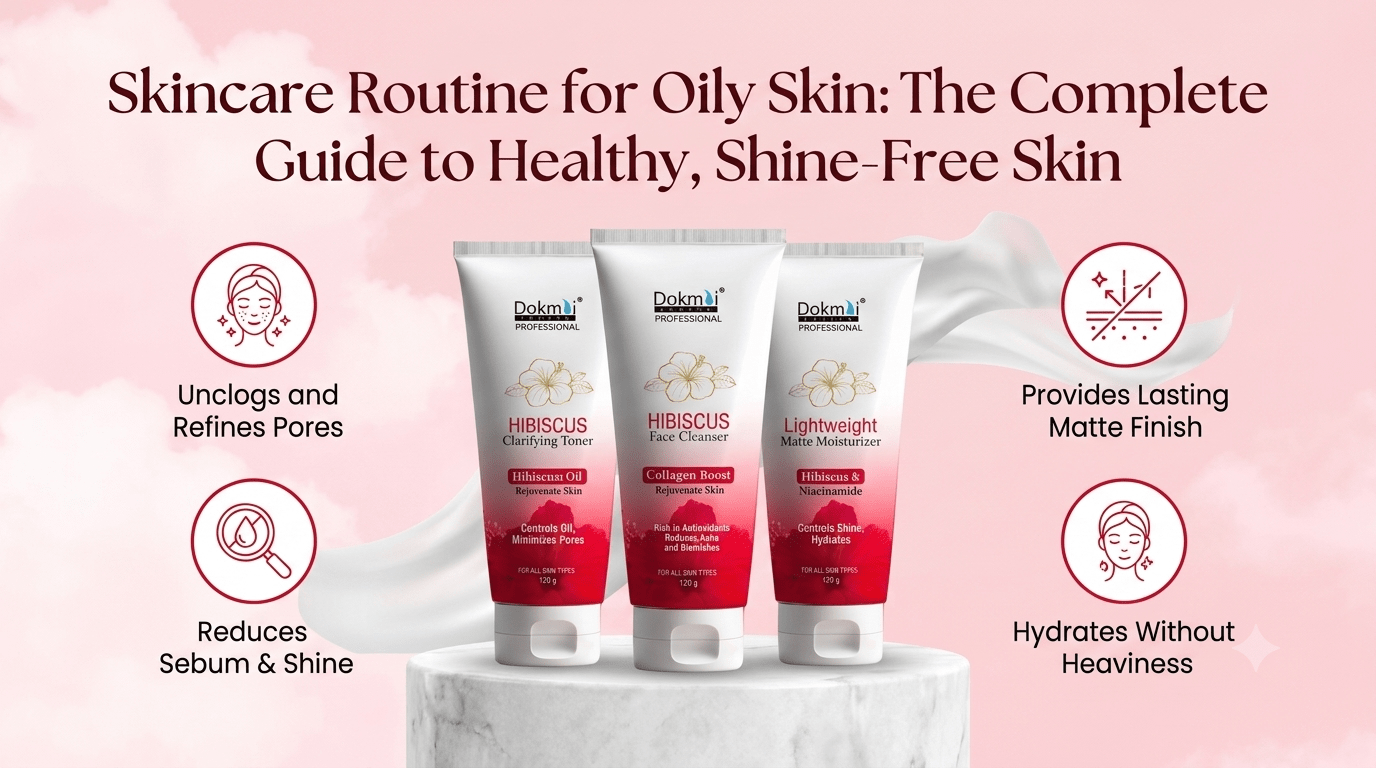
If you have oily skin, you know the challenges that come with it—excess shine, clogged pores, acne breakouts, blackheads, and enlarged pores. While oily skin naturally produces more sebum than other skin types, the right skincare routine can help balance oil production without stripping away your skin’s natural moisture.
Many people believe that oily skin doesn’t need moisturizer or hydration, but that’s one of the biggest skincare myths. Healthy oily skin needs gentle cleansing, lightweight hydration, and consistent care to stay balanced.
In this comprehensive guide, you’ll learn the best skincare routine for oily skin, the most effective ingredients, common mistakes to avoid, and practical lifestyle tips for maintaining a fresh, healthy complexion.
Understanding Oily Skin
Oily skin occurs when the sebaceous glands produce more sebum than the skin needs. While sebum helps protect and moisturize the skin, excessive production can lead to clogged pores and breakouts.
Common Signs of Oily Skin
- Shiny or greasy appearance
- Enlarged pores
- Frequent acne and pimples
- Blackheads and whiteheads
- Makeup wearing off quickly
- Excess oil, especially in the T-zone
Understanding your skin type is the first step toward building an effective skincare routine.
Why a Proper Skincare Routine Is Important
A consistent skincare routine helps:
- Remove excess oil
- Prevent clogged pores
- Reduce acne breakouts
- Improve skin texture
- Maintain hydration
- Support a healthy skin barrier
- Keep skin looking fresh throughout the day
The goal isn’t to eliminate oil completely but to maintain a healthy balance.
Step 1: Cleanse Twice a Day
Cleansing is the foundation of oily skin care.
Wash your face every morning and evening to remove:
- Dirt
- Sweat
- Excess oil
- Pollution
- Sunscreen
- Makeup residue
Look for a gentle face wash with ingredients such as:
- Vitamin C
- Niacinamide
- Salicylic Acid
- Rice Water Extract
- Aloe Vera
Avoid harsh cleansers that leave your skin feeling tight, as they may encourage even more oil production.
Step 2: Use a Lightweight Toner (Optional)
A toner can help refresh the skin after cleansing and prepare it for the next steps.
Choose alcohol-free toners with calming and hydrating ingredients. If a toner irritates your skin or feels unnecessary, you can skip it.
Step 3: Apply a Serum
A serum targets specific skin concerns with concentrated ingredients.
Niacinamide Serum
Niacinamide is one of the best ingredients for oily skin.
It helps:
- Control excess oil
- Reduce the appearance of pores
- Calm redness
- Improve skin texture
- Strengthen the skin barrier
Vitamin C Serum
Vitamin C helps:
- Brighten dull skin
- Reduce post-acne marks
- Support collagen production
- Protect against environmental damage
Apply a few drops after cleansing and allow the serum to absorb before moving to the next step.
Step 4: Moisturize Every Day
One of the biggest misconceptions is that oily skin doesn’t need moisturizer.
Skipping moisturizer can leave your skin dehydrated, which may trigger even more oil production.
Choose a lightweight, oil-free, or gel-based moisturizer that hydrates without feeling heavy.
Benefits include:
- Balanced hydration
- Improved skin barrier
- Softer skin
- Reduced tightness after cleansing
Step 5: Never Skip Sunscreen
Daily sunscreen is essential for every skin type, including oily skin.
Use a broad-spectrum sunscreen with SPF 30 or higher.
Benefits include:
- Protection from UV damage
- Prevention of pigmentation
- Reduced risk of premature aging
- Support for an even skin tone
Modern lightweight sunscreens are available that are suitable for oily and acne-prone skin.
Morning Skincare Routine for Oily Skin
Follow these simple steps:
- Cleanse your face.
- Apply a Niacinamide or Vitamin C serum.
- Use a lightweight moisturizer.
- Finish with sunscreen.
This routine helps keep your skin fresh and protected throughout the day.
Night Skincare Routine for Oily Skin
Nighttime is when your skin naturally repairs itself.
Follow these steps:
- Remove makeup and sunscreen.
- Wash your face with a gentle cleanser.
- Apply your chosen serum.
- Finish with a lightweight moisturizer.
Consistency is more important than using many products.
Best Ingredients for Oily Skin
Niacinamide
Supports balanced oil production and improves the appearance of pores.
Salicylic Acid
A beta hydroxy acid (BHA) that exfoliates inside the pores and helps reduce blackheads and acne.
Vitamin C
Brightens the complexion and helps improve the appearance of post-acne marks.
Hyaluronic Acid
Hydrates oily skin without adding heaviness.
Aloe Vera
Provides soothing hydration and helps calm irritation.
Green Tea Extract
Rich in antioxidants and known for its calming properties, making it a popular ingredient in products designed for oily skin.
Weekly Skincare Tips
Exfoliate Gently
Exfoliate 1–2 times per week to remove dead skin cells and improve skin texture.
Avoid over-exfoliating, which can irritate the skin.
Clay Masks
Using a clay mask once a week may help absorb excess oil and leave the skin feeling refreshed.
Common Mistakes to Avoid
Many people unknowingly worsen oily skin by making these mistakes:
- Washing the face too often
- Using harsh soaps
- Skipping moisturizer
- Touching the face frequently
- Sleeping with makeup on
- Forgetting sunscreen
- Using too many active ingredients at once
Keeping your routine simple often leads to better results.
Lifestyle Habits for Healthy Oily Skin
Healthy skin starts from within.
Stay Hydrated
Drink enough water throughout the day to support overall skin health.
Eat a Balanced Diet
Include:
- Fruits
- Vegetables
- Whole grains
- Healthy fats
- Lean proteins
Sleep Well
Aim for 7–8 hours of sleep each night.
Exercise Regularly
Physical activity supports healthy circulation and overall well-being.
Manage Stress
Stress may contribute to breakouts in some individuals.
Frequently Asked Questions (FAQs)
How many times should I wash oily skin?
Twice daily is usually sufficient. Over-washing may disrupt the skin barrier and increase oil production.
Is moisturizer necessary for oily skin?
Yes. A lightweight, non-comedogenic moisturizer helps maintain hydration and supports the skin barrier.
Which serum is best for oily skin?
Niacinamide is a popular choice for balancing oil and improving skin texture. Vitamin C may also be beneficial if your concerns include dullness or post-acne marks.
Can oily skin become dehydrated?
Yes. Oily skin can still lack water, so using hydrating products is important.