
Permanent Hair Spa: What Is It, Benefits & How Long Does It Last?
-
Dokmai London
- Posted on
- 0 comments
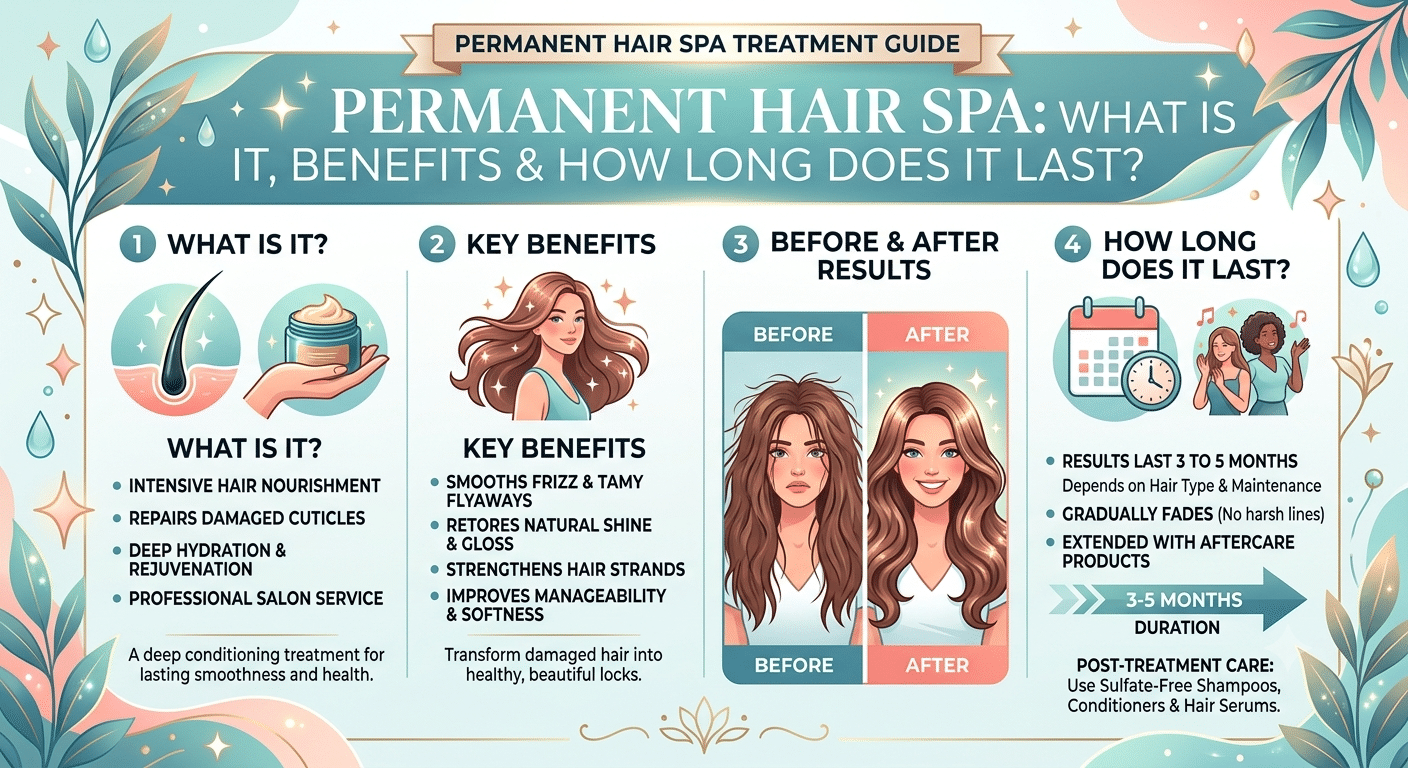
What Is a Permanent Hair Spa?
The phrase permanent hair spa sounds straightforward, but it can be confusing because it is not a single standardized salon treatment with one universally accepted formula. In current salon usage, the term is often used for an intensive or longer-lasting hair treatment designed to make the hair feel smoother, softer, shinier, and easier to manage. A traditional hair spa is primarily a deep-conditioning service involving cleansing, a nourishing mask, massage, and sometimes steam, while a service marketed as “permanent” may involve a stronger smoothing or texture-changing process. L’Oréal Professionnel describes a conventional hair spa as a deep-conditioning treatment intended to nourish the scalp and hair while improving moisture, texture, shine, and manageability. (L’Oréal Professionnel)
So, if you have searched for “permanent hair spa benefits” or “how long does permanent hair spa last,” the most important thing to understand is that the name alone does not tell you exactly what product or chemical process a salon will use. One salon may use the phrase to describe an intensive conditioning service, while another may use it when discussing a longer-lasting smoothing treatment. That difference matters because the expected result, maintenance routine, durability, and potential for hair damage can all change depending on the formulation. Before booking, ask for the exact treatment name, product being used, expected result, processing method, and aftercare instructions rather than relying only on the word “permanent.”
Is Permanent Hair Spa Really Permanent?
No, not literally. Hair itself keeps growing, while treated lengths continue to experience shampooing, humidity, sunlight, heat styling, brushing, and environmental exposure. Even chemical treatments that are described as “permanent” generally affect the hair that has already been treated rather than newly grown hair. For example, permanent straightening changes the structure or appearance of treated strands, but new growth eventually appears with the person’s natural texture. (Healthline)
This is why it is better to think of permanent hair spa as a longer-lasting hair transformation or intensive treatment, depending on what your salon actually provides, rather than expecting a one-time service to keep every strand smooth forever. If your main goal is simply nourishment, softness, and shine, a conventional hair spa may be enough. If your goal is significant frizz reduction or a change in texture that lasts for months, you may actually be discussing a smoothing, straightening, or similar chemical service rather than a traditional hair spa.
How Is Permanent Hair Spa Different From a Regular Hair Spa?
The biggest difference is usually the depth and intended longevity of the result. A conventional hair spa is designed to condition and improve the appearance and feel of the hair. It is generally part of a maintenance routine rather than a permanent texture-changing procedure. A long-lasting treatment, on the other hand, may use specialized formulations and heat or chemical processing to create a more noticeable change in smoothness or manageability. Because “permanent hair spa” is not a standardized category, the exact difference depends on the salon and product system.
| Feature | Regular Hair Spa | Long-Lasting / “Permanent” Hair Spa |
|---|---|---|
| Main purpose | Conditioning and nourishment | Longer-lasting smoothness or manageability |
| Typical focus | Dryness, roughness, dullness, frizz | Frizz, texture, smoothness, manageability |
| Result | Soft, shiny, conditioned hair | Potentially longer-lasting cosmetic change |
| Frequency | Usually repeated every few weeks | Depends on the specific treatment |
| New hair growth | Natural texture | Natural texture remains in new growth |
| Chemical processing | Usually limited | May involve stronger chemical processing |
| Consultation | Useful | Especially important |
Regular Hair Spa
A regular hair spa works much like a reset button for tired-looking hair. A professional service commonly includes cleansing, treatment-mask application, massage, and sometimes steam or heat-assisted processing before the hair is rinsed and styled. L’Oréal Professionnel’s current guidance describes hair spa as a multi-step treatment that can include cleansing, conditioning or masking, massage, steaming, and rinsing. (L’Oréal Professionnel)
The purpose is not to permanently change your natural hair pattern. Instead, it helps improve the condition and appearance of the existing hair. This makes regular hair spa particularly useful when your hair feels dry, rough, dull, tangled, or difficult to manage. Current salon guidance commonly places the visible effects of a conventional hair spa in the range of roughly 2–4 weeks, although the actual duration depends heavily on hair condition, washing frequency, products, and lifestyle. (Bodycraft)
Long-Lasting Hair Treatments
A long-lasting smoothing treatment is a different conversation. Depending on the formulation, it may be designed to reduce frizz, loosen texture, increase smoothness, or create a straighter-looking finish for several months. Chemical straightening and related services can last for months because they alter the treated hair, but they also require more careful consideration of hair condition and potential damage. (Healthline)
That is why a professional consultation is so important. Imagine choosing a road trip without knowing whether your car is being prepared for a short drive or a cross-country journey—the preparation would obviously be different. The same principle applies to hair treatments: nourishment, smoothing, and structural chemical changes are not interchangeable services.
How Does a Permanent Hair Spa Work?
The process depends on the exact service being offered, but a professional appointment should begin with an assessment rather than immediately applying product. Your stylist should look at the hair’s texture, porosity, previous colour or chemical history, dryness, breakage, density, and overall condition. This is particularly important if the treatment involves chemical processing or substantial heat. Hair that has already been heavily bleached, coloured, relaxed, straightened, or otherwise processed may respond differently from untreated hair.
A traditional hair spa generally follows a relatively gentle sequence: cleansing, treatment application, massage, optional steam, rinsing, conditioning, and styling. L’Oréal Professionnel’s current hair-spa guidance describes similar stages and emphasizes tailoring treatment to individual hair and scalp needs. (L’Oréal Professionnel) A service sold under a “permanent” or long-lasting label may add a specialized smoothing formulation and controlled heat processing. The exact timing and technique should always follow the manufacturer’s instructions rather than a generic internet formula.
Hair Assessment and Preparation
The consultation is one of the most overlooked parts of any salon treatment. Before you commit to a long-lasting service, tell your stylist about previous colour, bleach, keratin, smoothening, rebonding, perming, or other chemical treatments. Also mention if your hair breaks easily, feels unusually elastic when wet, or has recently undergone bleaching. These details can help determine whether the requested treatment is appropriate or whether a conditioning-focused service would be safer.
Preparation usually begins with cleansing the hair so that excess oil, styling residue, and buildup do not interfere with the treatment. Depending on the service, the stylist may use a specialized shampoo or cleansing step. With a traditional spa, the goal is generally to prepare the hair for deep conditioning; with a chemical smoothing service, preparation can be more specific to the manufacturer’s system.
Treatment Application and Processing
Once the hair is prepared, the chosen formula is applied according to the treatment protocol. With conventional spa services, this can involve a rich conditioning mask followed by massage and steam. With longer-lasting smoothing treatments, the product may be distributed carefully through sections of the hair and processed for a specified period before rinsing, drying, or heat styling.
The important point is that more processing does not automatically mean better hair. The right formula, correct application, controlled processing, and appropriate aftercare matter far more than simply choosing the strongest treatment available. A professional stylist should aim for the result your hair can realistically handle rather than promising an unrealistic transformation.
Benefits of Permanent Hair Spa
When the right treatment is selected for the hair and performed correctly, the most noticeable benefits are generally cosmetic: improved smoothness, softness, shine, reduced frizz, and easier styling. These benefits can be especially attractive for people whose hair has become difficult to manage because of heat styling, colouring, environmental exposure, dryness, or chemical processing. Professional hair spa treatments are designed to improve hydration and texture, while stronger smoothing services may produce longer-lasting changes in manageability. (L’Oréal Professionnel)
However, it is important not to confuse improved appearance with treatment of an underlying medical hair problem. Current medical commentary emphasizes that hair spas can improve the condition and appearance of the hair and may reduce breakage, but they do not treat medical causes of genuine hair loss. (The Indian Express)
Smoother and Softer Hair
One of the first things people notice after an intensive hair treatment is the feel of the hair. Dry strands can feel rough because their surface is not behaving smoothly, while conditioning products can make the hair feel softer and easier to comb. When the hair becomes more manageable, everyday styling can also become less frustrating.
This is particularly useful if your hair feels like it catches on your comb or becomes tangled after washing. A good conditioning service can make the lengths feel more polished without necessarily changing your natural texture. If a stronger smoothing treatment is used, the effect may be more dramatic, but that should be discussed during consultation.
Frizz Control and Better Manageability
Frizz is often one of the biggest reasons people explore salon treatments. Humidity, dryness, damaged cuticles, natural texture, and frequent heat styling can all contribute to a rough or unruly appearance. Conditioning and smoothing treatments can help the hair look more controlled and make daily blow-drying or styling easier.
The important distinction is that frizz control is not always the same as straightening. A nourishing spa may reduce the appearance of frizz while keeping your natural waves or curls. A chemical smoothing service can create a more significant change in texture. Your desired finish should therefore be part of the consultation.
Improved Shine and Appearance
Healthy-looking shine is closely connected to how smoothly the hair surface reflects light. When the hair feels smoother and less rough, it can look noticeably glossier. This is one reason salon hair treatments can produce an immediate “before and after” effect even when the underlying structure of the hair has not been permanently repaired.
A professional treatment can therefore be useful before events, weddings, photoshoots, or periods when you want your hair to look particularly polished. Just remember that shine is an appearance benefit, not proof that every internal form of hair damage has been permanently reversed.
How Long Does Permanent Hair Spa Last?
There is no single number that applies to every treatment marketed as a permanent hair spa. A standard hair spa may provide noticeable softness and shine for approximately 2–4 weeks, while a more intensive smoothing service can last considerably longer. Current Indian salon guidance gives conventional hair-spa results in roughly this range, with factors such as washing, hair condition, treatment intensity, and maintenance influencing longevity. (Bodycraft)
If the service is actually a chemical straightening or smoothing treatment, the timeline can extend to several months. For example, published guidance on permanent hair straightening reports that salon straightening can last around four to six months, while different techniques can vary substantially. (Healthline) That should not be confused with a conventional conditioning hair spa. In other words, ask what treatment you are actually receiving before assuming how long it will last.
Factors That Affect Results
Several everyday habits can shorten or extend the visible results. Frequent shampooing generally removes conditioning effects faster than less frequent washing. Hot water, repeated heat styling, harsh cleansing products, swimming, humidity, pollution, and mechanical friction can also influence how long the hair continues to feel smooth.
Your hair’s starting condition matters too. Very porous or heavily damaged hair may absorb and lose moisture quickly, while healthier hair may retain a conditioned feel for longer. Product choice and professional technique also make a difference. That is why two people can receive apparently similar services and experience different results.
Who Can Consider a Permanent Hair Spa?
People with dry, frizzy, rough, dull, or difficult-to-manage hair are often interested in intensive salon treatments. Those who regularly use straighteners, curling tools, blow dryers, colour services, or chemical treatments may also want additional conditioning and maintenance. Professional hair spa guidance specifically identifies dry, frizzy, chemically treated, and dull hair among the common situations where a hair spa may be useful. (L’Oréal Professionnel)
However, suitability depends on what “permanent hair spa” means at the salon. Someone looking for hydration may need a conditioning spa, while someone wanting a significant reduction in natural curl or wave may be considering a chemical smoothing service. Those are very different goals. A stylist should assess the hair before recommending a treatment, especially when previous chemical processing is involved.
Dry, Frizzy, or Chemically Treated Hair
Dry and frizzy hair can benefit from treatments designed around moisture and conditioning. Chemically treated hair may also benefit from carefully selected professional maintenance, but heavily compromised strands need extra caution. If the hair is already brittle, adding another strong chemical service simply because you want a smoother finish may not be the most appropriate approach.
The better strategy is to match the treatment to the actual condition of the hair, not just the desired Instagram result. Sometimes the smartest salon appointment is a restorative conditioning service followed by a maintenance plan rather than an aggressive transformation.
Does Permanent Hair Spa Straighten Hair?
Not necessarily. A traditional hair spa is a conditioning treatment and is not designed to permanently straighten naturally curly or wavy hair. It can make the hair look smoother and reduce frizz, which may create the impression of straighter hair, but that is different from permanently changing its texture.
If your primary goal is straight hair, discuss dedicated straightening or smoothing options with a professional. Chemical straightening treatments can alter the texture of the treated hair for months, but they also carry greater processing considerations than an ordinary conditioning spa. (Healthline)
Can Permanent Hair Spa Damage Hair?
The answer depends entirely on what is inside the treatment and how it is performed. A conventional conditioning spa is very different from a chemically processed straightening or smoothing treatment. Chemical services, especially when combined with high heat or performed on already weakened hair, can contribute to dryness, brittleness, breakage, or other unwanted changes.
This is why professional assessment is more than a formality. If your hair has been bleached repeatedly or has significant breakage, tell your stylist before treatment. Current medical guidance on chemical hair treatments also emphasizes that incorrect processing can cause hair and scalp problems, which is another reason to use trained professionals and follow product instructions. (WebMD)
Permanent Hair Spa Aftercare Tips
Aftercare can make a noticeable difference to how long the results remain visible. Your salon should give you product-specific instructions, because different formulations have different requirements. In general, gentle cleansing, adequate conditioning, reduced unnecessary heat exposure, and careful handling can help preserve smoothness and softness.
Avoid treating the salon appointment as a magic shield against future damage. Hair still encounters friction when you sleep, brush, towel-dry, style, and wash it. Using a gentle routine and avoiding excessive heat can help maintain the cosmetic benefits for longer.
A practical aftercare routine may include:
- Use a gentle shampoo and conditioner suitable for your treated hair.
- Avoid very hot water when washing.
- Limit unnecessary straightening and high-heat styling.
- Use heat protection whenever heat tools are required.
- Follow the exact waiting period recommended by your stylist or product manufacturer.
- Schedule maintenance based on your hair’s condition rather than an arbitrary calendar.
Permanent Hair Spa vs Keratin vs Smoothening
These terms are often mixed together online, but they can refer to different services. A conventional hair spa focuses primarily on conditioning, nourishment, and improving the appearance and feel of the hair. Keratin and smoothening services are generally associated with longer-lasting frizz control and changes in manageability, although formulations and results vary considerably between products and salons.
| Treatment | Main Goal | Typical Result | Longevity |
|---|---|---|---|
| Hair Spa | Nourishment and conditioning | Softer, shinier, manageable hair | Often around 2–4 weeks |
| Keratin-type smoothing | Smoothness and frizz reduction | Sleeker, easier-to-style hair | Often several months, product dependent |
| Chemical Smoothening | Texture and frizz control | Smoother appearance | Often several months |
| Permanent Straightening | Major texture change | Straighter treated hair | Several months/new-growth dependent |
Current sources place ordinary hair-spa benefits around a few weeks, while chemical straightening and smoothing services can last several months depending on the technique and maintenance. (Bodycraft)
The choice should therefore be based on your desired result and your hair’s condition, not on whichever treatment sounds most powerful. If you only want softer, healthier-looking hair, a strong chemical service may be unnecessary. If you want long-lasting texture reduction, a basic spa may not deliver the result you expect.
How Often Should You Repeat the Treatment?
There is no universal schedule. Current hair-spa guidance commonly suggests repeating conventional treatments every few weeks depending on hair condition, while normal healthy hair may require less frequent maintenance. (L’Oréal Professionnel)
For dry or chemically treated hair, a stylist may recommend more regular conditioning. For healthy hair, monthly or occasional sessions may be enough. If the service involves chemical smoothing or straightening, repeating it should be based on the specific product’s instructions and the appearance of new growth rather than simply booking another appointment as soon as the hair feels slightly less smooth.
What Should You Ask Your Salon Before Booking?
Before paying for a service called permanent hair spa, ask a few simple questions. What is the exact product name? Is the service a conditioning treatment, keratin-type smoothing treatment, chemical smoothening, or straightening service? How long should the result realistically last on your hair, and what aftercare will be required?
Also ask whether your existing colour, bleach, or chemical treatment changes your suitability. A professional salon should be comfortable explaining what the service can and cannot do. Be cautious of promises such as “permanent results forever,” especially when the treatment is actually a conditioning service. Clear expectations are the foundation of a good salon experience.
Conclusion
Permanent hair spa is a popular search term, but the phrase can describe different salon services, so understanding the exact treatment is essential. A conventional hair spa is mainly a deep-conditioning and nourishing service that can improve softness, shine, manageability, and the appearance of frizz, with visible effects often lasting around 2–4 weeks. (Bodycraft)
If a salon uses “permanent hair spa” to describe a stronger smoothing or chemical treatment, the results may last several months, but the process, aftercare, and potential risks are different. Permanent should not be interpreted as “forever,” because hair grows and treated lengths continue to experience washing, heat, humidity, and environmental exposure. (Healthline)
The smartest approach is simple: identify your hair concern first, understand the exact treatment being offered, and choose the service according to your hair’s condition and your desired result. When in doubt, get a professional consultation before processing your hair.
FAQs About Permanent Hair Spa
1. Is permanent hair spa actually permanent?
No. “Permanent hair spa” is not a standardized scientific category, and the term can refer to different intensive or long-lasting salon treatments. Traditional hair-spa effects are temporary, while chemical smoothing or straightening can last for several months on treated hair.
2. How long does a permanent hair spa last?
It depends on the exact treatment. A conventional hair spa commonly provides visible conditioning benefits for around 2–4 weeks, while certain chemical smoothing or straightening services can last several months. (Bodycraft)
3. Does permanent hair spa make hair straight?
Not necessarily. A normal hair spa mainly conditions the hair and reduces dryness and frizz. If the service is intended to permanently change texture, it may actually be a chemical smoothing or straightening treatment rather than a conventional hair spa.
4. Is permanent hair spa suitable for damaged hair?
It depends on how damaged the hair is and what treatment is being used. A nourishing conditioning spa may be appropriate for dry hair, but heavily weakened or bleached hair may not be suitable for an additional strong chemical process. A professional hair assessment is recommended before treatment.
5. Can a hair spa stop hair fall?
A hair spa may improve the appearance of dry hair and reduce breakage, but it does not treat medical causes of hair loss. Current medical guidance distinguishes breakage along the hair shaft from true shedding from the root; persistent or significant hair loss should be assessed by a dermatologist. (The Indian Express)