

Which Is Better: Hair Mask or Conditioner?
-
Dokmai London
- Posted on
- 0 comments
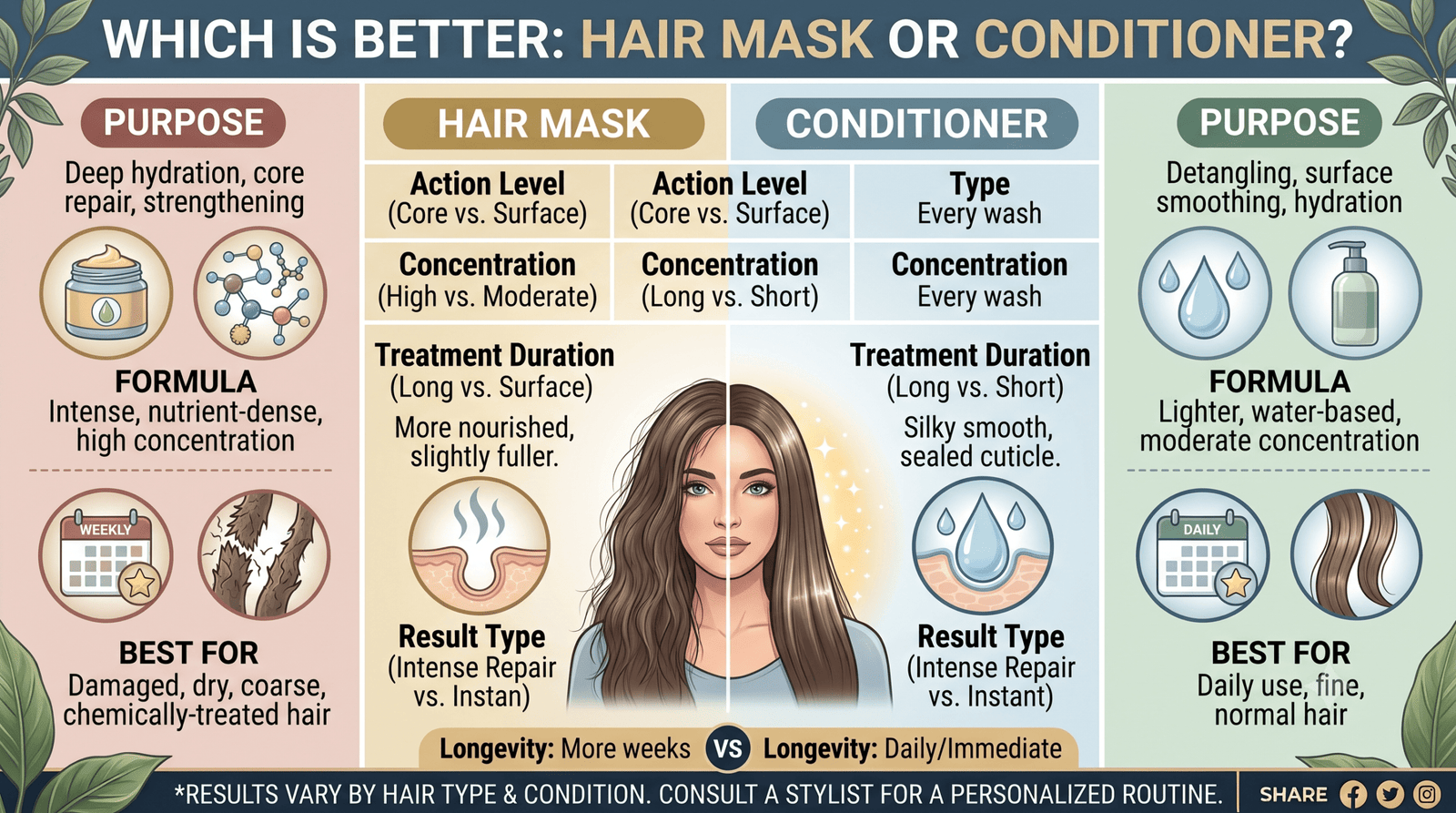
Which Is Better: Hair Mask or Conditioner?
When it comes to hair care, two products often create confusion: hair mask and conditioner. Both are designed to make hair softer, smoother, and easier to manage, but they are not exactly the same. Conditioner is generally designed for regular use after shampooing, while a hair mask is a more intensive treatment used when hair needs additional moisture and care.
So, which is better—hair mask or conditioner? The answer depends on your hair type, condition, and specific hair concerns. For many people, the best approach is not choosing one over the other but using each at the right time.
What Is a Hair Conditioner?
A hair conditioner is an essential part of a regular hair-washing routine. Shampoo cleans the scalp and hair, but it can leave the strands feeling rough or difficult to detangle. Conditioner helps moisturize, smooth, and improve manageability after washing. The American Academy of Dermatology recommends using conditioner after washing, with application depending on your hair type.
Conditioner is usually lighter than a hair mask and is designed to provide quick results. It can help:
- Make hair softer and smoother
- Reduce tangling
- Improve manageability
- Reduce friction between strands
- Make hair look shinier
- Control everyday dryness and frizz
For people with fine or straight hair, applying conditioner mainly to the lengths and ends can help avoid weighing the hair down. Those with dry or curly hair may benefit from applying it throughout the lengths.
What Is a Hair Mask?
A hair mask is a more concentrated conditioning treatment. It is generally richer in texture and is designed to provide intensive nourishment to hair that feels particularly dry, rough, brittle, or stressed.
Hair masks are commonly used for hair affected by frequent heat styling, coloring, chemical treatments, or excessive dryness. Depending on the product, a mask may be left on the hair for several minutes before rinsing.
The benefits of using a hair mask can include:
- Intense hydration
- Softer-feeling hair
- Improved smoothness
- Better manageability
- Reduced appearance of dryness
- Improved shine
- Additional care for chemically or heat-treated hair
However, a hair mask does not necessarily need to replace your regular conditioner.
Hair Mask vs Conditioner: What’s the Difference?
The biggest difference between a hair mask and conditioner is the level and purpose of conditioning.
| Feature | Hair Conditioner | Hair Mask |
|---|---|---|
| Main purpose | Regular hair maintenance | Intensive hair treatment |
| Texture | Usually lightweight | Usually richer |
| Usage | Often after every shampoo | Usually weekly or as needed |
| Treatment time | Usually a few minutes | Often longer |
| Best for | Softness and manageability | Dry, rough or damaged-looking hair |
| Frequency | Regular use | Occasional intensive care |
Conditioner is generally the everyday maintenance product, while a hair mask is more of a treatment product.
Is Hair Mask Better Than Conditioner?
Not necessarily. A hair mask is not automatically better than conditioner. They have different roles.
If your hair is relatively healthy and you simply want it to remain soft and manageable, conditioner may be all you need after shampooing.
If your hair feels extremely dry, rough, brittle, or stressed from frequent styling or chemical treatments, adding a hair mask to your routine may provide more intensive conditioning.
This is why comparing them as competitors can be misleading. A better approach is to understand what your hair needs at that particular time.
Which Is Better for Dry Hair?
For dry hair, both products can be useful.
Start with a suitable conditioner after shampooing. If your hair continues to feel dry or rough, consider adding a moisturizing hair mask periodically.
A consistent routine can be more useful than applying a very rich product every day. Overusing heavy products may leave some hair types feeling weighed down or greasy.
Which Is Better for Damaged Hair?
If your hair has been exposed to frequent straightening, curling, blow-drying, coloring, bleaching, or chemical treatments, it may need additional conditioning care.
A hair mask can be useful as an intensive treatment, while conditioner can help with regular maintenance.
It is also important to reduce the causes of damage. Dermatologists recommend limiting excessive heat, using lower heat settings where possible, and using heat-protective products.
Which Is Better for Curly Hair?
Curly and textured hair can often benefit from additional moisture because dryness can make curls appear frizzy and difficult to manage.
Conditioner is important for regular washing, while a suitable moisturizing mask can be added when the hair needs extra conditioning.
The right product should always be selected according to your individual hair type rather than simply following a trend.
Which Is Better for Fine or Oily Hair?
If your hair is fine or becomes oily quickly, a heavy hair mask may not be necessary very often.
A lightweight conditioner may be a better everyday option. Apply it mainly to the mid-lengths and ends rather than directly to the scalp.
If you use a hair mask, choose a lightweight formula and avoid applying excessive amounts.
Can You Use Both Hair Mask and Conditioner?
Yes, many people can use both as part of a hair-care routine.
A simple routine could look like this:
Regular wash day:
Shampoo → Conditioner → Rinse
Intensive-care day:
Shampoo → Hair Mask → Rinse
The exact order and whether you need conditioner after a particular mask depends on the product’s instructions. There is no universal need to use both every time.
How Often Should You Use a Hair Mask?
There is no single frequency that works for everyone. Many hair masks are designed for approximately once-a-week use, while some can be used more or less frequently depending on the formula and condition of the hair.
If your hair is healthy and easily weighed down, you may need a mask only occasionally. If it is very dry or exposed to frequent chemical or heat treatments, you may benefit from using one more regularly.
Always follow the instructions provided with the specific product in Salon.
Common Mistakes to Avoid
Using more hair products does not automatically mean healthier-looking hair. Avoid these common mistakes:
1. Applying too much product:
A large quantity is not necessarily more effective.
2. Applying heavy products directly to the scalp:
Most conditioners and masks are intended primarily for the hair lengths unless the product specifically says otherwise.
3. Using a mask too frequently:
Some hair types can become weighed down with rich products.
4. Ignoring heat damage:
Frequent high-heat styling can contribute to hair damage. Use lower temperatures and heat protection when styling.
5. Choosing products without considering hair type:
The best routine depends on whether your hair is fine, thick, straight, curly, dry, oily, colored, or chemically treated.
Final Verdict: Hair Mask or Conditioner?
So, which is better: hair mask or conditioner?
The simple answer is both can be valuable, but they serve different purposes.
Conditioner is better for regular maintenance, softness, detangling, and everyday manageability. A hair mask is better when your hair needs more intensive conditioning and nourishment.
For most people, conditioner should remain part of the regular hair-washing routine, while a hair mask can be added periodically according to the condition of the hair.
Instead of asking which product is universally better, ask: “What does my hair need right now?” Choosing products based on your hair type and condition is the key to building an effective hair-care routine.
Frequently Asked Questions
1. Can I use a hair mask instead of conditioner?
Sometimes, depending on the product, but a hair mask is generally intended as a more intensive treatment rather than a direct replacement for everyday conditioner.
2. Is a hair mask good for dry hair?
Yes. A suitable moisturizing hair mask can provide additional conditioning for dry or rough-feeling hair.
3. Should I use conditioner after every shampoo?
For most hair types, conditioner after washing is recommended to moisturize and detangle the hair.
4. How often should I use a hair mask?
Many masks are designed for weekly or occasional use, but always follow the instructions for the specific product.
5. Is conditioner enough for healthy hair?
For many people with relatively healthy hair, a good conditioner may provide sufficient regular conditioning, with a mask used only when extra care is needed.
FAQs – Hair Mask vs Conditioner
1. Is a hair mask better than conditioner?
Not necessarily. Conditioner is ideal for regular hair care, while a hair mask provides more intensive conditioning. Both can be useful depending on your hair’s needs.
2. Can I use a hair mask instead of conditioner?
A hair mask can sometimes be used instead of conditioner, depending on the product. However, conditioner is generally more suitable for regular use.
3. How often should I use a hair mask?
For most people, using a hair mask once a week is a good starting point. The ideal frequency depends on your hair type, dryness, and damage level.
4. Can I use conditioner every day?
Conditioner can be used regularly, especially after shampooing. However, the frequency should depend on your hair type and washing routine.
5. Which is better for dry hair: hair mask or conditioner?
A hair mask is generally better when hair needs intensive moisture, while conditioner helps maintain softness and manageability during regular washes.
6. Which is better for damaged hair?
A suitable hair mask can provide more intensive conditioning for dry or damaged-looking hair. Conditioner can be used regularly to maintain smoothness and manageability.
7. Can I use both a hair mask and conditioner?
Yes, you can use both as part of your hair-care routine. However, you may not need both during every wash. Follow the instructions on your specific products.
8. Should I apply a hair mask to my scalp?
Most hair masks are intended for the hair lengths and ends rather than the scalp. Always check the product instructions before applying it to your scalp.
9. Can hair masks reduce frizz?
A suitable moisturizing hair mask can help improve the smoothness and manageability of dry hair, which may make frizz appear less noticeable.
10. Is conditioner good for curly hair?
Yes. Conditioner can help curly hair feel softer and easier to detangle. A moisturizing hair mask can also be added when curls need extra conditioning.
11. Is a hair mask suitable for oily hair?
Yes, but choose a lightweight formula and avoid applying excessive product near the scalp. Applying the mask mainly to the lengths and ends can help prevent the hair from feeling weighed down.
12. What should I use after shampoo: conditioner or hair mask?
For regular washing, conditioner is usually the simpler choice. When your hair needs intensive care, you can use a hair mask according to its instructions.
13. Can a hair mask make hair greasy?
Using too much product or choosing a formula that is too rich for your hair type can make hair feel heavy or greasy. Use an appropriate amount and rinse thoroughly.
14. How long should I leave a hair mask on?
The recommended time varies by product. Always follow the instructions on the packaging rather than leaving the mask on for longer than recommended.
15. What is the main difference between a hair mask and conditioner?
The main difference is their purpose and intensity. Conditioner is designed for regular maintenance, while a hair mask is generally a more intensive treatment for hair that needs extra conditioning.


