
How Does Hair Spa Improve Dry and Damaged Hair?
-
Dokmai London
- Posted on
- 0 comments
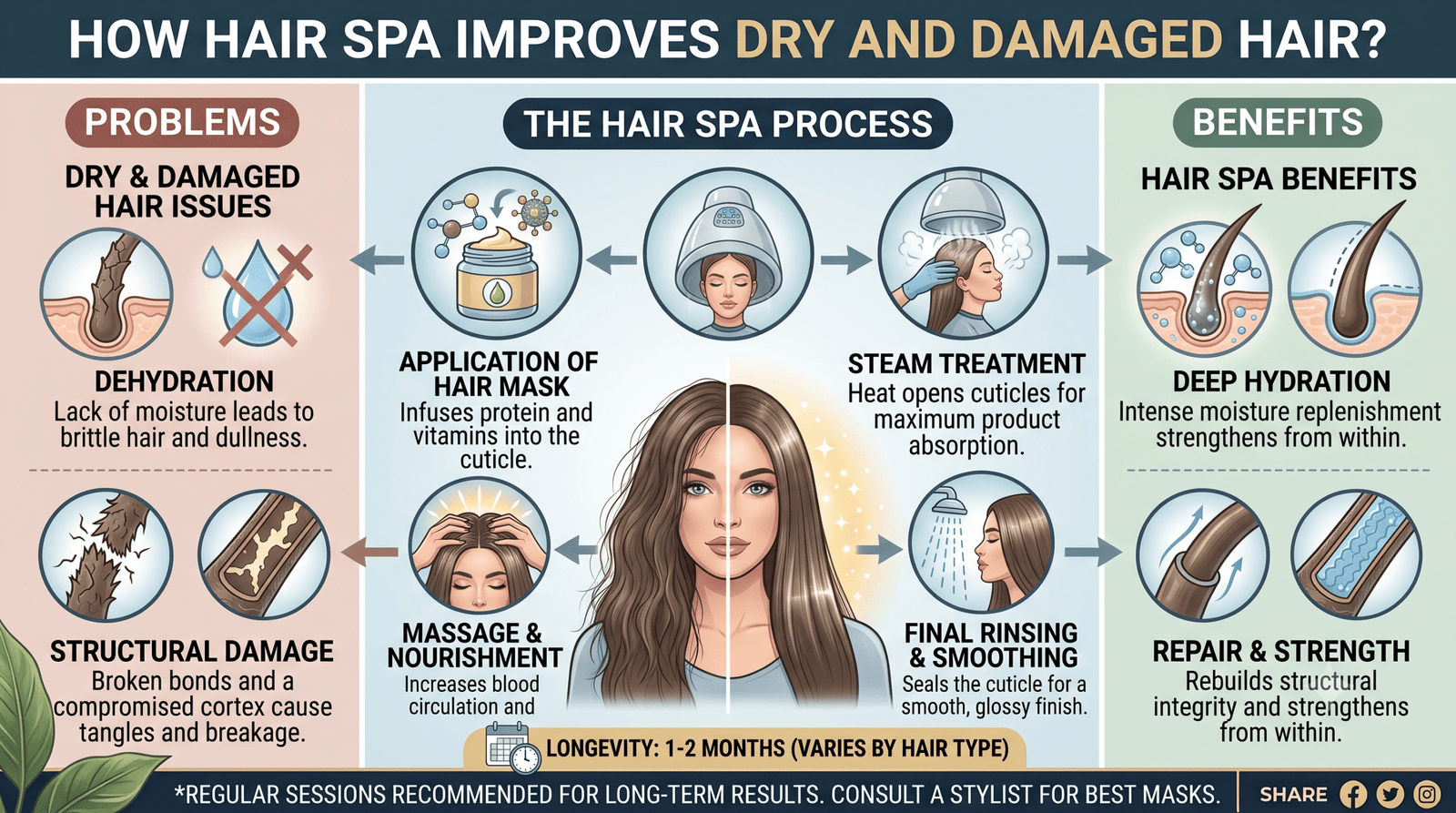
Introduction: Why Does Dry and Damaged Hair Need Special Care?
Healthy-looking hair generally feels soft, flexible, smooth, and manageable. Dry or damaged hair, on the other hand, may feel rough, look dull, develop split ends, or become difficult to style. If you’ve noticed more frizz after washing, frequent tangles, or hair that feels unusually coarse, your strands may need more conditioning and moisture.
This is where a hair spa can become a useful part of a hair-care routine.
A professional hair spa is designed to condition the hair and improve its cosmetic appearance. Depending on the products and technique used, the treatment may include cleansing, conditioning, a nourishing mask, gentle massage, and controlled steaming or another method intended to support product application.
It’s important to understand that a hair spa isn’t a permanent repair for severely damaged hair. Hair is made primarily of keratin, and once a strand has suffered significant structural damage, cosmetic treatments can’t completely restore it to its original condition. However, proper conditioning can make damaged hair feel softer, smoother, shinier, and easier to manage.
So, how does hair spa improve dry and damaged hair? The biggest advantage is its ability to provide intensive conditioning and moisture to hair that may be lacking both.
What Is a Hair Spa?
A hair spa is a professional conditioning treatment that focuses on improving the appearance, feel, and manageability of the hair.
Unlike a basic conditioner that you may use for a few minutes during your regular shower, a salon hair spa usually involves several steps. The stylist assesses the hair, selects appropriate products, applies a conditioning treatment or mask, and may use massage and controlled steam depending on the service.
A typical hair spa may involve:
- Hair and scalp cleansing
- Application of a nourishing or conditioning mask
- Gentle scalp massage
- Controlled steaming when appropriate
- Rinsing
- Conditioning
- Drying and styling
The exact process can vary from salon to salon and according to the hair’s condition.
The goal isn’t simply to make hair smell nice. A well-performed treatment should leave the hair feeling conditioned, smoother, softer, and more manageable.
For people dealing with dryness caused by environmental exposure, frequent washing, heat styling, colouring, or other cosmetic practices, regular conditioning treatments may help maintain a healthier-looking finish.
Why Does Hair Become Dry and Damaged?
Before discussing the benefits, it’s useful to understand what causes dryness and damage in the first place.
Heat Styling
Frequent use of straighteners, curling irons, and high-temperature blow-drying can contribute to dryness and surface damage. Repeated heat exposure may leave hair rough and more prone to breakage.
Chemical Treatments
Hair colouring, bleaching, relaxing, perming, and some smoothing procedures can alter the hair’s structure. When performed too frequently or without proper aftercare, these processes may contribute to dryness and weakness.
Environmental Exposure
Sun exposure, dry weather, pollution, dust, and humidity can affect the hair’s appearance and moisture balance. Outdoor exposure can be particularly challenging for already dry hair.
Excessive Washing
Washing too frequently with harsh products may strip away oils that help keep the hair feeling conditioned. However, washing frequency should always depend on the person’s scalp and hair type.
Poor Hair-Care Habits
Rough towel drying, aggressive brushing, excessive styling, and skipping conditioner can all make hair harder to manage.
Lack of Moisture
Hair that isn’t adequately conditioned may feel rough, tangled, and frizzy. Dryness can also make existing damage more noticeable.
How Does Hair Spa Improve Dry and Damaged Hair?
A hair spa primarily works through intensive conditioning. The products used during the treatment can coat and condition the hair, helping it feel smoother and more flexible.
For dry hair, this can make a noticeable difference in softness and manageability. For damaged hair, conditioning can temporarily improve the hair’s cosmetic appearance and reduce the rough feeling associated with a damaged surface.
The results aren’t identical for everyone. Hair texture, porosity, previous chemical treatments, product selection, and the overall condition of the strands all matter.
Here are seven powerful benefits you may notice.
1. Provides Deep Conditioning and Moisture
One of the most important hair spa benefits is intensive conditioning.
Dry hair often lacks the smooth, conditioned feel people associate with healthy-looking strands. A professional hair mask can provide a concentrated conditioning treatment compared with a quick everyday conditioning routine.
The treatment may help:
- Improve softness
- Reduce the rough feeling
- Make hair easier to comb
- Improve flexibility
- Reduce the appearance of dryness
- Make the hair feel more conditioned
Moisture and conditioning are especially useful for hair exposed to frequent heat styling or colouring.
However, “deep moisture” doesn’t mean the hair is permanently repaired. Instead, the treatment helps improve the hair’s condition and appearance for a period of time.
For best results, the treatment should be combined with suitable shampoo, conditioner, leave-in products, and sensible heat protection.
2. Makes Hair Softer and Smoother
If your hair feels rough when you run your fingers through it, a conditioning-focused hair spa may help.
Conditioning ingredients can improve the feel of the hair by creating a smoother surface. This can make the strands feel softer and less coarse after treatment.
Softness isn’t just about appearance. Softer hair is often easier to detangle and style, which may reduce the amount of pulling and mechanical stress during daily grooming.
After a professional treatment, you may notice that:
- Combing becomes easier
- Hair feels less coarse
- Tangles are reduced
- Styling takes less effort
- The hair has a smoother finish
This is one reason hair spa treatments are popular before events, celebrations, or important occasions.
3. Helps Reduce Frizz
Frizz is often more visible when hair is dry, porous, rough, or exposed to humidity.
A conditioning treatment can help smooth the hair surface, making the hair look more controlled and polished. While a hair spa isn’t the same as a permanent straightening or smoothing treatment, it may temporarily reduce the appearance of frizz.
This can be particularly helpful for people who want:
- Smoother-looking hair
- Better control around the crown
- Fewer flyaways
- Easier styling
- A more polished finish
The result will depend heavily on the natural texture of the hair and the cause of the frizz.
If your main goal is long-lasting straightening, a hair spa may not be the right service. If your goal is conditioning and improving manageability, however, it can be a useful option.
4. Improves Shine and Overall Appearance
Dull hair often reflects light less evenly because the surface can be rough or uneven.
Conditioning treatments can improve the smoothness of the hair’s surface, which may make it look shinier after treatment.
This doesn’t mean the treatment changes your natural hair colour. Instead, better conditioning can create a healthier-looking finish.
After a hair spa, many people notice:
- Increased-looking shine
- A smoother appearance
- Less visible dryness
- Better-looking ends
- A more polished hairstyle
If you’re preparing for an occasion, this cosmetic improvement can make a significant difference.
Still, shine shouldn’t be considered proof that damaged hair has been permanently repaired. It is better viewed as an improvement in the hair’s appearance and feel.
5. Supports Weakened and Chemically Treated Hair
Hair that has been coloured, bleached, or exposed to repeated chemical services may require more careful conditioning.
A hair spa can help improve the cosmetic condition of such hair by providing conditioning ingredients that make the strands feel smoother and more manageable.
If you regularly colour your hair, a professional stylist can also help you choose treatments according to your hair’s current condition.
For example, highly processed hair may need a different approach from relatively healthy, virgin hair.
A professional assessment is valuable because using the same treatment on every hair type isn’t always the best strategy.
If hair is extremely fragile, breaking heavily, or showing significant damage, trimming and reducing damaging practices may be more important than repeatedly applying conditioning treatments.
6. Helps Maintain a Healthier-Looking Scalp and Hair Routine
Hair care begins at the scalp, although a hair spa isn’t a medical treatment for scalp conditions.
Cleansing can remove accumulated oil, sweat, and product residue, while gentle massage can make the service feel relaxing.
A healthy-looking scalp environment supports a good overall hair-care routine. However, persistent itching, scaling, redness, sores, or unusual hair loss should not be treated as something a salon spa can solve.
In those situations, professional medical advice is more appropriate.
For routine cosmetic care, though, scalp cleansing followed by suitable conditioning can leave both the scalp and hair feeling refreshed.
7. Makes Hair Easier to Manage
One of the most practical hair spa benefits is improved manageability.
Dry and damaged hair often tangles easily. When the hair is conditioned and smoother, brushing, combing, blow-drying, and styling may become easier.
Better manageability can also reduce the temptation to repeatedly use high heat or pull aggressively at knots.
You may find that:
- Hair takes less time to style
- Detangling becomes easier
- Blow-drying feels smoother
- Hairstyles hold a cleaner appearance
- Daily grooming becomes less frustrating
In other words, a hair spa can help turn unruly-looking hair into hair that’s easier to work with.
What Is the Typical Hair Spa Procedure?
Although the exact process varies, a professional hair spa commonly follows a structured routine.
Step 1: Hair Assessment
The stylist checks the hair’s texture, dryness, previous chemical treatments, and visible damage.
Step 2: Cleansing
The hair is washed with a suitable shampoo to remove dirt, oil, and product buildup.
Step 3: Conditioning Mask
A treatment mask is applied according to the hair’s needs. The product may focus on conditioning, hydration, nourishment, or improving manageability.
Step 4: Massage
A gentle massage may be performed to distribute the treatment and make the experience more relaxing.
Step 5: Controlled Steam
Some salons use steam to support the conditioning process. The technique should be performed appropriately for the client’s hair and scalp.
Step 6: Rinsing
The product is rinsed thoroughly.
Step 7: Finishing
The stylist may apply conditioner or a leave-in product before drying and styling the hair.
The complete treatment can take around 45–90 minutes depending on the service, hair length, density, and salon process.
Hair Spa vs Regular Conditioning: What’s the Difference?
Both hair spa and regular conditioning can improve softness, but they aren’t exactly the same.
| Feature | Regular Conditioning | Hair Spa |
|---|---|---|
| Frequency | Often used during washing | Usually occasional |
| Treatment time | Short | Longer |
| Product intensity | Everyday conditioning | More intensive treatment |
| Massage | Usually absent | Often included |
| Steam | Usually absent | May be included |
| Professional assessment | Usually absent | Often included |
| Main goal | Routine maintenance | Intensive conditioning and care |
Think of regular conditioner as daily maintenance and a hair spa as an occasional extra-care session.
Neither replaces the other.
Who Should Consider a Hair Spa?
A hair spa may be worth considering if your hair is:
- Dry or rough
- Frizzy
- Dull-looking
- Difficult to detangle
- Frequently exposed to heat
- Coloured or chemically treated
- Lacking softness
- Difficult to manage
People with long hair may also find conditioning treatments useful because the older ends can be more weathered than newly grown hair near the roots.
However, not everyone needs frequent professional hair spas. If your hair is already healthy, soft, and easy to manage, a good home-care routine may be enough.
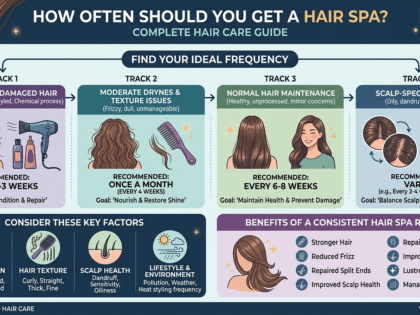
How Often Should You Get a Hair Spa?
There’s no single schedule that works for everyone.
For moderately dry or damaged hair, an occasional professional treatment may be helpful. Some people may choose a session every few weeks, while others may need it less frequently.
The ideal frequency depends on:
- Hair texture
- Hair length
- Chemical processing
- Heat-styling habits
- Scalp condition
- Product buildup
- Overall hair health
Instead of following a fixed calendar, pay attention to how your hair responds.
If the hair starts feeling dry, rough, or difficult to manage, it may be time to reassess your routine.
How to Maintain Hair Spa Results at Home
A salon treatment can provide a temporary improvement, but your everyday routine determines how long that improvement lasts.
Use a Suitable Shampoo
Choose a shampoo appropriate for your scalp and hair type. Avoid automatically assuming that stronger cleansing is better.
Don’t Skip Conditioner
Apply conditioner mainly to the lengths and ends, especially if those areas are dry.
Limit High Heat
Use lower heat settings when possible and avoid repeatedly passing a straightener over the same section.
Use Heat Protection
If you use hot styling tools, apply an appropriate heat-protectant product according to its instructions.
Detangle Gently
Start from the ends and work upward instead of pulling a brush aggressively from the roots through tangled lengths.
Protect Hair During Sleep
Reducing friction with suitable bedding or a gentle hairstyle can help minimize tangling.
Schedule Regular Trims
Split ends can’t be permanently sealed back together. Trimming helps remove visibly split or damaged ends.
Common Hair Spa Mistakes to Avoid
A hair spa can be beneficial, but more isn’t always better.
Getting Treatments Too Frequently
Over-treating the hair isn’t necessary. Give your strands time between intensive services.
Choosing Products Without Considering Hair Type
A product designed for one hair type may not be ideal for another. Your stylist should consider texture, porosity, chemical history, and current condition.
Expecting Permanent Hair Repair
Hair spa treatments can improve the feel and appearance of hair, but they don’t magically rebuild severely damaged strands.
Ignoring the Scalp
If your scalp has persistent irritation or another concerning symptom, don’t rely on cosmetic treatments alone.
Continuing Damaging Habits
There’s little benefit in getting an intensive treatment and then immediately returning to excessive heat, harsh brushing, or repeated chemical processing.
Professional Hair Spa vs Home Hair Spa
Both professional and home treatments have a place in a good routine.
A home hair mask can be convenient and affordable for regular conditioning. A professional hair spa, however, adds the benefit of stylist assessment, professional products, technique, and a more structured treatment experience.
Choose a professional treatment when:
- Your hair has significant dryness
- You regularly colour or chemically treat your hair
- You want a professional assessment
- Your hair is difficult to manage
- You’re preparing for a special occasion
Choose home conditioning when:
- Your hair is generally healthy
- You need routine maintenance
- You prefer a simple weekly or regular routine
The smartest approach may be a combination of both.
When Should You See a Hair Professional or Doctor?
A salon professional can help with cosmetic concerns such as dryness, frizz, styling, and product selection.
However, some problems require medical evaluation.
Consider seeking professional medical advice if you experience persistent:
- Scalp pain
- Severe itching
- Sores
- Inflammation
- Sudden or significant hair loss
- Unexplained thinning
- Persistent scaling
A hair spa is a cosmetic service, not a treatment for medical scalp or hair disorders.
For general information about hair and scalp health, you can also consult trusted medical resources such as the American Academy of Dermatology Association.
Frequently Asked Questions About Hair Spa
1. Does hair spa permanently repair damaged hair?
No. A hair spa can improve the feel, smoothness, shine, and manageability of damaged hair, but it can’t permanently restore severely damaged hair to its original condition. Regular trimming and reducing damaging habits are also important.
2. Is hair spa good for dry hair?
Yes, a conditioning-focused hair spa can be helpful for dry hair. It can provide intensive conditioning and make the strands feel softer and smoother. Results depend on the cause and severity of dryness.
3. Can hair spa reduce frizz?
It can temporarily reduce the appearance of frizz by conditioning and smoothing the hair. However, it isn’t equivalent to permanent straightening or smoothing treatments.
4. How often should I get a hair spa?
There’s no universal schedule. Many people use professional hair spas occasionally, depending on dryness, chemical treatments, styling habits, and hair condition. Your stylist can recommend a suitable frequency after assessing your hair.
5. Does hair spa make hair grow faster?
A hair spa isn’t proven to directly accelerate hair growth. Its main purpose is conditioning and improving the appearance and manageability of existing hair.
6. Can coloured hair get a hair spa?
Yes, coloured hair can often benefit from suitable conditioning treatments. However, the products should be selected carefully so they complement the hair’s condition and colour-care routine.
7. Is hair spa better than conditioner?
They’re designed for different purposes. Conditioner is generally used as routine maintenance, while a professional hair spa usually provides a more intensive conditioning experience. A hair spa doesn’t replace everyday conditioner.
8. Can I do a hair spa at home?
Yes. You can use a suitable shampoo, conditioning mask, and conditioner at home. However, a professional salon treatment offers stylist assessment and professional application techniques.
9. Is hair spa suitable for frizzy hair?
Yes, conditioning treatments may help make frizzy hair look smoother and more manageable. The result depends on the hair’s natural texture, moisture level, and cause of frizz.
10. Does hair spa help with split ends?
A hair spa may make split ends look smoother temporarily, but it can’t permanently repair a split strand. Trimming is the reliable way to remove split ends.
Conclusion: Is Hair Spa Worth It for Dry and Damaged Hair?
So, how does hair spa improve dry and damaged hair? The answer comes down mainly to intensive conditioning, improved softness, better manageability, reduced-looking frizz, and enhanced shine.
A professional hair spa can be a valuable addition to your hair-care routine, particularly when your strands are dry, rough, dull, or difficult to manage. However, it’s important to have realistic expectations. A hair spa can improve the cosmetic condition of hair, but severely damaged strands may still need trimming and a reduction in damaging treatments.
For the best long-term results, combine occasional professional care with consistent home maintenance. Use suitable cleansing and conditioning products, limit unnecessary heat, protect your hair during styling, and pay attention to changes in your hair and scalp.
When done correctly and matched to your hair’s needs, a hair spa can help your hair look softer, smoother, shinier, and healthier—and that’s a pretty good reason to make it part of your beauty routine.
Post-Article Message
Healthy-looking hair doesn’t happen overnight. Give your hair the right care, stay consistent with your routine, and choose professional treatments based on what your hair actually needs.