
Skincare Routine for Dry Skin: A Complete Step-by-Step Guide for Healthy, Glowing Skin
-
Dokmai London
- Posted on
- 0 comments
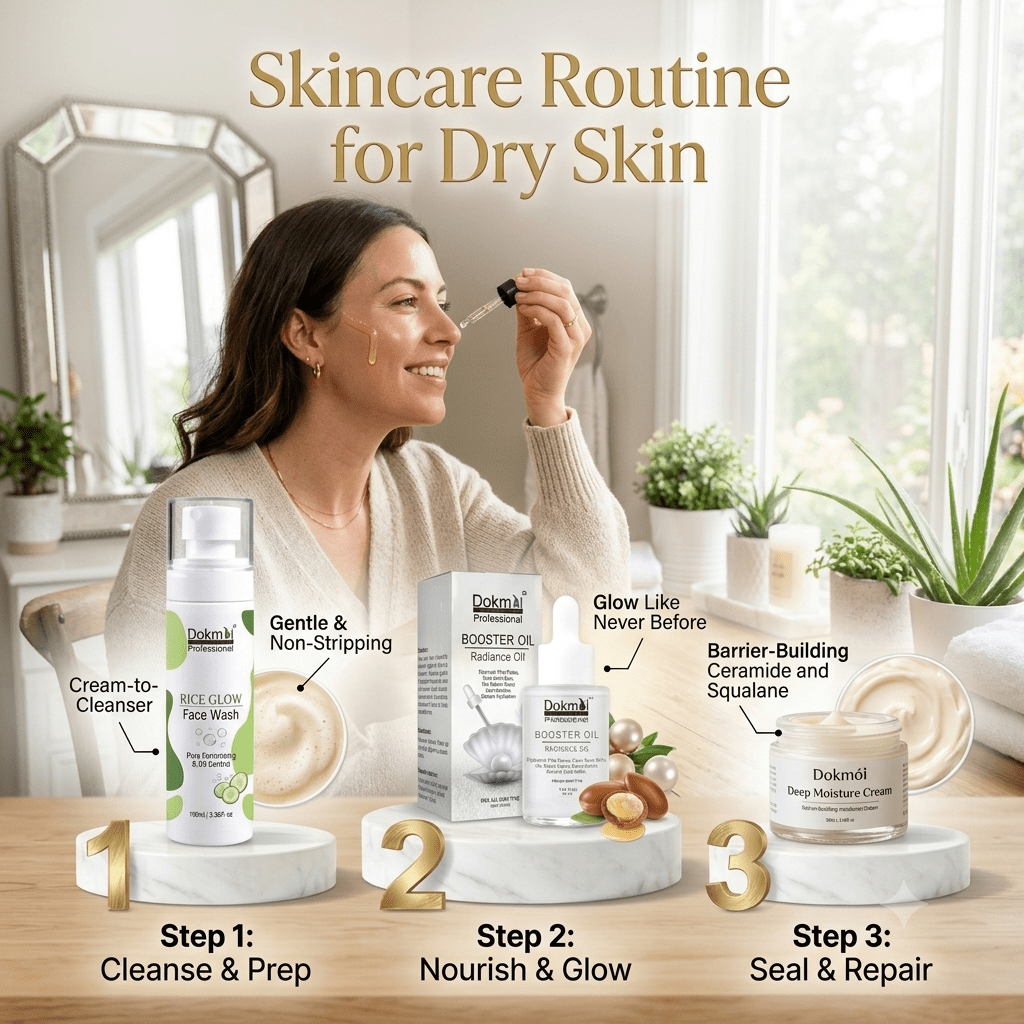
Dry skin can feel tight, rough, flaky, and uncomfortable, especially during changing weather or after using harsh skincare products. If you struggle with dryness, the right skincare routine can help restore your skin’s natural moisture barrier and keep it soft, smooth, and healthy.
In this comprehensive guide, we’ll walk you through the best skincare routine for dry skin, recommend key ingredients to look for, and share expert tips to achieve long-lasting hydration.
What Causes Dry Skin?
Dry skin occurs when your skin lacks enough natural oils and moisture. Several factors can contribute to this condition, including:
- Cold or dry weather
- Hot showers
- Harsh soaps and cleansers
- Aging
- Dehydration
- Air conditioning
- Excessive sun exposure
- Certain skin conditions like eczema
Understanding the cause of your dryness can help you choose products that effectively nourish and protect your skin.
Morning Skincare Routine for Dry Skin
Step 1: Use a Gentle Hydrating Cleanser
Start your day with a mild cleanser that removes dirt without stripping away your skin’s natural oils.
Look for cleansers containing:
- Glycerin
- Hyaluronic Acid
- Ceramides
- Aloe Vera
- Oat Extract
Avoid:
- Sulfates
- Alcohol-based cleansers
- Strong foaming face washes
A hydrating cleanser leaves your skin feeling fresh without making it tight.
Step 2: Apply a Hydrating Toner
Many people skip toner, but a good alcohol-free toner adds an extra layer of hydration.
Best ingredients include:
- Rose Water
- Panthenol
- Hyaluronic Acid
- Chamomile
- Centella Asiatica
Hydrating toners prepare the skin to absorb serums and moisturizers more effectively.
Step 3: Use a Hydrating Serum
A serum delivers concentrated hydration deep into the skin.
Best serums for dry skin contain:
Hyaluronic Acid
Holds up to 1,000 times its weight in water, helping your skin stay plump and hydrated.
Vitamin B5
Repairs the skin barrier while soothing irritation.
Niacinamide
Improves moisture retention, strengthens the skin barrier, and reduces redness.
Apply 2–3 drops onto slightly damp skin.
Step 4: Moisturize Thoroughly
Moisturizer is the most important step for dry skin.
Choose creams rich in:
- Ceramides
- Shea Butter
- Squalane
- Cocoa Butter
- Glycerin
- Fatty Acids
A good moisturizer locks in hydration and prevents moisture loss throughout the day.
Step 5: Never Skip Sunscreen
Many people believe sunscreen isn’t necessary for dry skin—but UV rays damage the skin barrier and worsen dryness.
Use a broad-spectrum sunscreen with SPF 30 or higher.
Look for moisturizing sunscreens that include:
- Ceramides
- Vitamin E
- Hyaluronic Acid
Reapply every two hours if you’re outdoors.
Evening Skincare Routine for Dry Skin
Nighttime is when your skin repairs itself.
Step 1: Remove Makeup Gently
Use:
- Cleansing Balm
- Cleansing Oil
- Micellar Water
These dissolve makeup without drying out the skin.
Step 2: Cleanse Again
Follow with a gentle hydrating cleanser to remove any remaining impurities.
Double cleansing keeps pores clean while maintaining hydration.
Step 3: Apply Treatment Serum
Night is ideal for repairing the skin barrier.
Recommended ingredients:
- Ceramides
- Peptides
- Hyaluronic Acid
- Squalane
If using retinol, choose a gentle formula and apply it only 2–3 nights per week. Always follow with a moisturizer.
Step 4: Use a Rich Night Cream
Night creams are usually thicker than daytime moisturizers.
They provide:
- Deep nourishment
- Overnight hydration
- Skin barrier repair
- Improved skin elasticity
Look for ingredients like:
- Shea Butter
- Ceramides
- Cholesterol
- Squalane
- Plant Oils
Step 5: Apply Lip Balm
Dry skin often affects the lips.
Choose lip balms containing:
- Shea Butter
- Beeswax
- Lanolin
- Vitamin E
Apply generously before bedtime.
Weekly Skincare Routine for Dry Skin
Gentle Exfoliation (1–2 Times Weekly)
Dead skin cells can make dry skin appear dull.
Instead of harsh scrubs, use gentle chemical exfoliants like:
- Lactic Acid
- Mandelic Acid
- Polyhydroxy Acids (PHAs)
Avoid over-exfoliating, as it can damage your skin barrier.
Hydrating Face Mask
Use a moisturizing mask once or twice a week.
Look for masks containing:
- Hyaluronic Acid
- Aloe Vera
- Honey
- Ceramides
- Oat Extract
These ingredients replenish moisture and calm irritation.
Best Ingredients for Dry Skin
Choosing products with the right ingredients makes all the difference.
Hyaluronic Acid
Provides intense hydration and plumps the skin.
Ceramides
Strengthen the skin barrier and prevent moisture loss.
Glycerin
Draws moisture into the skin and keeps it hydrated.
Squalane
Softens the skin without feeling greasy.
Shea Butter
Deeply nourishes dry, flaky skin.
Vitamin E
Protects against environmental damage and supports healing.
Aloe Vera
Calms irritation while providing lightweight hydration.
Niacinamide
Improves skin barrier function and reduces redness.
Ingredients to Avoid
Dry skin can become worse if you use products containing:
- Alcohol Denat.
- Sulfates
- Artificial Fragrance
- Harsh Physical Scrubs
- High-Concentration Salicylic Acid
- Strong Benzoyl Peroxide (unless prescribed)
These ingredients may strip away natural oils and increase irritation.
Lifestyle Tips for Healthy, Hydrated Skin
Healthy skin starts from within.
Drink Plenty of Water
Aim for 2–3 liters daily to support overall hydration.
Eat Healthy Fats
Include foods rich in Omega-3 fatty acids, such as:
- Salmon
- Walnuts
- Flaxseeds
- Chia Seeds
Avoid Very Hot Showers
Use lukewarm water to prevent moisture loss.
Use a Humidifier
A humidifier adds moisture to indoor air, helping prevent dry skin—especially during winter.
Sleep Well
Quality sleep allows your skin to repair itself overnight.
Common Mistakes to Avoid
Many people unknowingly worsen dry skin by making these mistakes:
- Washing the face too often
- Skipping moisturizer
- Using harsh exfoliants
- Not wearing sunscreen
- Taking very hot showers
- Trying too many new products at once
- Ignoring hydration from within
Keeping your routine simple and consistent often delivers the best results.
Frequently Asked Questions.
Can dry skin become oily after moisturizing?
No. A good moisturizer helps balance the skin. In fact, overly dry skin may produce extra oil to compensate for moisture loss.
How often should I exfoliate dry skin?
Once or twice a week is enough. Over-exfoliating can damage the skin barrier and increase dryness.
Is Vitamin C good for dry skin?
Yes. Vitamin C brightens the skin, supports collagen production, and works well when paired with hydrating ingredients like Hyaluronic Acid and Ceramides.
Can dry skin use retinol?
Yes, but start slowly. Use a gentle retinol two or three nights a week and always follow with a rich moisturizer to minimize irritation.