
How Long Does Nanoplastia Hair Treatment Last?
-
Dokmai London
- Posted on
- 0 comments
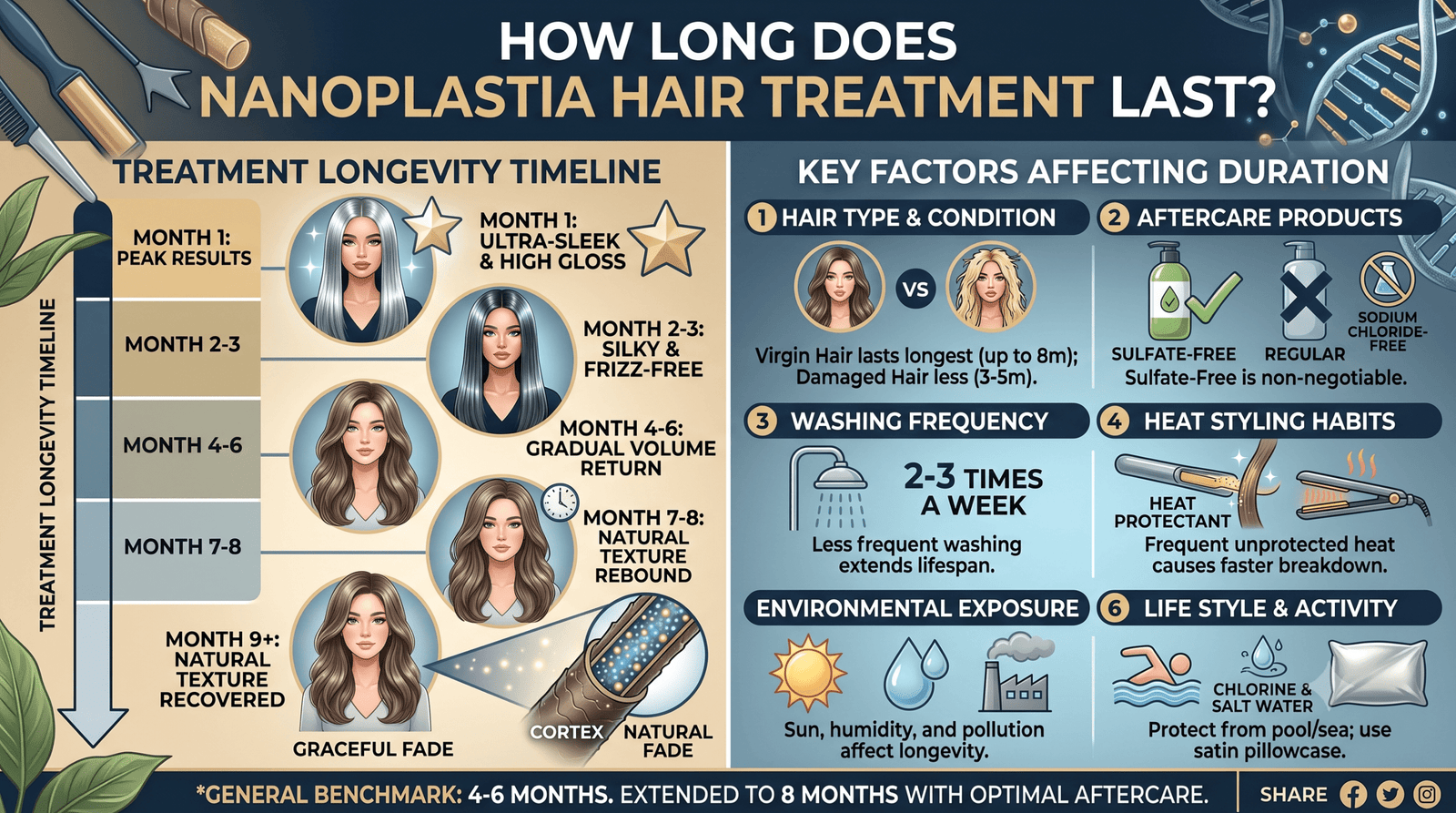
If you’re tired of fighting frizz, rough texture, and unruly hair every morning, nanoplastia hair treatment can sound like a dream come true. It can make hair look smoother, shinier, softer, and easier to manage without requiring daily straightening.
But there’s one question almost everyone asks before booking the service: How long does nanoplastia hair treatment last?
In general, nanoplastia results can last around 3 to 6 months, although the exact duration varies from person to person. Hair type, washing frequency, products used at home, heat styling, swimming, chemical treatments, and the quality of the salon application can all influence how long the smooth finish remains.
It’s also important to understand that nanoplastia isn’t a permanent change to your hair. As your hair grows and the treatment gradually wears away, your natural texture begins to return.
This guide explains what you can realistically expect, how to extend the results, and what to check before choosing a nanoplastia service.
What Is Nanoplastia Hair Treatment?
Nanoplastia is a professional hair-smoothing treatment designed to reduce frizz, improve manageability, and create a smoother-looking hair surface. Depending on the formulation and technique used, the treatment may also improve softness, shine, and the appearance of damaged or rough hair.
Unlike a simple conditioning treatment, nanoplastia generally involves a professional application followed by controlled heat. The precise formulation can differ significantly between brands, salons, and countries, so it’s important not to assume that every product marketed as “nanoplastia” has the same ingredients or performance.
The main attraction is its ability to provide a polished appearance while reducing the amount of daily styling required.
For people with:
- Frizzy hair
- Dry-looking hair
- Wavy hair
- Unmanageable hair
- Coarse hair
- Humidity-related frizz
- Hair that takes a long time to style
the treatment may offer a convenient smoothing option.
How Nanoplastia Works on Hair
The process normally begins with cleansing the hair and preparing it for the treatment. A professional then applies the selected smoothing formulation according to the manufacturer’s instructions.
After the product has been processed, the hair is typically dried and/or heat-treated. The heat step is important because many smoothing systems rely on heat to activate or set the desired cosmetic effect.
The exact process varies, so a qualified stylist should follow the product’s technical instructions rather than using one universal method for every client.
The result is generally hair that looks:
- Smoother
- Shinier
- Softer
- Less frizzy
- Easier to comb
- Easier to style
However, there’s an important distinction: smoother-looking hair doesn’t necessarily mean permanently straight hair.
Nanoplastia vs. Permanent Hair Straightening
Permanent straightening treatments work by changing the internal structure of the hair more permanently. Nanoplastia is generally discussed as a smoothing treatment with results that gradually fade.
That’s why the answer to “How long does nanoplastia hair treatment last?” isn’t a permanent number.
The treatment effect gradually becomes less noticeable as the hair is washed, exposed to environmental conditions, and replaced by new untreated growth.
If you want a natural-looking smooth finish rather than a permanently altered texture, this temporary nature can actually be an advantage.
How Long Does Nanoplastia Hair Treatment Last?
For many clients, nanoplastia hair treatment lasts approximately 3 to 6 months.
Some people may notice results for a shorter period, while others may enjoy a smooth appearance for longer. There’s no universal expiration date because hair behaves differently from person to person.
For example, someone who washes their hair every day may experience faster fading than someone who washes only a few times per week. Similarly, frequent swimming, heavy sweating, intense sun exposure, and repeated heat styling can affect the appearance and longevity of the treatment.
Average Duration of Nanoplastia
A practical way to understand the timeline is:
| Period | What You May Notice |
|---|---|
| First few weeks | Maximum smoothness, shine, and manageability |
| 1–2 months | Hair generally remains noticeably smoother |
| 2–3 months | Natural texture may gradually become more visible |
| 3–4 months | Frizz may slowly begin returning |
| 4–6 months | Many clients may consider maintenance depending on hair growth and fading |
These are general expectations, not guarantees.
Your stylist should consider your hair’s condition, previous chemical services, natural texture, and lifestyle before estimating how long your results are likely to last.
Why Results Vary From Person to Person
Two people can receive the same treatment and get very different timelines.
Consider two clients:
Client A has coarse, highly frizzy hair and washes it three times per week using professional aftercare products.
Client B has fine hair, washes it every day, swims regularly, and uses strong clarifying shampoos.
Even if both receive the treatment on the same day, Client A may maintain the cosmetic effect longer.
This is why a professional consultation matters.
A good salon shouldn’t promise an exact number of months without examining your hair first.
7 Factors That Affect Nanoplastia Longevity
Several factors influence how long your smooth hair remains.
1. Hair Type and Texture
Your natural texture plays a major role.
Very curly, coarse, or highly porous hair may behave differently from fine or mildly wavy hair. The treatment can make difficult-to-manage hair significantly easier to style, but natural texture will still influence the final appearance.
Hair porosity also matters because porous hair can respond differently to chemical and cosmetic treatments.
2. Washing Frequency
Every time you wash your hair, you’re gradually removing product residues and altering the cosmetic finish.
If you shampoo daily, the smoothing effect may fade faster.
If possible, avoid unnecessary washing and choose a routine appropriate for your scalp and lifestyle.
That doesn’t mean you should leave your scalp unwashed just to make nanoplastia last longer. Cleanliness and scalp health should always come first.
3. Shampoo and Hair Products
Your shampoo can make a noticeable difference.
Harsh cleansing products or frequent use of clarifying shampoos may reduce the longevity of some smoothing treatments.
After nanoplastia, many salons recommend using a gentle, treatment-compatible shampoo and conditioner.
Before buying anything, ask your stylist which products are compatible with the specific nanoplastia formulation used on your hair.
4. Heat Styling
Excessive heat can affect the overall condition of treated hair.
Using a flat iron or high-temperature blow dryer repeatedly may make hair appear dry or brittle over time, even if the smoothing effect remains.
Use heat protection and choose sensible temperatures.
5. Swimming and Sun Exposure
Chlorinated pool water and salt water can affect the feel and appearance of treated hair.
If you’re a regular swimmer, consider:
- Wetting hair with fresh water before entering the pool
- Wearing a swimming cap
- Rinsing hair promptly afterward
- Applying suitable leave-in protection
- Avoiding unnecessary exposure to harsh chemicals
Strong sun exposure can also contribute to dryness and roughness.
6. Previous Chemical Treatments
Previously bleached, coloured, relaxed, or chemically processed hair may respond differently.
If your hair is already fragile, your stylist may recommend a strand test or modify the treatment approach.
Don’t skip the consultation simply because you’ve had nanoplastia before. Your hair condition can change significantly between appointments.
7. Professional Application
The skill of the stylist matters.
Correct product selection, application, processing time, temperature, sectioning, and finishing technique all influence the final result.
A professional should also assess whether the service is appropriate for your hair instead of applying the same process to every client.
What Happens When Nanoplastia Starts Wearing Off?
Nanoplastia usually doesn’t disappear overnight.
Instead, the smoothness gradually becomes less noticeable.
You may first notice a little more frizz around the roots or areas exposed to frequent washing. Over time, the hair may begin to feel closer to its natural texture.
Does Hair Return to Its Natural Texture?
Generally, untreated new growth will have your natural texture because it has never received the treatment.
The previously treated lengths may gradually lose the smoothing effect.
This creates a transition between new growth and treated hair.
That’s one reason people who love the result may eventually schedule maintenance treatments.
However, repeating chemical or heat-based smoothing services too frequently isn’t automatically better. Your stylist should assess the condition of your hair before recommending another full treatment.
How to Make Nanoplastia Last Longer
If you’ve invested in professional smoothing, you’ll naturally want to protect the results.
The good news is that a consistent aftercare routine can help maintain the appearance for longer.
Use Suitable Hair-Care Products
Choose products recommended for your particular treatment.
A basic routine can include:
- Gentle shampoo
- Hydrating conditioner
- Weekly nourishing mask
- Leave-in conditioner when appropriate
- Heat protectant before styling
Avoid randomly switching between strong cleansing products.
If you’re unsure, ask the salon for a product list specifically designed for your treatment.
Reduce Excessive Washing
Try to wash your hair only as often as necessary for your scalp and lifestyle.
If your scalp becomes oily quickly, don’t force yourself to wait several days. Instead, speak with your stylist about products that allow you to maintain both scalp cleanliness and hair smoothness.
Protect Hair From Heat
Heat protection is one of the simplest habits you can adopt.
Before using a blow dryer, curling iron, or straightener, apply a suitable heat-protective product.
Also, don’t repeatedly pass a flat iron over the same section of hair.
Maintain Moisture
Smooth hair looks best when it is properly conditioned.
Use a nourishing conditioner regularly and consider a weekly hair mask if your hair feels dry.
However, don’t overload fine hair with heavy products. Too much product can make it appear flat or greasy.
Nanoplastia Aftercare Routine
A simple aftercare routine can make the difference between maintaining your results and watching them fade quickly.
First Few Days After Treatment
Follow the specific instructions provided by your salon and product manufacturer.
Depending on the formulation, your stylist may provide instructions about washing, tying, clipping, or styling your hair immediately after treatment.
Don’t assume that every nanoplastia system has the same rules.
Weekly Maintenance
A practical weekly routine may look like this:
| Routine | Recommended Approach |
|---|---|
| Shampoo | Use a suitable gentle cleanser |
| Conditioner | Apply after every wash if appropriate |
| Hair mask | Once weekly or as advised |
| Heat styling | Keep moderate and use heat protection |
| Swimming | Rinse hair after swimming |
| Trimming | Remove damaged ends when necessary |
| Salon maintenance | Schedule based on hair condition |
Consistency matters more than buying dozens of products.
Is Nanoplastia Suitable for Every Hair Type?
Nanoplastia may be suitable for many different hair textures, but not every hair type should automatically receive the same treatment.
A consultation is especially important if your hair is:
- Severely bleached
- Extremely fragile
- Breaking easily
- Recently chemically treated
- Heavily coloured
- Damaged from repeated heat styling
A stylist should inspect the hair and scalp and discuss your expectations before beginning.
If your primary goal is simply reducing frizz rather than achieving very straight hair, tell your stylist. The desired result can influence product selection and technique.
Is Nanoplastia Safe? Important Product Checks
It’s important not to assume that every product sold under the name “nanoplastia” has the same chemical composition.
Hair-smoothing products can vary widely.
The U.S. FDA warns that some hair smoothing and straightening products can release formaldehyde gas when heated, creating potential exposure concerns.
OSHA likewise advises salons and workers to check product labels and Safety Data Sheets and notes that some smoothing products can contain or release formaldehyde during use.
For this reason, don’t choose a treatment solely because marketing material says “formaldehyde-free” or “chemical-free.”
Instead, ask:
- What exact product will be used?
- Can I see the ingredient list?
- Is the product accompanied by an SDS?
- What ventilation is used during the service?
- Is a strand test necessary?
- What aftercare does the manufacturer recommend?
- Is the product suitable for my hair condition?
You can also read the FDA’s consumer guidance on hair-smoothing products for additional information.
FDA: Formaldehyde in Hair Smoothing Products
A reputable professional should be comfortable answering reasonable safety questions.
Nanoplastia vs. Keratin: Which Lasts Longer?
Both nanoplastia and keratin treatments are used to make hair smoother and easier to manage, but they aren’t identical services.
| Feature | Nanoplastia | Keratin Treatment |
|---|---|---|
| Main purpose | Smoothing and frizz reduction | Smoothing and conditioning |
| Typical duration | Around 3–6 months | Often around 2–5 months |
| Hair texture | Can make hair noticeably smoother | Can reduce frizz and soften texture |
| Maintenance | Depends on washing and aftercare | Depends on washing and aftercare |
| Result | Often sleek and polished | Usually smoother and more manageable |
| Best choice | Depends on desired result and hair condition | Depends on desired result and hair condition |
These time ranges are general estimates. The exact longevity depends on the product, technique, hair type, and maintenance routine.
So, which is better?
There isn’t one answer for everyone.
If your priority is strong frizz control and a smooth, polished appearance, nanoplastia may be appealing. If you’re looking for a different level of smoothing or a particular finish, a keratin service may be more suitable.
A professional consultation is the best way to compare the two for your specific hair.
When Should You Repeat Nanoplastia?
You shouldn’t automatically book another full treatment simply because three months have passed.
Instead, look at your hair.
If the treatment is still providing good manageability and your lengths remain smooth, there may be no need to repeat it immediately.
If frizz has returned significantly and your natural texture has become difficult to manage again, you can discuss maintenance with your stylist.
The professional may recommend treating only specific areas rather than repeatedly applying the service to already treated lengths.
This can help avoid unnecessary processing.
Signs You May Need a Hair Consultation
Consider speaking with a professional before your next treatment if you notice:
- Excessive hair breakage
- Sudden dryness
- Split or brittle ends
- Significant shedding
- Scalp irritation
- Burning or itching after a previous service
- Uneven texture
- Unexpected colour changes
- Hair becoming unusually weak
A salon treatment shouldn’t be used to hide serious hair or scalp problems.
If you experience a strong reaction during or after a smoothing service, stop using the suspected product and seek appropriate professional medical advice.
Frequently Asked Questions
1. How long does nanoplastia hair treatment last?
Nanoplastia commonly lasts around 3 to 6 months, but the duration depends on hair type, washing frequency, aftercare, lifestyle, and the specific formulation used.
2. Can nanoplastia last for 6 months?
Yes, some people may continue to see noticeable smoothing for around six months. However, six months shouldn’t be treated as a guaranteed duration.
3. Does nanoplastia permanently straighten hair?
No. Nanoplastia should generally be viewed as a smoothing treatment rather than permanent straightening. Natural hair growth will continue to have its original texture.
4. Can I wash my hair after nanoplastia?
Follow the instructions provided for the specific product used. Different formulations can have different post-treatment requirements.
5. Which shampoo is best after nanoplastia?
A gentle shampoo recommended by your stylist is usually a sensible choice. Avoid automatically choosing a product simply because it says “for treated hair.” Compatibility with your particular treatment matters.
6. Can I colour my hair after nanoplastia?
It depends on the condition of your hair, the colour service, and the nanoplastia formulation. Ask your stylist about appropriate timing before combining services.
7. Does nanoplastia damage hair?
The answer depends on the specific product, formulation, application technique, heat exposure, and condition of the hair. Any chemical or heat-based salon service should be professionally assessed, especially when hair is already damaged.
8. Is nanoplastia good for frizzy hair?
It can be a useful option for people who want to reduce visible frizz and improve manageability. Results depend on hair type and the formulation used.
9. Can I swim after nanoplastia?
You can generally swim after following your salon’s post-treatment instructions, but chlorine and salt water may affect hair condition and the longevity of some smoothing results. Rinse your hair with fresh water after swimming and use appropriate protection.
10. How can I make nanoplastia last longer?
Use suitable aftercare products, avoid unnecessary washing, protect your hair from excessive heat, maintain moisture, and follow the salon’s maintenance instructions.
11. Is nanoplastia better than keratin?
Neither is universally better. Nanoplastia and keratin treatments can produce different finishes and may suit different hair types and goals. A professional consultation can help you choose.
12. Can nanoplastia be repeated?
Yes, maintenance treatments may be repeated when appropriate. However, the timing should depend on the condition of your hair rather than following a fixed schedule.
Conclusion
So, how long does nanoplastia hair treatment last? For many people, the results can remain noticeable for approximately 3 to 6 months.
However, your actual results depend on several factors, including your natural hair texture, washing routine, products, heat styling, swimming, previous chemical services, and the quality of the professional application.
The best way to get longer-lasting results isn’t simply to repeat the treatment more often. It’s to choose an appropriate formulation, have the service performed professionally, follow proper aftercare, and maintain the health of your hair.
Before booking, ask your stylist about the exact product being used, its ingredients, expected results, aftercare requirements, and whether it’s suitable for your current hair condition. This approach can help you enjoy smoother, shinier, more manageable hair while making an informed decision about your treatment.
Remember: healthy-looking hair starts with informed choices and professional care—not just a single salon service.
Final takeaway: If you’re considering nanoplastia for frizzy, dry, or difficult-to-manage hair, a professional consultation is the smartest first step. The right treatment and the right aftercare can make your results look beautiful for months.
SEO Keywords Covered: nanoplastia hair treatment, how long does nanoplastia hair treatment last, nanoplastia results, nanoplastia aftercare, nanoplastia for frizzy hair, nanoplastia vs keratin, hair smoothing treatment, nanoplastia longevity, nanoplastia maintenance, smooth hair treatment.
SEO Tip: For a salon website, add your salon’s location, before-and-after photos, stylist credentials, treatment pricing, and a clear booking CTA to strengthen local relevance and demonstrate first-hand experience.