
D-Tan Face Pack Benefits: Does It Really Remove Tan? How to Use It for a Fresh, Glowing Look
-
Dokmai London
- Posted on
- 0 comments
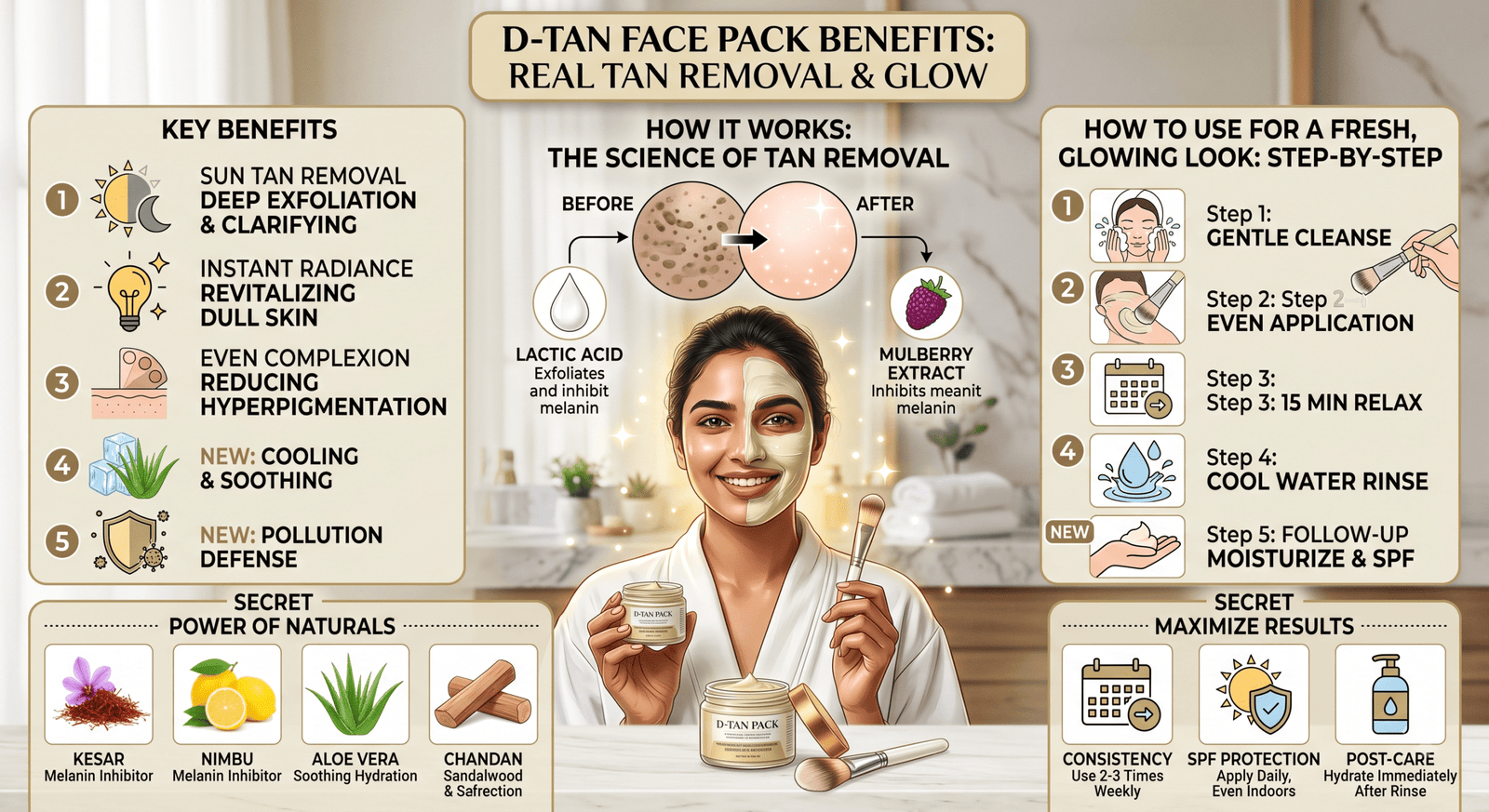
D-Tan Face Pack Benefits: Does It Really Remove Tan? How to Use It for a Fresh, Glowing Look
Tanned, dull-looking skin is a common concern after spending time outdoors, especially when the skin is regularly exposed to sunlight, heat, and pollution. A D-Tan face pack is one of the popular skincare options used to improve the appearance of tanning and bring back a fresher, brighter-looking complexion.
But does a D-Tan face pack really remove tan? The answer depends on what we mean by “remove.” A D-Tan treatment can help reduce the appearance of superficial tanning, dullness, and uneven-looking skin, but it cannot instantly erase all pigmentation or reverse deeper sun damage. For the best results, we need to combine appropriate skincare with consistent sun protection.
What Is a D-Tan Face Pack?
A D-Tan face pack is a skincare treatment formulated to help improve the appearance of sun-tanned, dull, and uneven-looking skin. Depending on the product, it may contain ingredients designed to exfoliate dead skin cells, improve skin brightness, hydrate the skin, or support a more even-looking complexion.
Professional D-Tan treatments offered at salons may also include cleansing, exfoliation, application of a D-Tan formulation, massage, and a finishing product. The exact process varies depending on the product and skin type.
Unlike harsh bleaching treatments, a well-formulated D-Tan product should focus on improving the appearance and texture of the skin without unnecessarily irritating it.
Does a D-Tan Face Pack Really Remove Tan?
A D-Tan face pack can help make tanning look less noticeable, particularly when the tan is relatively recent and superficial.
Sun exposure causes the skin to produce more melanin as part of its natural protective response. This increased melanin can make the skin appear darker than its usual tone. A D-Tan treatment may help by removing accumulated dead skin cells and improving the overall appearance of the complexion.
However, we should not expect one application to permanently remove pigmentation. A D-Tan face pack is not a magic eraser for sun damage.
With regular sun exposure, tanning can return. Deeper pigmentation, post-inflammatory pigmentation, melasma, or other pigmentation concerns may require a different skincare approach and, in some cases, professional dermatological advice.
Top D-Tan Face Pack Benefits
1. Helps Reduce the Appearance of Tan
One of the main reasons people choose a D-Tan face pack is to make recently tanned skin appear brighter and more even-toned. Exfoliating ingredients can help remove surface dead skin cells that contribute to a dull appearance.
2. Gives the Skin a Fresher Look
After cleansing and exfoliation, the skin can appear visibly fresher. A D-Tan treatment may help reduce the tired, dull appearance caused by environmental exposure.
3. Helps Remove Dead Skin Cells
Dead skin cells can accumulate on the surface and make the complexion appear rough or lacklustre. Many D-Tan formulations contain ingredients that provide some degree of exfoliation, helping the skin look smoother and more refined.
4. Improves the Appearance of Uneven Skin Tone
Regular exposure to the sun can make different areas of the face appear uneven in tone. A suitable D-Tan treatment may help create a more uniform-looking complexion.
5. Can Make Skin Feel Smoother
When surface buildup is reduced, the skin may feel softer and smoother. This can also help skincare products spread more evenly across the skin.
6. Provides a Quick Pre-Event Glow
A professional D-Tan facial can be useful before an event when the goal is to achieve a cleaner, fresher, more polished appearance. We should avoid aggressive treatments immediately before an important occasion, however, because irritated skin can become red or sensitive.
How to Use a D-Tan Face Pack at Home
We should always follow the instructions supplied with the specific product because formulations differ. A general routine can look like this:
Step 1: Cleanse the Face
Begin with a gentle cleanser to remove sweat, oil, makeup, sunscreen, and surface impurities. Pat the skin dry rather than rubbing it aggressively.
Step 2: Prepare the Skin
If the product instructions recommend exfoliation, use only the recommended preparation. We should avoid combining multiple strong exfoliating products in the same routine unless specifically advised.
Step 3: Apply the D-Tan Face Pack
Apply an even layer according to the product instructions. Avoid the eye area, lips, broken skin, and irritated areas.
Do not assume that leaving the product on for longer will produce better results. Overuse can increase the risk of dryness, irritation, or sensitivity.
Step 4: Remove Thoroughly
After the recommended application time, rinse the product thoroughly with lukewarm or cool water. Avoid vigorous scrubbing.
Step 5: Moisturize
Follow with a suitable moisturizer to help maintain the skin barrier and prevent excessive dryness.
Step 6: Apply Sunscreen
Sunscreen is one of the most important steps after any tan-reducing skincare routine. During the daytime, use a broad-spectrum sunscreen with SPF 30 or higher and reapply as needed, particularly when spending extended time outdoors.
How Often Should We Use a D-Tan Face Pack?
The ideal frequency depends on the formulation, skin type, and other skincare products being used.
For some products, occasional use may be sufficient. Using a D-Tan face pack too frequently can cause dryness, redness, stinging, or irritation, particularly if it contains exfoliating or active ingredients.
We should always follow the manufacturer’s directions rather than assuming that more frequent use will produce faster results.
Who Can Use a D-Tan Face Pack?
People with normal, combination, or oily skin may find D-Tan treatments useful when dealing with superficial tanning and dullness. However, sensitive or reactive skin requires additional caution.
Before using a new product, we can perform a patch test according to the manufacturer’s recommendations. If significant burning, itching, swelling, or persistent redness occurs, the product should be removed and discontinued.
People with active skin irritation, sunburn, open wounds, or a compromised skin barrier should avoid applying potentially irritating products until the skin has recovered.
D-Tan Face Pack vs. Regular Face Pack
A regular face pack may primarily focus on hydration, cleansing, oil control, soothing, or general skin maintenance. A D-Tan face pack is specifically marketed toward improving the appearance of tanning and dullness.
The right choice depends on our skin concern. If the primary issue is dryness, a hydrating mask may be more appropriate. If the skin is oily, an oil-control formulation may be preferable. If recent sun exposure has caused visible tanning, a suitable D-Tan treatment may be considered.
D-Tan Treatment at a Salon
Professional D-Tan treatments can provide a more structured skincare experience. A trained salon professional can assess the skin’s general condition and select products and treatment steps accordingly.
A typical salon D-Tan service may include cleansing, exfoliation, D-Tan application, massage or treatment steps, removal, moisturizing, and sunscreen application.
Professional treatments can be particularly appealing before weddings, parties, photoshoots, festivals, or other special occasions. However, we should avoid experimenting with an unfamiliar intensive treatment immediately before a major event.
How to Maintain Results After D-Tan Treatment
A D-Tan treatment can improve the appearance of the skin, but maintaining the result requires consistent skincare habits.
We should:
- Apply broad-spectrum sunscreen every day.
- Reapply sunscreen when spending extended periods outdoors.
- Wear hats, sunglasses, or protective clothing when appropriate.
- Avoid unnecessary prolonged sun exposure.
- Keep the skin moisturized.
- Use gentle cleansing products.
- Avoid excessive physical scrubbing.
- Introduce exfoliating products gradually.
- Maintain a consistent skincare routine rather than relying only on occasional treatments.
Common Mistakes to Avoid
One of the biggest mistakes is believing that stronger treatment automatically means better results. Excessive exfoliation can damage the skin barrier and make the complexion look more irritated rather than brighter.
We should also avoid using multiple active treatments simultaneously without understanding how they interact. Lemon juice, undiluted acids, harsh scrubs, or other untested DIY remedies can irritate the skin and potentially worsen pigmentation.
Another common mistake is skipping sunscreen after trying to reduce tanning. Without sun protection, continued UV exposure can contribute to renewed tanning and pigmentation.
Frequently Asked Questions About D-Tan Face Packs
Is D-Tan face pack safe for the skin?
A properly formulated product can be suitable for many people when used according to its instructions. However, individual skin sensitivity varies, so patch testing and careful use are recommended.
Can a D-Tan face pack remove tan in one use?
One application may make the skin appear fresher or brighter, but it should not be expected to permanently eliminate tanning. Results depend on the depth and cause of pigmentation, skin type, product formulation, and ongoing sun exposure.
How long does D-Tan treatment last?
The visible effect varies from person to person. Continued sun exposure can cause tanning to return, which is why daily sunscreen and sun protection are essential.
Can we use D-Tan on sensitive skin?
Sensitive skin requires extra caution. We should choose gentle formulations, follow the instructions carefully, and perform a patch test. Active irritation or sunburn should be allowed to recover first.
Can D-Tan remove dark spots?
A D-Tan treatment may improve the overall appearance of dull or uneven skin, but persistent dark spots can have different causes. A D-Tan face pack should not be considered a guaranteed treatment for melasma, acne marks, or deeper pigmentation.
Can we use a D-Tan face pack every day?
Daily use is generally unnecessary unless the product specifically states that it is designed for such frequent use. Overuse of exfoliating products can cause irritation and dryness.
Final Thoughts
A D-Tan face pack can be a useful skincare option for reducing the appearance of superficial tanning, dullness, and uneven-looking skin. It can help the complexion look fresher, smoother, and more radiant when used correctly.
However, the most important part of any tan-management routine is prevention. Daily sunscreen, sensible sun exposure, gentle skincare, and consistent moisturization can help protect the skin and maintain a more even-looking complexion.
For deeper or persistent pigmentation, we should look beyond D-Tan treatments and consider professional skincare or dermatological guidance. When used appropriately and combined with good sun protection, a D-Tan face pack can be a practical addition to a balanced skincare routine.