
Best Face Wash for Glowing Skin: Ingredients to Look For
-
Dokmai London
- Posted on
- 0 comments

Glowing skin does not necessarily come from using the most expensive skincare products or following a complicated 10-step routine. Sometimes, the first and most important step is simply choosing a face wash that cleans effectively without leaving your skin dry, tight, irritated, or uncomfortable. Your cleanser is the product that touches your face every day, often twice a day, so its ingredients can have a meaningful role in how your skin looks and feels over time. A good face wash removes excess oil, sweat, dirt, sunscreen, and everyday buildup while helping your skin maintain its natural protective barrier. The American Academy of Dermatology recommends using a gentle, non-abrasive cleanser and avoiding aggressive scrubbing because irritation can work against healthy-looking skin.
When people search for the best face wash for glowing skin, they often focus only on words such as “brightening,” “radiance,” or “instant glow” printed on the packaging. A smarter approach is to turn the bottle around and read the ingredient list. Ingredients such as niacinamide, glycerin, hyaluronic acid, ceramides, vitamin C, salicylic acid, and gentle exfoliating acids can serve different purposes depending on your skin type and concerns. The key is not to collect every active ingredient available but to choose a formula that addresses your actual needs. After all, glowing skin is usually less about forcing your skin to look different overnight and more about maintaining clean, hydrated, balanced, and comfortable skin consistently.
What Makes a Face Wash Good for Glowing Skin?
A good face wash should leave your skin feeling clean without creating the uncomfortable sensation of tightness that many people mistake for effectiveness. If your face feels extremely dry immediately after washing, your cleanser may be removing too much oil or irritating the skin barrier. Dermatologists generally recommend a mild, gentle cleanser rather than aggressive scrubbing or harsh cleansing products.
For glowing skin, cleansing is only one part of the equation. The ideal formula should complement the rest of your skincare routine instead of competing with it. A hydrating cleanser may be particularly useful for dry skin, while a cleanser containing salicylic acid can make more sense for someone dealing with clogged pores, blackheads, or oily skin. The best choice therefore depends on your skin type, sensitivity, climate, lifestyle, and primary concern. A cleanser that works beautifully for oily skin may feel unnecessarily drying on already-dehydrated skin.
Cleansing Without Damaging the Skin Barrier
Think of your skin barrier as the protective roof of a house. When the roof is healthy, it helps keep unwanted environmental stressors out while helping moisture stay inside. When that barrier becomes irritated or compromised, the skin may feel dry, sensitive, rough, or uncomfortable. This is why the pursuit of “squeaky clean” skin can sometimes backfire. The AAD advises using lukewarm water, fingertips rather than abrasive tools, and gentle cleansing techniques.
A face wash for glowing skin should therefore clean your face without making it feel stripped. Look for a balanced formula containing cleansing agents alongside hydrating or barrier-supporting ingredients. Glycerin, hyaluronic acid, ceramides, and niacinamide can be useful supporting ingredients, particularly when the cleanser is designed for daily use. Your goal is not to remove everything from the surface of your skin. Your goal is to remove what does not belong there while preserving what your skin needs.
1. Niacinamide for a Brighter, More Balanced Complexion
Niacinamide, a form of vitamin B3, has become one of the most popular skincare ingredients because it can support several different skin concerns at once. Cleveland Clinic notes that niacinamide is available in products including cleansers and moisturizers and can help support the skin barrier, calm redness, regulate oil production, and improve the appearance of dark spots.
For someone searching for a face wash for glowing skin, niacinamide is attractive because healthy-looking brightness is not simply about exfoliation. Skin that is properly hydrated and supported by a healthy barrier can naturally look smoother and more luminous. Niacinamide may also be useful for people who experience excess oil, uneven-looking texture, or the appearance of enlarged pores. However, remember that a face wash is a rinse-off product, so you should not expect the same level of results that you might get from a leave-on serum designed to remain on the skin.
How Niacinamide Supports Healthy-Looking Skin
Niacinamide can support the skin’s lipid barrier, helping the skin retain moisture and defend itself against environmental irritants. Cleveland Clinic also reports that formulas containing around 5% niacinamide have been studied for their potential to improve the appearance of dark spots.
That makes niacinamide particularly interesting when your idea of “glowing” means more even-looking, smoother, healthier skin rather than artificial whitening. A cleanser containing niacinamide can be a convenient introduction to the ingredient, especially if you prefer simple skincare. If you have sensitive skin, introducing one new product at a time can make it easier to identify irritation. Patch testing can also be useful when trying a new skincare product.
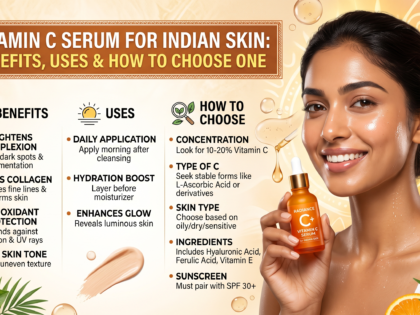
2. Vitamin C for Brightness and Antioxidant Protection
Vitamin C is another ingredient frequently associated with brighter-looking skin. It is an antioxidant, and dermatologists commonly recommend vitamin C products for concerns involving dark spots and signs of skin aging. The AAD identifies vitamin C among ingredients that can help address dark spots, while its skincare guidance notes that vitamin C can be used after cleansing and before sunscreen.
There is an important distinction, though: vitamin C in a face wash is not the same as vitamin C in a leave-on serum. Because cleanser is washed away relatively quickly, the amount of time an active ingredient remains in contact with the skin is limited. That does not automatically make a vitamin C face wash useless, but expectations should remain realistic. If pigmentation or uneven tone is your main concern, a complete routine that includes an appropriate leave-on treatment and daily sun protection may have a larger role than cleanser alone.
Why Vitamin C Is Popular for Dull Skin
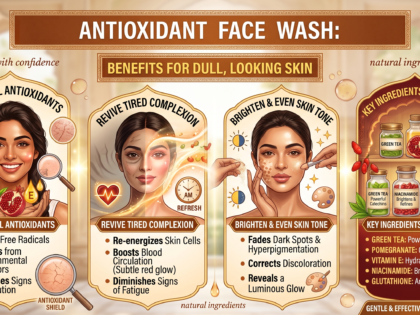
Dull-looking skin can be influenced by dehydration, accumulated dead skin cells, environmental exposure, uneven pigmentation, and lifestyle factors. Vitamin C is popular because of its antioxidant properties and its relationship with brighter-looking skin. However, “glow” should not be interpreted as changing your natural skin color. The practical goal is healthy, even-looking, well-maintained skin.
If you choose a cleanser with vitamin C, consider it one component of a broader routine. Daily sunscreen is particularly important when your objective is maintaining an even complexion because ultraviolet exposure contributes to pigmentation and cumulative skin damage. The AAD recommends broad-spectrum sunscreen with SPF 30 or higher as part of daily skin protection.
3. Hyaluronic Acid for Hydration and Freshness
Hyaluronic acid is best known as a hydration-focused ingredient. It can help the skin hold onto moisture, which may make the surface appear softer, smoother, and more comfortable. The AAD includes hyaluronic acid among ingredients that can help lock in water and support hydrated-looking skin.
This matters because dehydrated skin can appear dull even when there is nothing inherently wrong with its pigmentation or texture. Imagine a dry leaf compared with a fresh one: the difference is not necessarily color but moisture and surface appearance. The same principle can apply to skin. A face wash containing hydrating ingredients can help reduce the harsh, stripped sensation that sometimes follows cleansing.
Hyaluronic acid can be especially appealing in a cleanser for people with dry, normal, combination, or dehydrated skin. It is also commonly paired with glycerin and ceramides. Remember, however, that a cleanser cannot replace a moisturizer. After washing, applying an appropriate moisturizer helps support hydration, while sunscreen remains essential during the daytime.
4. Glycerin for Soft, Comfortable Skin
Glycerin is a classic skincare ingredient that does not always receive the same social-media attention as vitamin C or acids, but it can be extremely useful in a daily cleanser. It is a humectant, meaning it helps attract and retain water, supporting a more comfortable skin feel. The AAD lists glycerin among ingredients that can help smooth and soften skin.
If your skin often feels tight after washing, glycerin is an ingredient worth noticing on a face wash label. It can help create a gentler cleansing experience, particularly when combined with other moisturizing ingredients. A well-formulated cleanser should not leave you feeling as though every trace of moisture has been removed from your face.
For people who live in hot, dusty, or humid environments, cleansing can become especially important because sweat, sunscreen, pollution, and excess oil can accumulate throughout the day. But stronger cleansing is not always better cleansing. A formula that combines effective cleansing with hydration support can be a more practical everyday choice.
5. Ceramides for a Stronger Skin Barrier
Ceramides are naturally occurring lipids found in the skin and are important components of the skin barrier. Cleveland Clinic explains that ceramides help protect against environmental stressors and moisture loss.
A face wash containing ceramides can therefore be appealing when your priority is maintaining a comfortable, hydrated skin barrier. This is particularly relevant for people who experience dryness or sensitivity. When your barrier is unhappy, chasing more active ingredients can sometimes create more irritation rather than more glow.
Why Barrier Care Matters for Glow
Think about glowing skin as the result of many small factors working together. Hydration supports a smoother appearance. A healthy barrier helps reduce moisture loss. Gentle cleansing removes buildup without unnecessary irritation. Sun protection helps reduce cumulative damage. A cleanser cannot accomplish all of these things by itself, but it can either support or undermine the foundation.
For this reason, barrier-friendly ingredients such as ceramides, glycerin, and hyaluronic acid can be just as relevant to a glowing-skin routine as trendy brightening ingredients. AAD guidance also emphasizes gentle cleansing and moisturizing as fundamental parts of skincare.
6. Salicylic Acid for Oily and Acne-Prone Skin
If your version of dull skin comes with blackheads, clogged pores, or frequent breakouts, salicylic acid may be more relevant than a purely hydrating cleanser. Salicylic acid is a beta hydroxy acid, or BHA, that can penetrate into pores and help remove sebum and buildup. Cleveland Clinic identifies it as a common ingredient for acne cleansers, particularly for blackheads and whiteheads.
Salicylic acid can make the skin appear smoother because keeping pores clearer can improve the overall appearance of texture. The AAD also notes that salicylic-acid cleansers may help unclog pores and that some formulations are gentle enough for daily use.
Still, more is not automatically better. If your skin becomes dry, burning, red, or irritated, reduce frequency or switch to a gentler cleanser. Oily skin still needs hydration; aggressively stripping oil can irritate the skin and may make the routine harder to maintain.
7. Glycolic Acid for Smoother-Looking Skin
Glycolic acid belongs to the alpha hydroxy acid family and is commonly used to exfoliate the skin. By helping remove dead skin cells from the surface, exfoliating acids can improve the appearance of roughness and uneven texture. Cleveland Clinic lists glycolic acid among facial acids used for concerns including skin texture and signs of aging.
A glycolic-acid face wash may be attractive if your skin feels rough or looks tired and uneven. But acids deserve respect. If you combine an exfoliating cleanser with several other exfoliating products, you may unintentionally overdo it. Irritation can make skin appear less healthy, not more radiant.
For beginners, a mild formulation used according to its directions is a sensible approach. If your skin is sensitive, reactive, or already irritated, a simple hydrating cleanser may be more appropriate until your barrier feels comfortable again.
8. Lactic Acid for Gentle Exfoliation
Lactic acid is another AHA used in skincare. It can help improve rough texture while generally being considered a gentler exfoliating option than some stronger acids. Cleveland Clinic specifically identifies lactic acid as useful for smoothing rough texture and notes that it can be suitable for sensitive skin in appropriate formulations.
When looking for the best face wash for glowing skin, lactic acid can make sense for someone whose main concern is surface dullness or roughness rather than severe acne. Its appeal is that it combines exfoliating action with a reputation for being relatively gentle when properly formulated.
However, “gentle” does not mean “impossible to irritate.” Your individual tolerance matters. Start conservatively, avoid stacking multiple exfoliating products at once, and pay attention to how your skin responds. If you experience persistent redness, burning, peeling, or discomfort, stop the active product and simplify your routine.
9. Aloe Vera and Soothing Ingredients
Aloe vera is commonly included in skincare products designed to provide a soothing, comfortable skin feel. Other calming ingredients may include green tea extract and colloidal oatmeal. The AAD identifies aloe and hyaluronic acid as useful lightweight moisturizing ingredients and green tea as an ingredient that may help reduce inflammation in skincare formulations.
Soothing ingredients can be particularly useful when your skin is exposed to heat, environmental stress, frequent cleansing, or other factors that leave it feeling uncomfortable. Instead of looking for the strongest possible cleanser, you can look for a balanced formula that cleans while helping the skin remain comfortable.
For sensitive skin, simplicity is often valuable. Fragrance-free products may be preferable because added fragrance can trigger irritation or allergic reactions in some people. The AAD specifically recommends avoiding potentially irritating ingredients when skin is sensitive.
10. Antioxidant-Rich Ingredients for Dull Skin
Antioxidants are popular in skincare because they help defend against oxidative stress associated with environmental exposure. Vitamin C is the best-known example, but formulas may also include botanical antioxidants such as green tea. The important point is to think beyond a single “glow ingredient.”
A good skincare routine works more like a team than a solo performer. Your cleanser handles surface buildup. Your moisturizer supports hydration. Your antioxidant treatment can target specific concerns. Your sunscreen helps protect against ultraviolet exposure. When these roles are balanced, the routine becomes easier to maintain and more predictable.
For a cleanser specifically, antioxidants can be a useful bonus, but they should not distract you from the basics. Gentle cleansing, suitable hydration, and daily sun protection remain more important than collecting a long list of fashionable ingredients.
Ingredients to Be Careful With in a Face Wash
Not every ingredient marketed as powerful is appropriate for every skin type. Fragrance, essential oils, harsh alcohols, and aggressive physical exfoliants can cause irritation in some people. The AAD advises avoiding ingredients such as fragrance, essential oils, rubbing alcohol, and rough physical exfoliants when they may irritate the skin.
A face wash should also be evaluated according to how your skin actually behaves rather than how impressive its ingredient list looks. If a cleanser contains five active ingredients but leaves your skin red and uncomfortable, it is not necessarily serving your goal of healthy-looking skin. The same applies to extremely strong exfoliating cleansers that promise dramatic results in a few uses.
Remember the simple rule: clean skin should feel comfortable, not punished. If your skin repeatedly burns, stings, flakes, or becomes unusually tight after cleansing, consider simplifying the routine and choosing a gentler product. Persistent or significant skin problems should be discussed with a qualified dermatologist.
Best Face Wash Ingredients by Skin Type
Different skin types often need different approaches. Choosing ingredients according to your skin’s behavior can make the search much easier.
| Skin Type | Ingredients to Look For | Ingredients to Use Carefully |
|---|---|---|
| Dry skin | Glycerin, hyaluronic acid, ceramides | Strong acids, harsh cleansers |
| Oily skin | Niacinamide, salicylic acid, gentle cleansing agents | Harsh alcohol-based cleansers |
| Combination skin | Niacinamide, glycerin, mild acids | Over-exfoliating formulas |
| Sensitive skin | Ceramides, glycerin, soothing ingredients | Fragrance, strong acids, rough scrubs |
| Acne-prone skin | Salicylic acid, gentle non-comedogenic formulas | Excessive exfoliation |
| Dull/uneven skin | Vitamin C, niacinamide, gentle AHAs | Aggressive scrubbing |
Dry, Oily, Combination, and Sensitive Skin
If you have dry skin, prioritize hydration and barrier support. Glycerin, hyaluronic acid, and ceramides can be useful ingredients. If you have oily skin, look for a cleanser that removes excess oil without stripping the skin; niacinamide and salicylic acid may be useful depending on your concerns. The AAD specifically recommends gentle cleansing for oily skin rather than excessively harsh products.
For combination skin, balance is the key. You may have an oily T-zone while your cheeks feel normal or dry, so a very aggressive cleanser can create problems in areas that did not need aggressive treatment. Sensitive skin benefits from an even simpler strategy: fragrance-free, gentle formulas with barrier-supporting ingredients are often easier to tolerate. The AAD recommends introducing products carefully and keeping routines simple when skin is sensitive.
How Often Should You Use a Face Wash?
For many people, cleansing in the morning and evening works well, while cleansing after heavy sweating can also be useful. The AAD recommends washing the face twice daily and after sweating, while also emphasizing gentle application and avoiding scrubbing.
However, your skin type matters. People with very dry or sensitive skin may find that cleansing once daily in the evening is sufficient, particularly if morning cleansing leaves the skin uncomfortable. The objective is consistency without irritation. Washing your face repeatedly throughout the day is not automatically going to make it cleaner or more radiant.
Your cleanser should fit your lifestyle too. If you exercise, work outdoors, wear sunscreen, or use makeup, you may need more careful evening cleansing. The key is to remove buildup without repeatedly compromising your skin barrier.
How to Use Face Wash Correctly for Better Results
Even the best face wash for glowing skin will not perform as intended if you use it incorrectly. Start with lukewarm water rather than extremely hot water. Apply the cleanser gently with your fingertips and avoid aggressive rubbing, brushes, or rough cloths unless specifically recommended for your skin. The AAD recommends using fingertips and gently patting the skin dry after rinsing.
After cleansing, follow with your appropriate skincare products. The AAD recommends a general sequence of cleanser first, followed by treatment, then moisturizer and/or sunscreen.
If your face feels tight after washing, do not automatically assume that means the cleanser is “working.” Tightness may be a sign that the product is too drying for you. A comfortable, clean, hydrated feeling is a much better target for a daily cleanser.
Face Wash vs Cleanser: Is There a Difference?
The words “face wash” and “cleanser” are often used interchangeably, but products can differ significantly in texture and formulation. A foaming face wash may be particularly appealing to people who enjoy a fresh, clean sensation, while cream or lotion cleansers may be more comfortable for dry or sensitive skin.
The label alone does not tell you whether a product is right for your skin. Instead, examine the ingredient list and consider what the formula is designed to do. If you are dealing with excess oil and clogged pores, an appropriate salicylic acid cleanser may be useful. If your skin is dry, a cleanser containing glycerin, ceramides, or hyaluronic acid may be more suitable.
The most important question is not “Is this the best face wash in the market?” It is “Is this the right cleanser for my skin and my current concern?”
Common Mistakes That Can Make Skin Look Dull
One of the most common mistakes is over-cleansing. People sometimes assume that scrubbing harder or washing more frequently will remove more dirt and create more glow. In reality, excessive cleansing can irritate the skin, and harsh products can damage the moisture barrier. Dermatologists specifically recommend gentle cleansing rather than aggressive scrubbing.
Another mistake is using too many active ingredients at the same time. Imagine painting a wall and applying five coats before the first one dries. More product does not necessarily mean a better finish. If you combine strong acids, scrubs, acne treatments, retinoids, and multiple brightening products without considering compatibility or tolerance, irritation may become the dominant result.
A third mistake is ignoring sunscreen. You can use a carefully selected cleanser and brightening serum, but continued sun exposure can contribute to pigmentation and cumulative skin damage. The AAD recommends daily broad-spectrum SPF 30 or higher.
How to Build a Simple Glowing-Skin Routine
A glowing-skin routine does not need to be complicated. Start with a gentle face wash suited to your skin type. Follow it with a moisturizer appropriate for your skin, and during the daytime use broad-spectrum sunscreen with SPF 30 or higher. If you have a specific concern such as dark spots, acne, or uneven texture, add one targeted treatment rather than introducing several strong products at once.
For example, someone with dry skin might prioritize a gentle cleanser containing glycerin or ceramides, followed by moisturizer and sunscreen. Someone with oily, acne-prone skin might consider a gentle salicylic acid cleanser, followed by a lightweight moisturizer and sunscreen. Someone focused on uneven pigmentation might use a gentle cleanser and a separate vitamin C or other dermatologist-recommended treatment.
The AAD emphasizes that skincare does not have to be complicated to be effective and that consistency matters. A simple routine you can follow every day is often more practical than an elaborate routine that constantly changes. If your skin reacts to a new product, introduce products one at a time so you can identify what caused the reaction.
Conclusion
Finding the best face wash for glowing skin starts with understanding ingredients rather than chasing marketing claims. Niacinamide can support the skin barrier and help with oil balance and the appearance of dark spots; vitamin C is valued for antioxidant and brightening benefits; hyaluronic acid and glycerin support hydration; ceramides help support the skin barrier; and salicylic acid can be useful for oily, acne-prone skin and clogged pores. Gentle AHAs such as glycolic and lactic acid can help with surface texture, but they should be used thoughtfully, particularly if your skin is sensitive.
The ideal cleanser is not necessarily the one with the longest ingredient list or the strongest “instant glow” claim. It is the one that effectively cleans your skin while fitting your skin type and leaving your face comfortable rather than irritated. Pay attention to how your skin feels after cleansing, avoid unnecessary harshness, moisturize appropriately, and protect your skin from the sun every day. If persistent acne, pigmentation, irritation, or another skin concern continues despite a sensible routine, a dermatologist can help determine the underlying cause and recommend appropriate treatment.
Frequently Asked Questions
1. Which ingredient is best for glowing skin in a face wash?
There is no single ingredient that is universally best for everyone. Niacinamide, vitamin C, glycerin, hyaluronic acid, ceramides, and gentle exfoliating acids can each support different aspects of healthy-looking skin. Your skin type and primary concern should determine which ingredient deserves priority.
2. Is niacinamide good in a face wash?
Yes, niacinamide can be a useful ingredient in a face wash. It is associated with supporting the skin barrier, regulating oil production, calming redness, and improving the appearance of dark spots. Because a face wash is rinsed off, however, it should be considered part of a broader skincare routine rather than the only product responsible for visible results.
3. Is salicylic acid face wash good for glowing skin?
Salicylic acid can be useful when dull-looking skin is accompanied by clogged pores, blackheads, whiteheads, or excess oil. It helps exfoliate inside pores and can improve the appearance of congestion. If it causes dryness or irritation, reduce use or switch to a gentler cleanser.
4. Can vitamin C face wash brighten the skin?
Vitamin C is associated with antioxidant and brightening benefits and can help address the appearance of dark spots. However, because face wash is rinsed off, a leave-on vitamin C product may play a more significant role when pigmentation or uneven tone is the main concern.
5. How can I choose the best face wash for my skin type?
Start by identifying your primary skin behavior and concern. Dry skin generally benefits from gentle, hydrating ingredients such as glycerin, hyaluronic acid, and ceramides, while oily or acne-prone skin may benefit from ingredients such as niacinamide or salicylic acid. Sensitive skin usually benefits from simpler, fragrance-free formulas and fewer potentially irritating actives.