
Nanoplastia Hair Treatment Step by Step: Process, Benefits, Results & Everything You Need to Know
-
Dokmai London
- Posted on
- 0 comments
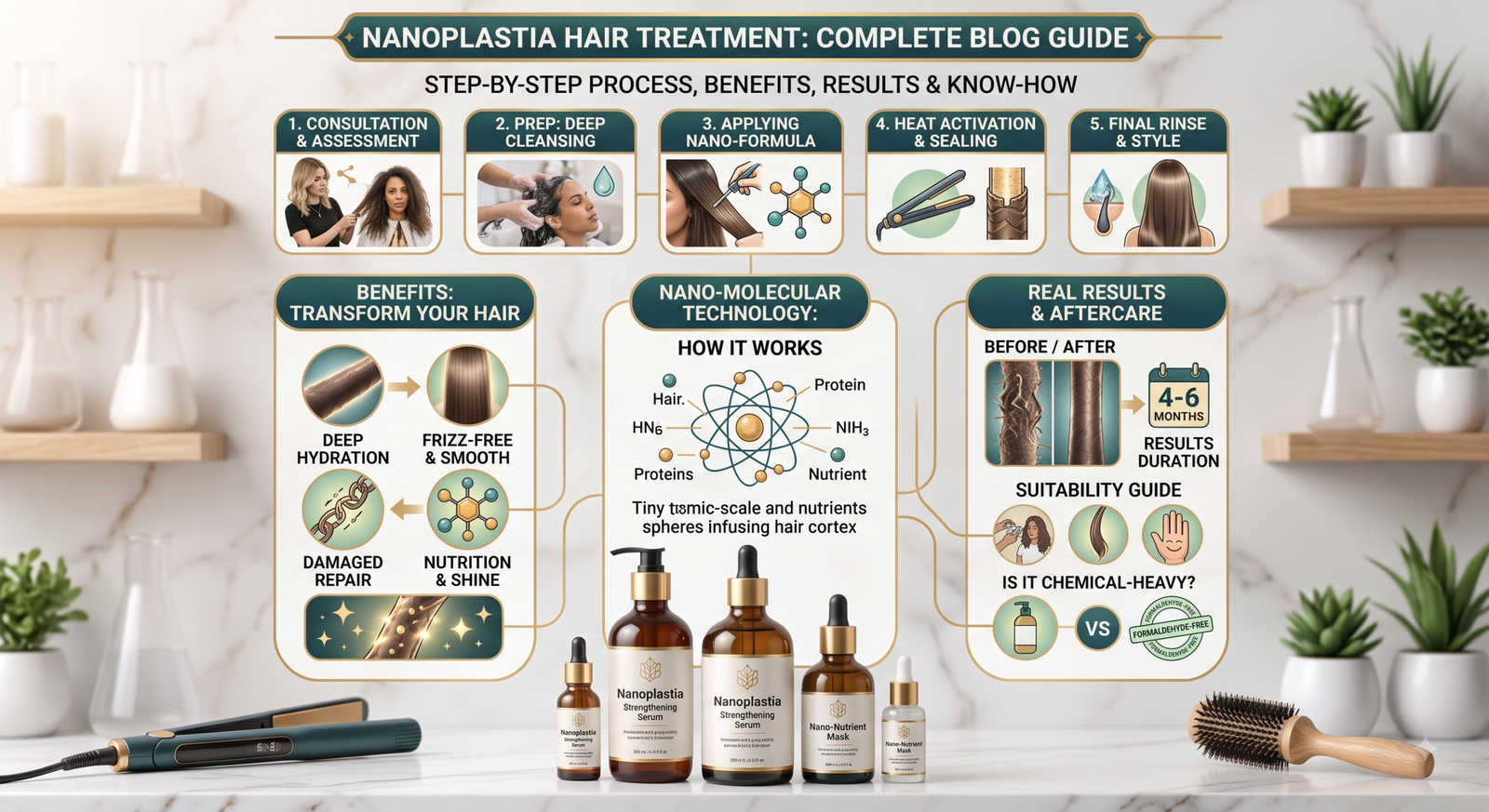
Nanoplastia Hair Treatment Step by Step: Process, Benefits, Results & Everything You Need to Know
Frizzy, rough, dry, and difficult-to-manage hair can make everyday styling a challenge. Nanoplastia hair treatment has become increasingly popular among people looking for smoother, shinier, softer, and more manageable hair without relying on traditional permanent straightening alone.
But what exactly happens during a Nanoplastia treatment? How is it performed? What results can we expect? How long can the results last, and is it suitable for colored or damaged hair?
Understanding the Nanoplastia hair treatment process step by step helps us make a better decision and set realistic expectations before visiting a professional salon.
What Is Nanoplastia Hair Treatment?
Nanoplastia is a professional hair-smoothing treatment designed to reduce the appearance of frizz, improve manageability, enhance shine, and create a smoother-looking hair texture.
The exact formulation varies between brands and professional systems. Depending on the product, Nanoplastia treatments may use conditioning and smoothing ingredients combined with heat-assisted processing.
Unlike conventional permanent straightening, the primary goal of Nanoplastia is generally to create smooth, polished, frizz-controlled hair while improving the overall cosmetic appearance.
The final result depends on the natural texture, porosity, density, condition, and previous chemical history of the hair.
Nanoplastia Hair Treatment Benefits
Nanoplastia is popular because it can provide several visible cosmetic benefits when performed correctly on suitable hair.
1. Helps Reduce Frizz
One of the biggest reasons people choose Nanoplastia is excessive frizz. The treatment can help create a smoother surface and make hair look more controlled.
2. Creates a Smoother Appearance
Rough and unruly hair can appear significantly more polished following the treatment.
3. Enhances Shine
A smoother hair surface can reflect light more evenly, creating a noticeable glossy and salon-finished appearance.
4. Improves Manageability
Hair that is difficult to comb, blow-dry, or style can become easier to manage after a professional smoothing treatment.
5. Reduces Styling Time
Because the hair can become smoother and more controlled, everyday blow-drying and styling may require less effort.
6. Softens Coarse-Looking Hair
Coarse and rough hair can feel softer and appear more refined after treatment.
7. Creates a Sleek Finish
Depending on the natural hair texture and treatment system, Nanoplastia can produce a sleek, smooth finish while reducing unwanted volume and frizz.
Nanoplastia Hair Treatment Step-by-Step Process
The exact procedure can vary depending on the professional product system used. However, a typical Nanoplastia service may include the following stages.
Step 1: Professional Hair Consultation
Before applying any product, the stylist should assess the hair.
Important factors include:
- Hair texture
- Hair density
- Porosity
- Elasticity
- Previous coloring
- Bleaching history
- Existing chemical treatments
- Breakage
- Desired final result
This consultation is especially important for bleached, highlighted, chemically treated, or damaged hair.
Step 2: Deep Cleansing
The hair is washed with a suitable professional cleansing shampoo to remove oil, dirt, styling-product residue, and buildup.
Proper cleansing helps prepare the hair for the treatment.
Step 3: Hair Drying
The hair is dried according to the product’s professional instructions. Depending on the specific Nanoplastia system, the required level of dryness may differ.
Step 4: Nanoplastia Product Application
The professional applies the Nanoplastia treatment systematically, usually working section by section.
The amount of product required can depend on:
- Hair length
- Hair thickness
- Hair density
- Porosity
- Texture
Professional application is important because uneven product distribution can affect the final result.
Step 5: Processing Time
The product is left on the hair for the time specified by the manufacturer.
Processing time should never be extended simply because someone wants a stronger result. Following the product protocol helps minimize unnecessary stress on the hair.
Step 6: Rinsing According to the Product Protocol
Depending on the Nanoplastia formulation, the stylist may rinse the product fully, partially, or follow another manufacturer-specific procedure.
This step varies between professional systems, so the exact instructions provided with the product should always be followed.
Step 7: Blow-Drying
The hair is blow-dried using a professional technique.
The goal is to prepare the hair for the heat-sealing stage when required by the specific treatment system.
Step 8: Heat Sealing With a Flat Iron
This is one of the most important stages in many Nanoplastia systems.
The stylist works with small sections of hair and uses controlled heat according to the product manufacturer’s instructions.
The number of passes and temperature should be selected based on the treatment system and hair condition rather than using the same settings for every client.
Step 9: Final Styling
After the treatment process is complete, the hair is styled to reveal the final result.
The hair may appear:
- Smoother
- Shinier
- Softer
- Less frizzy
- More manageable
- More polished
The exact level of straightness depends on the natural hair texture and specific product system.
How Long Does Nanoplastia Take?
A Nanoplastia appointment can take several hours depending on the hair.
Factors include:
- Hair length
- Hair density
- Hair thickness
- Curl pattern
- Previous treatments
- Product processing time
- Styling requirements
Long, thick, or highly textured hair generally takes more time than short or fine hair.
A professional consultation can provide a more accurate estimate.
How Long Does Nanoplastia Last?
Nanoplastia results are not permanently fixed forever.
The longevity depends on:
- Hair type
- Washing frequency
- Shampoo used
- Water quality
- Humidity
- Heat styling
- Hair growth
- Product formulation
- Professional application
As the hair is washed repeatedly and new hair grows, the treated appearance gradually changes.
Using suitable aftercare products and following professional maintenance recommendations can help preserve the cosmetic result.
Nanoplastia Before and After: What Results Can We Expect?
A typical Nanoplastia transformation may include:
Before:
- Frizzy hair
- Rough texture
- Dry appearance
- Excessive volume
- Difficult styling
- Reduced shine
After:
- Smoother-looking hair
- Reduced frizz
- Improved shine
- Softer feel
- Better manageability
- Sleeker appearance
However, before-and-after results should not be treated as guaranteed outcomes. Hair responds differently depending on its natural texture and condition.
Does Nanoplastia Straighten Hair Permanently?
No.
Nanoplastia is generally considered a smoothing treatment rather than permanent hair straightening.
It may significantly reduce waves, curls, frizz, and volume depending on the formulation and hair type, but the result gradually changes with washing and new hair growth.
If someone wants a permanently straight texture, they may need to consider a different chemical straightening system after professional consultation.
Is Nanoplastia Suitable for Curly Hair?
Nanoplastia can be considered for many curly and wavy hair types, particularly when the goal is to reduce frizz and make the hair easier to manage.
However, the result will vary.
Some people may achieve a smoother version of their natural texture, while others may experience a more significant reduction in curl.
The desired outcome should be discussed clearly with the stylist before treatment.
Can Nanoplastia Be Done on Colored Hair?
In some cases, Nanoplastia can be performed on colored hair, but the hair’s condition is more important than color alone.
Colored hair that is also heavily bleached or highly porous may require additional caution.
A professional should assess:
- Color history
- Bleaching
- Hair elasticity
- Breakage
- Porosity
The timing of coloring and Nanoplastia should also be planned carefully to avoid unnecessary chemical stress.
Is Nanoplastia Good for Damaged Hair?
This depends on the severity of the damage.
Hair that is mildly dry, frizzy, or rough may benefit cosmetically from a smoothing treatment. However, severely damaged, over-processed, or heavily bleached hair may not be an appropriate candidate.
Warning signs include:
- Severe breakage
- Extremely poor elasticity
- Hair snapping easily
- Excessive porosity
- Significant chemical damage
In such cases, improving the hair’s condition may need to come before another intensive treatment.
Nanoplastia Aftercare: How to Maintain Results
Proper aftercare plays an important role in maintaining smoothness.
Use a Suitable Shampoo
Follow your stylist’s recommendation for a shampoo compatible with your treatment and hair type.
Condition Regularly
Conditioner helps maintain softness and improve detangling.
Use a Hair Mask
A suitable mask can provide additional conditioning for dry or chemically treated hair.
Protect Hair From Heat
Always use appropriate heat protection when blow-drying, straightening, or curling the hair.
Avoid Excessive Washing
Washing frequency can influence how long the cosmetic smoothing effect lasts.
Protect Against Humidity
Humidity can make even treated hair appear frizzy. Appropriate styling and protective products can help manage this effect.
Nanoplastia vs Keratin Treatment
Nanoplastia and Keratin Treatment can both provide smoother, shinier, more manageable hair, but they are not identical.
Nanoplastia is generally chosen for a polished, smooth finish and significant frizz reduction.
Keratin Treatment is commonly chosen for frizz control, softness, shine, and improved manageability.
The exact results depend heavily on the product formulation and application technique.
Nanoplastia vs Smoothening
Smoothening is a broader category of professional hair services designed to reduce frizz and create a smoother or straighter appearance.
Nanoplastia is typically positioned as a smoothing-focused treatment with an emphasis on smoothness, shine, manageability, and frizz control.
The best option depends on the desired result and hair condition.
Common Mistakes to Avoid After Nanoplastia
Using the Wrong Hair Products
Products that are not appropriate for treated hair may affect the longevity and appearance of the result.
Excessive Heat Styling
Repeated high-temperature styling can contribute to dryness and breakage.
Ignoring Hair Damage
A smooth appearance does not necessarily mean the hair has become biologically healthier. Hair still requires conditioning and protection.
Repeating the Treatment Too Frequently
Repeated chemical and heat exposure can stress the hair. Maintenance should be based on new growth and professional assessment.
How Much Does Nanoplastia Cost?
The price varies significantly between salons and depends on:
- Hair length
- Hair thickness
- Product brand
- Hair density
- Salon location
- Stylist expertise
- Treatment complexity
Instead of choosing a salon based solely on price, we should consider professional experience, product quality, consultation, hygiene, technique, and aftercare guidance.
Who Should Avoid or Delay Nanoplastia?
Nanoplastia may not be appropriate for everyone at every point in time.
We should consider postponing treatment and seeking professional advice if the hair is:
- Severely bleached
- Extremely brittle
- Breaking extensively
- Severely chemically damaged
- Very weak or elastic when wet
Anyone with scalp irritation, wounds, or an active scalp condition should also discuss the situation with an appropriate healthcare professional before undergoing salon treatment.
Frequently Asked Questions
Is Nanoplastia better than Keratin?
Neither treatment is universally better. Nanoplastia may be preferred for a sleek, smooth finish and strong frizz control, while Keratin is commonly selected for smoothness, shine, and manageability.
How long does Nanoplastia last?
The result varies depending on hair type, washing routine, aftercare, product formulation, and professional application. It is not a permanent result and gradually changes as the hair is washed and new hair grows.
Does Nanoplastia damage hair?
The risk depends on the formulation, heat settings, application technique, and existing hair condition. Severely damaged hair may be more vulnerable to additional chemical and heat stress.
Can Nanoplastia be done on curly hair?
Yes, many curly and wavy hair types can be considered for Nanoplastia. The final result depends on the natural curl pattern and the treatment system used.
Can Nanoplastia be done on bleached hair?
It may be possible in some cases, but heavily bleached hair requires careful assessment because its strength and elasticity may already be compromised.
Does Nanoplastia permanently straighten hair?
No. Nanoplastia is generally a smoothing treatment rather than permanent straightening. It can reduce frizz and soften the appearance of waves or curls, but the effect changes over time.
How often should we do Nanoplastia?
There is no universal schedule. Maintenance should depend on new growth, hair condition, and the recommendations of a qualified stylist.
Final Verdict: Is Nanoplastia Hair Treatment Worth It?
Nanoplastia hair treatment can be an excellent option for people who want smoother, shinier, less frizzy, and easier-to-manage hair.
The process typically involves professional consultation, cleansing, treatment application, controlled processing, blow-drying, heat sealing, and final styling. When the correct formulation is used and the process is performed properly, the result can provide a noticeably more polished appearance.
However, Nanoplastia is not a miracle cure for damaged hair, nor is it a permanently straightening treatment. The quality of the final result depends on the hair’s condition, treatment formulation, stylist technique, and aftercare.
For the best outcome, we should always choose a qualified professional, disclose our complete chemical and color history, follow the product’s processing instructions, and maintain the hair with an appropriate post-treatment routine.
With the right assessment and professional care, Nanoplastia can help transform frizzy, rough, and difficult-to-manage hair into smoother, shinier, softer, and more manageable-looking hair.