

Best Vitamin C Serum for Glowing Skin: Benefits, Uses and How to Choose
-
Dokmai London
- Posted on
- 0 comments
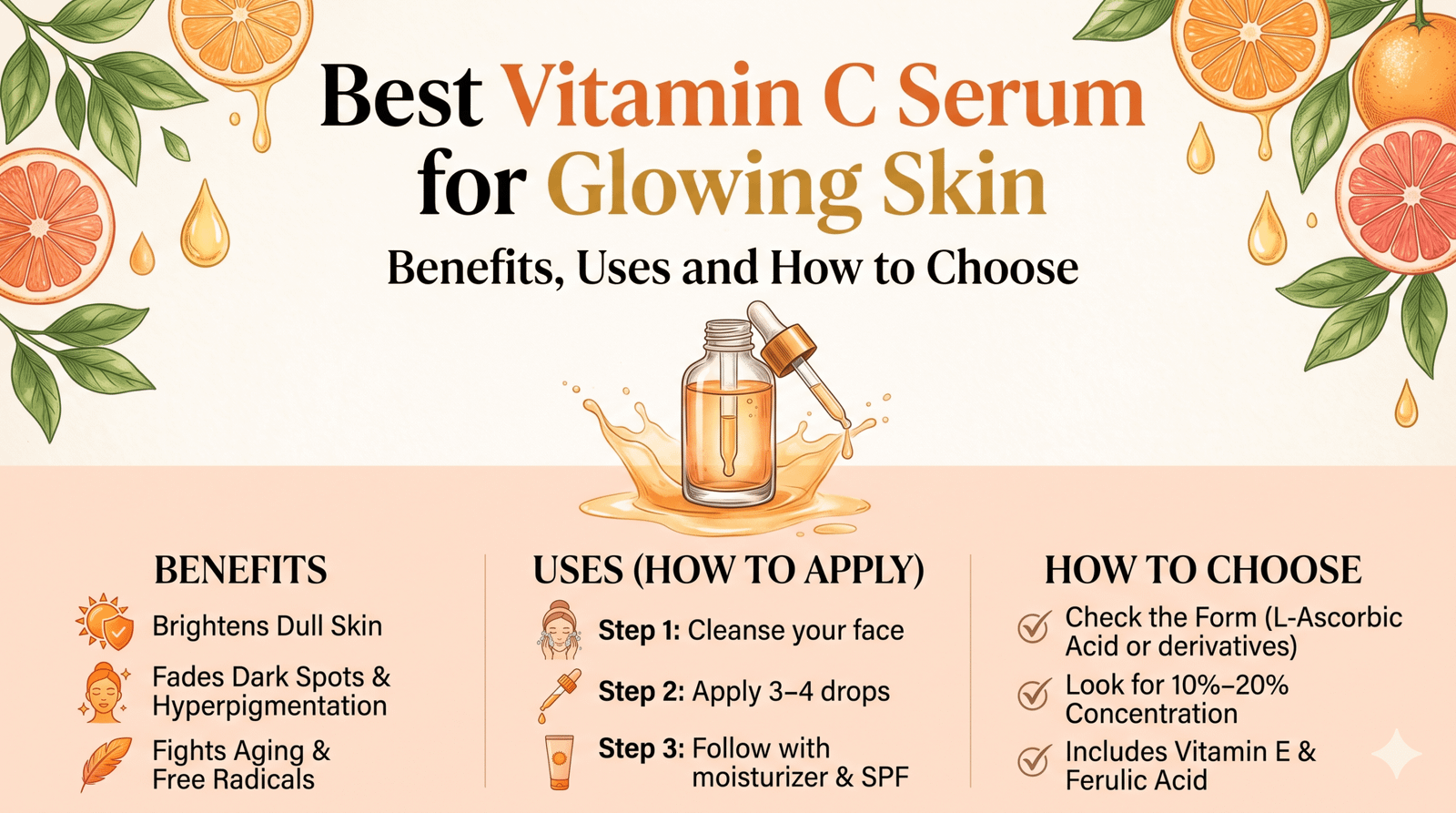
Healthy, radiant skin begins with the right skincare routine. Among the many skincare ingredients available today, Vitamin C serum for glowing skin has become a popular choice for people looking to improve skin brightness, support collagen production, and achieve a more even-looking complexion. When used correctly, a well-formulated Vitamin C serum can complement a daily skincare routine and help address common concerns such as dullness, uneven skin tone, and the appearance of dark spots.
However, choosing the best Vitamin C serum for glowing skin involves more than selecting a product with an attractive label. The concentration of Vitamin C, the formulation, the supporting ingredients, and the way the serum is used can all influence the overall skincare experience.
At Dokmai London, we believe effective skincare begins with understanding your skin’s needs and choosing products that support a consistent, balanced routine. This guide explains the benefits of Vitamin C serum, how to use it, which ingredients to look for, and how to choose a suitable product for your skin type.
What Is Vitamin C Serum?
Vitamin C serum is a lightweight skincare product formulated with Vitamin C or its derivatives. Vitamin C is an antioxidant that helps protect the skin against oxidative stress caused by environmental factors, including exposure to ultraviolet radiation and pollution.
Unlike many traditional creams, serums are designed to deliver concentrated skincare ingredients in lightweight formulations. Depending on the formula, a Vitamin C serum may help improve the appearance of dull skin, support collagen synthesis, and reduce the visibility of uneven pigmentation over time.
One of the most widely studied forms of Vitamin C is L-ascorbic acid. Other formulations use derivatives such as sodium ascorbyl phosphate, magnesium ascorbyl phosphate, or ascorbyl glucoside. These ingredients differ in stability, formulation requirements, and the amount of evidence available for their effects on the skin.
A suitable Vitamin C serum can become an important part of a morning skincare routine, particularly for people concerned about dullness, uneven skin tone, and the visible effects of environmental exposure.
Benefits of Vitamin C Serum for Glowing Skin
The popularity of Vitamin C serum comes from its antioxidant properties and its potential to improve several visible aspects of skin appearance.
1. Helps Improve Skin Brightness
Dull skin can result from multiple factors, including dehydration, accumulated dead skin cells, environmental exposure, and uneven pigmentation. Vitamin C supports a brighter-looking complexion by helping address oxidative stress and influencing processes involved in melanin production.
With consistent use, a well-formulated serum may help skin look more radiant and even-toned. Results vary depending on the formulation, skin condition, and regularity of application.
For people looking to achieve a healthy glow, Vitamin C can work alongside gentle cleansing, regular moisturising, and daily sun protection.
2. Helps Reduce the Appearance of Dark Spots
Dark spots may develop after acne, inflammation, sun exposure, or other skin changes. Vitamin C can help improve the appearance of uneven pigmentation by influencing melanin synthesis.
However, Vitamin C serum does not remove every dark spot overnight. Visible changes generally require consistent use over several weeks, and some types of pigmentation may need additional treatment from a qualified dermatologist.
For better results, use a suitable Vitamin C serum alongside a broad-spectrum sunscreen with SPF 30 or higher. Sun protection is particularly important because repeated ultraviolet exposure can worsen pigmentation and reduce the benefits of a brightening routine.
3. Supports Collagen Production
Collagen is a structural protein that helps maintain skin firmness and elasticity. Natural collagen production changes with age and can be affected by ultraviolet radiation and environmental stress.
Vitamin C plays an essential role in normal collagen synthesis. Topical Vitamin C formulations may help support skin texture and improve the appearance of fine lines over time.
Although Vitamin C is not a replacement for professional anti-ageing treatments, it can complement a skincare routine designed to maintain healthy-looking skin.
4. Provides Antioxidant Support
Everyday environmental exposure can contribute to oxidative stress in the skin. Antioxidants help neutralise reactive molecules that can damage cellular components.
Vitamin C is valued for its antioxidant activity and can help support the skin’s natural defences against environmental stressors.
When combined with sunscreen, Vitamin C may provide complementary protection against the effects of sun exposure. Nevertheless, Vitamin C serum cannot replace sunscreen, shade, or other sun-protection measures.
5. Helps Improve the Appearance of Skin Texture
Uneven texture can make skin appear less smooth and radiant. Certain Vitamin C formulations may support improvements in the appearance of skin texture with regular application.
The results depend on the product’s formulation and the underlying cause of the texture concern. Vitamin C is not an exfoliant in the same way as alpha-hydroxy acids, and it should not be expected to resolve every form of roughness or acne scarring.
A balanced routine that includes gentle cleansing, moisturising, and appropriate active ingredients can help maintain smoother-looking skin.
6. Complements a Hydrating Skincare Routine
Vitamin C itself is not necessarily a moisturiser. However, many serums contain additional ingredients such as glycerin, hyaluronic acid, or other humectants that help attract and retain moisture.
These combinations can make the skin appear plumper and more refreshed, especially when followed by a moisturiser.
For people with dry or dehydrated skin, choosing a Vitamin C serum with hydrating ingredients may improve comfort and make daily application easier.
How to Choose the Best Vitamin C Serum for Glowing Skin
Not every Vitamin C serum is suitable for every person. To choose the right product, consider your skin type, primary concerns, ingredient preferences, and tolerance for active skincare ingredients.
1. Check the Type of Vitamin C
The form of Vitamin C is one of the most important factors to consider.
- L-ascorbic acid: A well-studied form of Vitamin C that may help improve uneven pigmentation and support collagen synthesis. It can be irritating for some people, particularly at higher concentrations.
- Ascorbyl glucoside: A Vitamin C derivative used in skincare formulations designed to support brightness and improve the appearance of uneven skin tone.
- Sodium ascorbyl phosphate: A derivative used in various formulations, including products designed for blemish-prone skin.
- Magnesium ascorbyl phosphate: A derivative often selected for formulations intended to be gentler than some low-pH L-ascorbic acid products.
The best option depends on the overall formulation rather than the ingredient name alone.
2. Choose an Appropriate Concentration
Vitamin C serums are available in different concentrations. L-ascorbic acid products commonly range from approximately 5% to 20%.
For beginners or people with sensitive skin, starting with a lower concentration may be more comfortable. People who already tolerate active skincare ingredients may consider a stronger formulation, provided it is suitable for their skin.
Higher concentrations do not automatically produce better results. A well-formulated product at a moderate concentration may be more useful than a stronger product that causes irritation and cannot be used consistently.
Always follow the manufacturer’s instructions and introduce new active ingredients gradually.
3. Consider Your Skin Type
Your skin type can help determine which serum texture and formulation are most suitable.
| Skin Type | What to Look For |
|---|---|
| Dry skin | Vitamin C serum with hydrating ingredients such as glycerin or hyaluronic acid |
| Oily skin | Lightweight, non-greasy formulations |
| Combination skin | Fast-absorbing formulas that feel comfortable across different facial areas |
| Sensitive skin | Lower concentrations or suitable Vitamin C derivatives, introduced gradually |
| Normal skin | A well-formulated serum matched to your primary skincare concerns |
| Blemish-prone skin | A lightweight formulation that does not aggravate existing irritation |
People with eczema, rosacea, a damaged skin barrier, or persistent sensitivity should be particularly careful when introducing active ingredients. Professional advice may be helpful if irritation is frequent.
4. Look for Complementary Ingredients
Some ingredients work well alongside Vitamin C and can help create a balanced skincare product.
Vitamin E: An antioxidant that may complement Vitamin C in suitable formulations.
Ferulic acid: An antioxidant frequently used with Vitamin C and Vitamin E to improve the stability and performance of certain formulations.
Hyaluronic acid: A humectant that helps attract moisture and supports a hydrated appearance.
Glycerin: A moisturising ingredient that helps the skin retain water.
Niacinamide: A versatile skincare ingredient that can support the skin barrier and improve the appearance of uneven skin tone. It can generally be incorporated into a routine with Vitamin C, although the suitability of the combination depends on the products and individual tolerance.
The goal is to select a formulation that addresses your needs without unnecessarily increasing the number of active ingredients in your routine.
5. Check Packaging and Product Freshness
Vitamin C can be sensitive to oxidation, particularly in formulations containing L-ascorbic acid. Exposure to air, light, and unsuitable storage conditions may reduce product stability.
When choosing a serum, look for packaging that limits exposure to air and light, such as an appropriately designed opaque or airtight container.
Follow the product’s storage instructions and check its appearance, smell, and expiry information. A significant change in colour may indicate oxidation, although the expected colour depends on the formulation. If the serum changes noticeably or appears different from when it was purchased, consult the manufacturer’s guidance before continuing use.
How to Use Vitamin C Serum for the Best Results
Using Vitamin C serum correctly can help you build a consistent skincare routine and minimise the risk of irritation.
Step 1: Cleanse Your Face
Start with a gentle cleanser to remove excess oil, sweat, makeup, and surface impurities.
Avoid harsh cleansing products that leave your skin feeling tight or uncomfortable. A healthy skin barrier helps improve tolerance to active skincare ingredients.
Step 2: Apply Vitamin C Serum
Apply the serum according to the product instructions. For many formulations, a small amount is sufficient to cover the face.
Spread the serum gently across the face, avoiding the eyes and any areas where the product is not intended to be used. Do not apply it to broken or severely irritated skin.
If you are introducing Vitamin C for the first time, begin with less frequent use and increase gradually if your skin tolerates it.
Step 3: Apply Moisturiser
Once the serum has settled, apply a moisturiser suited to your skin type.
Moisturiser helps reduce water loss and supports the skin barrier. This step is particularly important if you experience dryness or tightness after using active skincare products.
Step 4: Finish With Sunscreen
In the morning, finish your routine with a broad-spectrum sunscreen of SPF 30 or higher.
Apply enough sunscreen to cover exposed skin and reapply according to the product instructions, particularly after swimming, sweating, or prolonged outdoor exposure.
Vitamin C and sunscreen serve different purposes. Using both can help support a routine focused on maintaining a brighter, healthier-looking complexion.
Can We Use Vitamin C Serum Every Day?
Many people can use a suitable Vitamin C serum daily, but the ideal frequency depends on the formulation and individual skin tolerance.
Beginners may start with two or three applications per week. If the skin remains comfortable, they can gradually increase frequency according to the manufacturer’s recommendations.
People who experience burning, persistent redness, itching, peeling, or discomfort should stop using the product until the skin settles. If symptoms are severe or persistent, seek advice from a qualified healthcare professional.
There is no need to apply excessive amounts or combine several strong active ingredients to achieve better results. Consistency and tolerance are more important than using the highest possible concentration.
How Long Does Vitamin C Serum Take to Show Results?
The time required to notice a difference depends on the skin concern being addressed, the formulation, and how consistently the product is used.
- Initial hydration and freshness: A serum containing moisturising ingredients may improve the appearance of dehydrated skin soon after application.
- Skin brightness: Some people may notice a gradual improvement in radiance after several weeks of regular use.
- Uneven skin tone: Visible changes may take several weeks to a few months.
- Dark spots and pigmentation: These concerns can require several months of consistent skincare and sun protection, and some conditions may need professional treatment.
- Fine lines and texture: Improvements, when they occur, generally develop gradually rather than overnight.
Individual results vary, and no serum can guarantee identical results for everyone.
Common Mistakes to Avoid When Using Vitamin C Serum
Even a well-formulated serum may not deliver the expected experience if it is used incorrectly.
Using Too Much Product
Applying more serum than recommended does not necessarily improve its effectiveness. Excessive application may increase the likelihood of irritation.
Skipping Sunscreen
Sun exposure can worsen dark spots and uneven pigmentation. A brightening routine is incomplete without consistent sun protection.
Combining Too Many Active Ingredients
Using Vitamin C alongside several exfoliating acids, retinoids, or other strong actives at the same time may increase irritation, particularly for beginners.
Introduce products individually and monitor your skin’s response.
Ignoring Skin Sensitivity
A tingling sensation is not a requirement for effectiveness. Persistent burning, swelling, or redness should not be ignored.
Perform a patch test according to the product instructions before applying a new serum to the entire face.
Expecting Overnight Results
Skin improvements generally take time. Changing products too frequently makes it difficult to determine whether a formulation is working and may unnecessarily irritate the skin.
Morning vs. Night: When Should We Apply Vitamin C Serum?
Vitamin C serum can often be used in either the morning or evening, depending on the formulation and manufacturer’s directions.
Morning application is popular because Vitamin C’s antioxidant properties complement daytime sun protection. A typical morning routine includes cleanser, Vitamin C serum, moisturiser, and sunscreen.
Evening application can be a suitable alternative for people who prefer a simpler morning routine or whose skin tolerates the product better at night. The remaining steps can include cleanser and moisturiser.
For most people, choosing a time that allows consistent application is more useful than trying to follow a complicated schedule.
Is Vitamin C Serum Suitable for All Skin Types?
Vitamin C serum can be suitable for many skin types, but not every formula will work equally well for everyone.
People with oily skin may prefer lightweight textures, while those with dry skin may benefit from additional hydrating ingredients. Sensitive skin may respond better to a lower concentration or a suitable derivative.
People who are pregnant or breastfeeding should check the suitability of their complete skincare routine with a qualified healthcare professional when uncertain, especially before introducing multiple active ingredients.
Anyone experiencing persistent pigmentation, severe acne, or unexplained skin changes should consider professional assessment rather than relying exclusively on cosmetic skincare products.
Why Choose Dokmai London Vitamin C Serum?
At Dokmai London, our skincare philosophy centres on helping people make informed choices about their daily beauty routines. When evaluating a Vitamin C serum, we encourage customers to look beyond marketing claims and consider the formulation, ingredient transparency, packaging, and suitability for their skin.
A good skincare product should fit naturally into a routine that includes gentle cleansing, appropriate moisturising, and daily sun protection.
When exploring a Vitamin C serum from Dokmai London, review the product label for its Vitamin C form, ingredient list, directions for use, and storage recommendations. Choose a product that matches your skin’s needs and introduce it gradually to assess tolerance.
Rather than relying on exaggerated promises, focus on realistic skincare goals: a more radiant-looking complexion, improved appearance of uneven skin tone, and a consistent routine that supports healthy-looking skin.
Frequently Asked Questions About Vitamin C Serum
1. Which Vitamin C serum is best for glowing skin?
The best Vitamin C serum is one with a suitable, well-formulated Vitamin C ingredient, appropriate concentration, stable packaging, and a texture that matches your skin type. Beginners may prefer a lower concentration, while people familiar with active skincare ingredients can choose according to their skin’s tolerance.
2. Can Vitamin C serum remove dark spots?
Vitamin C may help reduce the appearance of some dark spots and uneven pigmentation over time. However, results vary, and deeper or persistent pigmentation may require professional treatment. Daily sunscreen is essential for helping prevent further darkening.
3. Can we use Vitamin C serum daily?
Yes, many people can use Vitamin C serum daily if their skin tolerates the formulation. Beginners should start gradually and follow the manufacturer’s directions. Stop using the product if significant irritation develops.
4. Is Vitamin C serum suitable for oily skin?
Yes. People with oily skin may prefer a lightweight, fast-absorbing formula. The complete ingredient list matters, so choose a product that feels comfortable and does not aggravate existing skin concerns.
5. Can Vitamin C serum be used with niacinamide?
Vitamin C and niacinamide can generally be incorporated into the same skincare routine. There is no universal requirement to separate them. Introduce new products gradually and consider the formulation and your skin’s tolerance.
6. Should we apply Vitamin C serum before or after moisturiser?
For most traditional water-based serums, Vitamin C is applied after cleansing and before moisturiser. However, follow the product’s instructions because application order may vary with the formulation.
7. Can Vitamin C serum replace sunscreen?
No. Vitamin C serum does not replace sunscreen. Apply a broad-spectrum sunscreen with SPF 30 or higher during the day and follow appropriate sun-protection practices.
8. How should we store Vitamin C serum?
Store the serum according to the manufacturer’s instructions, away from excessive heat and direct sunlight. Close the container securely after use and pay attention to expiry dates and noticeable changes in appearance.
Final Thoughts: Choose the Right Vitamin C Serum for Radiant Skin
The best Vitamin C serum for glowing skin is not necessarily the strongest or most expensive product. It is the formulation that suits your skin type, addresses your concerns, and fits comfortably into a routine you can maintain.
Vitamin C can help support antioxidant protection, collagen synthesis, and a more even-looking complexion. With regular use, suitable moisturising, and consistent sunscreen application, it can become a valuable part of a skincare routine focused on healthier-looking, radiant skin.
At Dokmai London, we encourage a thoughtful approach to skincare: understand your skin, read product labels carefully, introduce active ingredients gradually, and give your routine time to work.
Discover skincare that fits your routine with Dokmai London, and take a consistent, informed approach to achieving naturally radiant-looking skin.


