
Daily Morning & Night Skincare Routine: A Complete Guide for Healthy, Glowing Skin
-
Dokmai London
- Posted on
- 0 comments
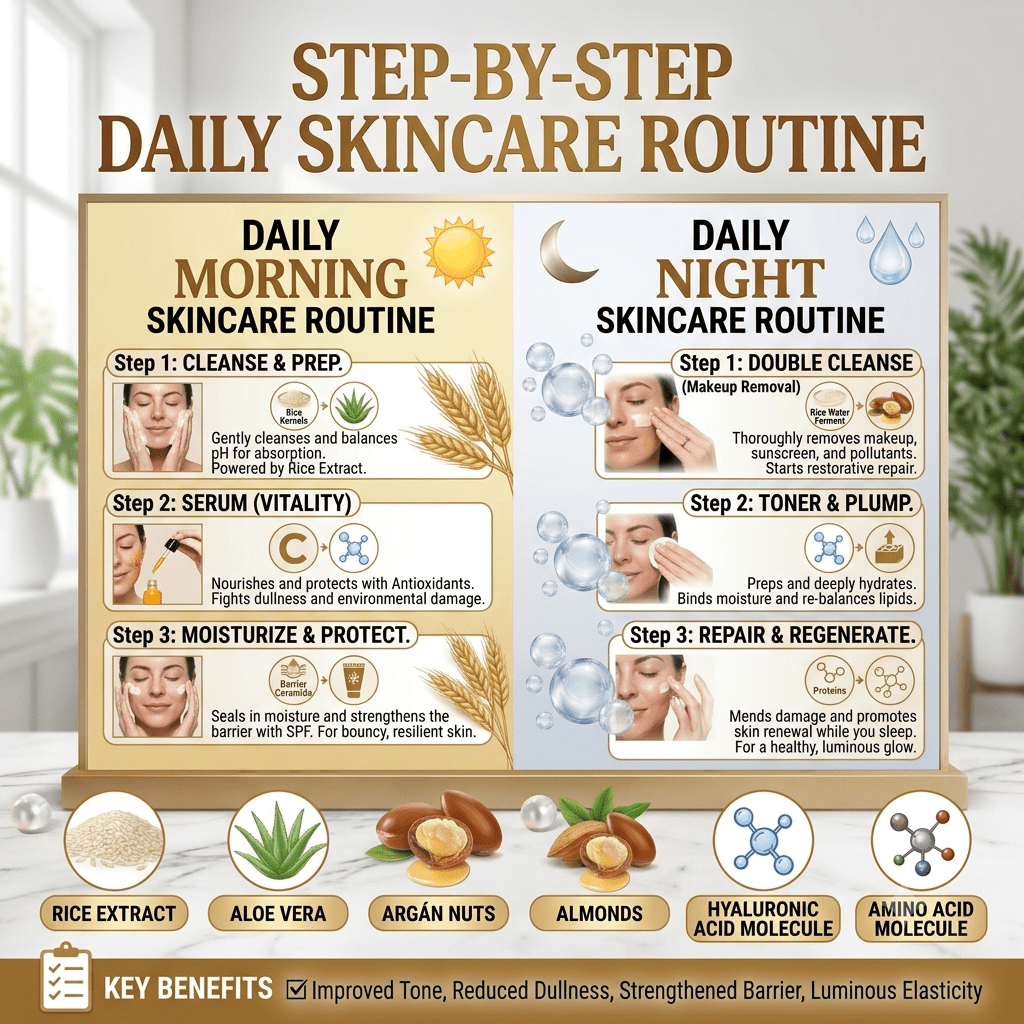
Healthy, radiant skin isn’t achieved overnight—it’s the result of a consistent skincare routine. Whether you have oily, dry, combination, or sensitive skin, following a daily morning and night skincare routine helps keep your skin clean, hydrated, and protected from environmental damage.
While your morning routine focuses on protection against UV rays, pollution, and dirt, your night routine is all about cleansing, repairing, and nourishing the skin. In this guide, we’ll walk you through the ideal skincare routine, the purpose of each step, and the best ingredients to look for based on your skin type.
Why Is a Daily Skincare Routine Important?
Your skin is exposed to dust, pollution, UV rays, makeup, sweat, and excess oil every day. Without proper care, these factors can lead to:
- Dull skin
- Acne and breakouts
- Dryness and dehydration
- Premature aging
- Uneven skin tone
- Enlarged pores
- Fine lines and wrinkles
A consistent routine helps:
- Keep skin clean and healthy
- Maintain hydration
- Protect the skin barrier
- Prevent common skin concerns
- Improve overall skin texture and glow
Morning Skincare Routine (AM Routine)
The goal of your morning routine is to cleanse, hydrate, and protect your skin before you start the day.
Step 1: Cleanse Your Face
Start your day by washing your face with a gentle cleanser to remove oil, sweat, and impurities that build up overnight.
Choose a Cleanser Based on Your Skin Type:
Dry Skin
- Hydrating cleanser with Hyaluronic Acid or Ceramides
Oily Skin
- Gel cleanser with Salicylic Acid
Combination Skin
- Gentle foaming cleanser
Sensitive Skin
- Fragrance-free, sulfate-free cleanser
Massage gently for 30–60 seconds and rinse with lukewarm water.
Step 2: Apply a Toner
A toner helps restore your skin’s pH balance while providing an extra layer of hydration.
Look for ingredients like:
- Rose Water
- Aloe Vera
- Hyaluronic Acid
- Niacinamide
- Centella Asiatica
Avoid alcohol-based toners, especially if you have dry or sensitive skin.
Step 3: Apply a Serum
Serums contain concentrated ingredients that target specific skin concerns.
Best Serums:
For Hydration
- Hyaluronic Acid
For Brightening
- Vitamin C
For Oily Skin
- Niacinamide
For Sensitive Skin
- Panthenol (Vitamin B5)
Use 2–3 drops and gently pat into the skin.
Step 4: Moisturize
Moisturizer keeps your skin hydrated and strengthens its protective barrier.
Choose According to Your Skin Type:
Dry Skin
- Rich cream with Ceramides and Shea Butter
Oily Skin
- Lightweight gel moisturizer
Combination Skin
- Water-based moisturizer
Sensitive Skin
- Fragrance-free moisturizer
Apply evenly over your face and neck.
Step 5: Apply Sunscreen (Most Important Step)
Sunscreen protects your skin from harmful UVA and UVB rays, helping prevent sunburn, premature aging, and dark spots.
Choose:
- SPF 30 or higher
- Broad-spectrum protection
- PA+++ or PA++++ (where available)
Apply generously to your face, neck, and exposed areas at least 15–20 minutes before sun exposure. Reapply every two hours when outdoors.
Night Skincare Routine (PM Routine)
At night, your skin naturally repairs itself. Your evening routine should focus on cleansing, nourishing, and supporting that repair process.
Step 1: Remove Makeup and Sunscreen
If you wear makeup or sunscreen, start with:
- Cleansing balm
- Cleansing oil
- Micellar water
This helps dissolve makeup, sunscreen, and excess oil.
Step 2: Cleanse Again
Follow with a gentle facial cleanser to remove any remaining impurities. This “double cleansing” method is especially helpful if you wear makeup or water-resistant sunscreen.
Step 3: Apply Treatment Serum
Nighttime is the best time to use targeted treatments.
Popular Options:
Hydration
- Hyaluronic Acid
Barrier Support
- Ceramides
Texture and Fine Lines
- Retinol (start slowly and use only as directed)
Calming Care
- Niacinamide or Panthenol
Always follow the instructions on active ingredients like retinol and avoid combining multiple strong actives unless advised by a skincare professional.
Step 4: Moisturize
Use a nourishing night cream or moisturizer to lock in hydration and support overnight skin repair.
Look for ingredients like:
- Ceramides
- Squalane
- Glycerin
- Shea Butter
- Peptides
Step 5: Lip Care
Finish your routine with a moisturizing lip balm containing ingredients such as:
- Shea Butter
- Beeswax
- Vitamin E
- Lanolin
This helps prevent dry, chapped lips overnight.
Weekly Skincare Additions
Exfoliate (1–2 Times Per Week)
Gentle exfoliation removes dead skin cells and improves skin texture.
Recommended exfoliants:
- Lactic Acid
- Mandelic Acid
- Polyhydroxy Acids (PHAs)
Avoid over-exfoliating, as it can weaken the skin barrier.
Apply a Face Mask (1–2 Times Weekly)
Choose a mask based on your skin needs:
Hydrating Mask
- Hyaluronic Acid
- Aloe Vera
- Honey
Clay Mask
- Suitable for oily skin to help absorb excess oil.
Brightening Mask
- Vitamin C
- Rice Extract
- Niacinamide
Skincare Routine by Skin Type
Dry Skin
- Hydrating cleanser
- Moisturizing toner
- Hyaluronic Acid serum
- Rich moisturizer
- Sunscreen
Oily Skin
- Gel cleanser
- Niacinamide toner
- Lightweight serum
- Oil-free moisturizer
- Sunscreen
Combination Skin
- Gentle cleanser
- Hydrating toner
- Vitamin C serum
- Lightweight moisturizer
- Sunscreen
Sensitive Skin
- Fragrance-free cleanser
- Soothing toner
- Panthenol or Centella serum
- Gentle moisturizer
- Mineral or sensitive-skin sunscreen
Common Skincare Mistakes to Avoid
Avoid these habits to get the best results:
- Skipping sunscreen
- Overwashing your face
- Using harsh scrubs too often
- Trying too many new products at once
- Sleeping with makeup on
- Not moisturizing oily skin
- Using products that don’t suit your skin type
Lifestyle Tips for Healthy Skin
Healthy skin is influenced by your daily habits.
- Drink enough water.
- Eat a balanced diet rich in fruits and vegetables.
- Get 7–9 hours of sleep each night.
- Manage stress.
- Avoid smoking.
- Exercise regularly to support healthy circulation.
Frequently Asked Questions
Can I skip toner?
Yes. Toner is optional, but a hydrating toner can add extra moisture and prepare your skin for the next steps.
Do I need moisturizer if I have oily skin?
Yes. Oily skin still needs hydration. Choose a lightweight, non-comedogenic moisturizer.
How long does it take to see results?
With a consistent routine, many people notice improvements in hydration and texture within 4–8 weeks, though results vary depending on skin type and concerns.
Can I use Vitamin C in the morning and Retinol at night?
Yes. This is a common approach. Vitamin C is often used in the morning for antioxidant protection, while retinol is used at night to support skin renewal. Always wear sunscreen during the day when using retinoids.
Final Thoughts
A consistent daily morning and night skincare routine is one of the best investments you can make for your skin. Cleansing, hydrating, moisturizing, and protecting your skin every day helps maintain a healthy skin barrier and supports a brighter, smoother complexion over time.
Choose products that suit your skin type, introduce new active ingredients gradually, and remember that consistency is more important than using many products. Combined with healthy lifestyle habits and daily sunscreen, a simple routine can help your skin look and feel its best.