
How to Remove Tan from Face Naturally: A Complete Skincare Guide
-
Dokmai London
- Posted on
- 0 comments
Sun exposure is one of the most common reasons behind uneven skin tone, dullness, and unwanted tanning. Whether we spend time outdoors, travel frequently, commute to work, or simply enjoy the sunshine, our facial skin is constantly exposed to ultraviolet (UV) radiation. Over time, this exposure can increase melanin production, resulting in a darker appearance known as sun tan.
While tanning is a natural protective response of the skin, excessive sun exposure can leave our complexion looking uneven and tired. Fortunately, with the right skincare routine, gentle natural ingredients, and consistent sun protection, we can gradually improve the appearance of tanned skin.
In this comprehensive guide, we will explore how to remove tan from face naturally, the best home remedies for sun tan, effective skincare ingredients, and daily habits that help maintain healthy, radiant-looking skin.
What Causes Sun Tan on the Face?
Before understanding how to remove facial tan, we should understand why it develops.
Sun tanning occurs when our skin produces additional melanin in response to ultraviolet radiation. Melanin is the natural pigment responsible for our skin colour. Its primary role is to help protect skin cells from UV damage.
There are two major types of ultraviolet radiation:
- UVA Rays: These penetrate deeper into the skin and contribute to premature ageing, pigmentation, and long-term skin damage.
- UVB Rays: These primarily affect the outer layers of the skin and are responsible for sunburn and contributing to tanning.
Several everyday factors can contribute to facial tanning:
- Spending extended periods outdoors without sunscreen.
- Inadequate sun protection during travelling.
- Skipping sunscreen on cloudy days.
- Not reapplying sunscreen throughout the day.
- Excessive exposure during peak sunlight hours.
- Using skincare products that irritate the skin.
- Existing pigmentation and uneven skin tone.
Understanding these causes helps us choose the right approach to reducing tan and preventing it from returning.
10 Best Natural Ways to Remove Tan from Face
Natural skincare ingredients can help soothe the skin, improve hydration, and support a healthy-looking complexion. However, we should remember that no home remedy can instantly remove tanning or reverse UV damage.
Here are ten gentle skincare options worth considering.
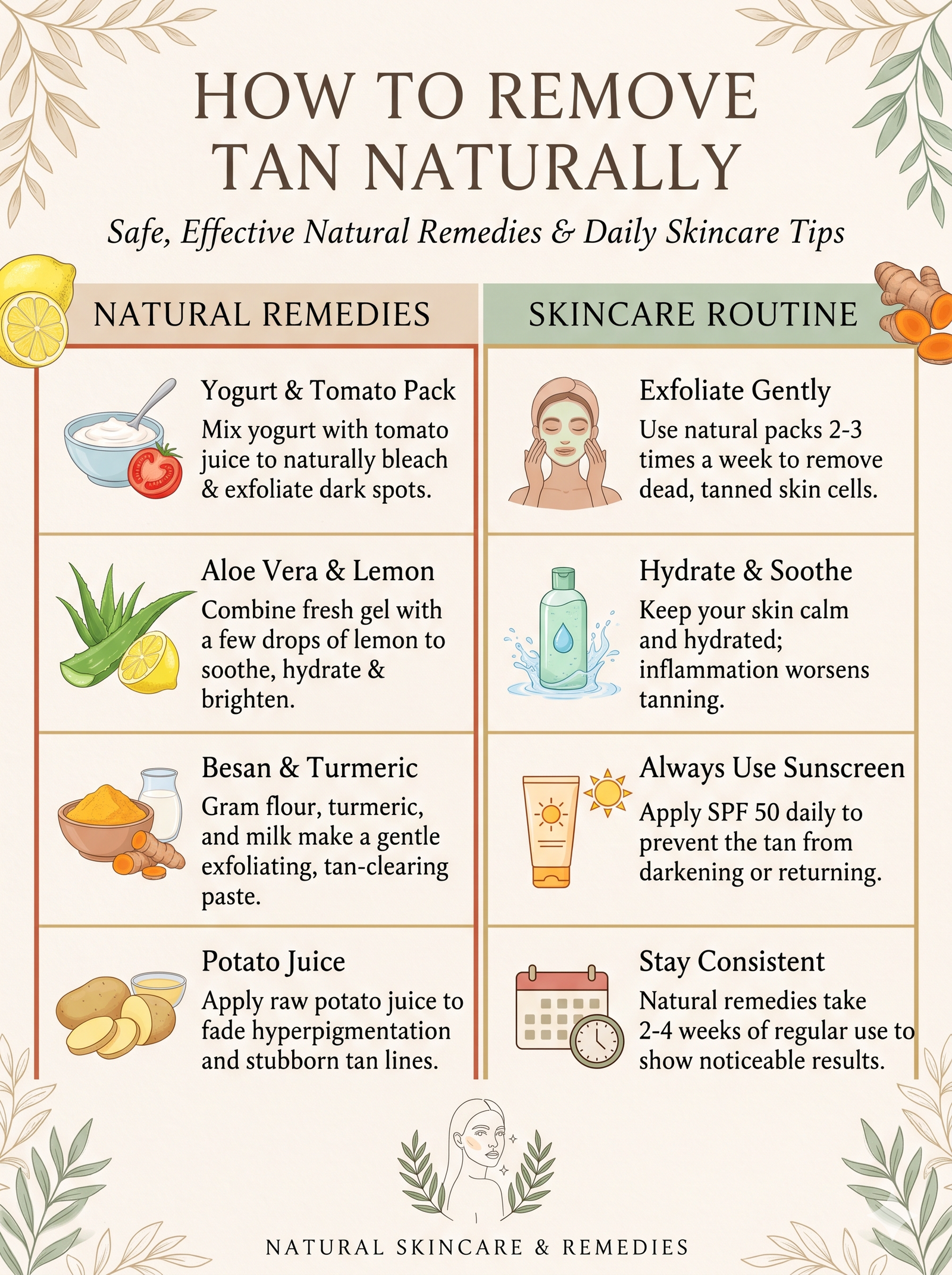
1. Aloe Vera Gel for Sun-Tanned Skin
Aloe vera is widely used in skincare because of its soothing and moisturising properties. It can be particularly helpful when the skin feels dry or uncomfortable after sun exposure.
Benefits of aloe vera:
- Helps soothe irritated skin.
- Provides lightweight hydration.
- Supports the skin’s moisture barrier.
- Leaves the skin feeling refreshed.
How to use:
Apply a small amount of pure, fragrance-free aloe vera gel to clean skin. Leave it on according to the product instructions and rinse if necessary.
Perform a patch test before applying it to your entire face. Aloe vera may irritate some individuals.
2. Curd for Gentle Skin Care
Curd contains lactic acid, an alpha-hydroxy acid (AHA) that can help exfoliate the skin. However, the concentration in homemade curd is unpredictable, so it should not be considered a controlled exfoliating treatment.
Potential benefits:
- Helps soften dry skin.
- Provides temporary hydration.
- Contains naturally occurring lactic acid.
How to use:
If your skin tolerates it, apply a small amount of plain, unsweetened curd to a small area for a few minutes and rinse gently. Avoid using it on sensitive, irritated, or sunburned skin.
3. Cucumber for Refreshing the Skin
Cucumber is known for its high water content and cooling sensation. It is a simple option for refreshing skin that feels warm or dehydrated after spending time outdoors.
Benefits:
- Provides temporary cooling.
- Helps refresh dehydrated skin.
- Supports a comfortable skincare routine.
How to use:
Place chilled cucumber slices over your closed eyes or gently apply freshly prepared cucumber pulp to your face. Rinse with cool water.
Remember that cucumber does not directly remove melanin or reverse sun tanning.
4. Honey for Skin Hydration
Honey is a natural humectant, meaning it helps attract and retain moisture. It can be useful for people experiencing dryness after sun exposure.
Benefits:
- Helps maintain skin hydration.
- Leaves the skin feeling soft.
- Supports a moisturising skincare routine.
How to use:
Apply a thin layer of plain honey to a small area of clean skin. Leave it for approximately 10 minutes and rinse thoroughly.
Avoid honey if you have an allergy or experience irritation.
5. Oatmeal for Gentle Exfoliation
Oatmeal is an excellent ingredient for people looking for a gentle skincare option. Colloidal oatmeal is particularly valued for its soothing properties.
Benefits:
- Helps soothe dry and sensitive skin.
- Supports the skin’s moisture barrier.
- Provides gentle cleansing when formulated appropriately.
How to use:
Mix finely ground, plain oats with water to create a smooth paste. Apply gently without scrubbing and rinse with lukewarm water.
Avoid rough rubbing because friction can worsen irritation and pigmentation.
6. Potato for Uneven-Looking Skin Tone
Potato is a traditional home remedy frequently recommended for tanning. However, there is limited reliable clinical evidence that applying raw potato can effectively remove facial tan.
For a safer approach, we recommend prioritising proven skincare ingredients rather than relying on potato juice for pigmentation treatment.
7. Rose Water for a Refreshing Feel
Rose water is commonly used in skincare for its refreshing properties.
Benefits:
- Provides a refreshing sensation.
- Can complement a hydrating skincare routine.
- Helps remove the feeling of dryness when used with moisturiser.
Choose alcohol-free, fragrance-free formulations if your skin is sensitive.
8. Green Tea for Antioxidant Support
Green tea contains polyphenols, including EGCG, which have antioxidant properties.
Skincare formulations containing green tea extracts may help support the skin against oxidative stress.
How to use:
Choose a properly formulated green tea skincare product and follow its instructions. Avoid applying hot green tea to the face or using ingredients that cause irritation.
9. Vitamin C for Brighter-Looking Skin
Vitamin C is one of the most popular skincare ingredients for addressing uneven skin tone.
It is an antioxidant that helps protect against oxidative stress and can support a brighter-looking complexion.
Benefits of Vitamin C:
- Helps improve the appearance of uneven skin tone.
- Supports antioxidant protection.
- Helps reduce the appearance of dark spots over time.
- Supports collagen production.
How to use:
Apply a suitable Vitamin C serum to clean, dry skin according to the product instructions. Follow with moisturiser and broad-spectrum sunscreen.
Beginners can start with a lower concentration and gradually increase usage depending on skin tolerance.
10. Rice Water for a Fresh Skin Appearance
Rice water is a traditional beauty ingredient used in different skincare routines.
It contains starch and other water-soluble components, but strong clinical evidence supporting rice water as a treatment for sun tan is limited.
If you want to experiment with rice water, use a freshly prepared, clean formulation and discontinue it if irritation occurs.
Best Skincare Ingredients to Remove Tan and Improve Skin Brightness
Although home remedies can provide temporary comfort and hydration, certain well-researched skincare ingredients are more useful for addressing uneven pigmentation.
Here are some ingredients worth including in a skincare routine.
| Ingredient | Primary Skincare Benefit |
|---|---|
| Vitamin C | Supports brighter-looking skin and antioxidant protection |
| Niacinamide | Helps improve uneven skin tone and skin barrier function |
| Alpha Arbutin | Helps reduce the appearance of dark spots |
| Azelaic Acid | Helps address pigmentation and acne-related marks |
| Glycolic Acid | Supports controlled exfoliation |
| Lactic Acid | Helps improve skin texture and surface dullness |
| Hyaluronic Acid | Helps maintain skin hydration |
| Aloe Vera | Helps soothe and moisturise skin |
We should select products according to our skin type and introduce active ingredients gradually. Combining several strong exfoliating ingredients can cause irritation and make pigmentation worse.
Daily Skincare Routine to Reduce Facial Tan
Consistency is essential when addressing tanning and uneven skin tone.
A simple morning and evening routine can help maintain healthy-looking skin.
Morning Skincare Routine
Step 1: Gentle Face Wash
Start with a mild cleanser to remove excess oil, sweat, and impurities without stripping the skin.
Step 2: Vitamin C Serum
Apply a suitable Vitamin C serum to support antioxidant protection and improve the appearance of uneven skin tone.
Step 3: Moisturiser
Choose a moisturiser according to your skin type. Hydrated skin generally feels smoother and more comfortable.
Step 4: Broad-Spectrum Sunscreen
Apply a broad-spectrum SPF 30 or higher sunscreen every morning. Use enough product to cover the face, ears, and exposed neck.
Reapply approximately every two hours when outdoors, and after swimming or excessive sweating.
Night Skincare Routine
Step 1: Cleanse Your Face
Remove sunscreen, makeup, dirt, and accumulated impurities with a gentle cleanser.
Step 2: Apply a Suitable Treatment Serum
Depending on your skin concerns, consider niacinamide, azelaic acid, or another dermatologist-recommended pigmentation treatment.
Step 3: Moisturise
Finish with a nourishing moisturiser to support the skin barrier overnight.
Avoid using multiple strong active ingredients together unless recommended by a skincare professional.
How Long Does It Take to Remove Tan from the Face?
One of the most common questions is how many days it takes to remove facial tan naturally.
The answer depends on several factors:
- The intensity of sun exposure.
- Your natural skin tone.
- The amount of pigmentation.
- Your skincare routine.
- Your consistency with sunscreen.
- Individual skin recovery and renewal.
Mild tanning may gradually fade over several weeks once further UV exposure is controlled. More persistent pigmentation can take months and may require professional treatment.
We should avoid products promising instant fairness or complete tan removal in three to seven days. Healthy skincare focuses on gradual improvement rather than aggressive skin-lightening methods.
Important Tips to Prevent Sun Tan on the Face
Preventing excessive tanning is just as important as treating existing pigmentation.
Follow these simple habits:
- Apply sunscreen daily: Choose broad-spectrum SPF 30 or higher.
- Wear protective clothing: Hats, sunglasses, and protective clothing help reduce direct sun exposure.
- Avoid peak sunlight: Whenever possible, limit prolonged outdoor activities during intense sunlight.
- Reapply sunscreen: Reapplication is essential, especially during outdoor activities.
- Stay hydrated: Maintain adequate water intake throughout the day.
- Avoid harsh scrubs: Excessive exfoliation can irritate the skin and worsen pigmentation.
- Use gentle skincare: Select products suitable for your skin type.
- Follow a consistent routine: Regular skincare habits are more useful than frequently changing products.
Common Mistakes to Avoid While Removing Tan Naturally
Many people unintentionally damage their skin while trying to achieve a brighter complexion.
Here are some mistakes we should avoid:
1. Applying Lemon Directly to the Face
Lemon juice is highly acidic and can cause irritation, dryness, and photosensitivity. It may lead to phytophotodermatitis when skin exposed to certain plant compounds is exposed to sunlight.
2. Using Baking Soda on Facial Skin
Baking soda can disrupt the skin’s natural protective barrier and cause irritation.
3. Scrubbing Too Hard
Aggressive scrubbing does not remove melanin. Instead, it can cause inflammation and post-inflammatory hyperpigmentation.
4. Skipping Sunscreen
Using pigmentation serums without adequate sun protection can limit results and allow further UV-related pigmentation.
5. Trying Too Many Home Remedies
Combining multiple ingredients without understanding their effects can cause allergic reactions and skin irritation.
6. Using Unverified Skin-Lightening Products
Avoid products containing undeclared steroids, mercury, or other potentially harmful ingredients. Choose properly labelled skincare products from reliable sources.
Best Skincare Routine for Different Skin Types
Every skin type has different needs. Therefore, our approach to reducing facial tan should be personalised.
For Oily Skin
Choose lightweight, non-comedogenic skincare products.
Recommended ingredients:
- Niacinamide.
- Vitamin C.
- Lightweight moisturisers.
- Gel-based sunscreen.
For Dry Skin
Focus on hydration and strengthening the skin barrier.
Recommended ingredients:
- Hyaluronic acid.
- Ceramides.
- Glycerin.
- Gentle moisturisers.
For Sensitive Skin
Avoid harsh exfoliants and highly fragranced home remedies.
Recommended ingredients:
- Colloidal oatmeal.
- Ceramides.
- Gentle moisturising ingredients.
Introduce new products individually and perform patch tests.
For Combination Skin
Use lightweight hydration while addressing pigmentation gradually.
Recommended ingredients:
- Niacinamide.
- Vitamin C.
- Hyaluronic acid.
- Broad-spectrum sunscreen.
When Should We Consult a Dermatologist?
Sometimes, dark patches on the face are not simply the result of sun tanning.
Conditions such as melasma, post-inflammatory hyperpigmentation, and other pigmentation disorders can produce similar symptoms.
Consult a dermatologist if:
- Dark patches persist despite consistent sun protection.
- Pigmentation becomes darker or spreads.
- You notice irregular or changing skin spots.
- Home remedies cause irritation or redness.
- Pigmentation affects your confidence or daily life.
A dermatologist may recommend treatments such as prescription creams, azelaic acid, retinoids, chemical peels, or other procedures depending on the underlying condition.
Professional guidance is especially important before trying strong pigmentation treatments.
Frequently Asked Questions About Removing Tan from Face Naturally
1. How can we remove tan from the face naturally at home?
We can maintain a gentle skincare routine using soothing ingredients such as aloe vera and oatmeal. However, daily broad-spectrum sunscreen is essential to prevent further tanning. For existing pigmentation, proven ingredients such as Vitamin C and niacinamide may help improve uneven skin tone.
2. Can aloe vera remove sun tan overnight?
No. Aloe vera may soothe and moisturise the skin, but it cannot remove melanin overnight. Visible improvement in pigmentation generally takes time.
3. Which natural ingredient is best for removing facial tan?
Aloe vera and oatmeal can help soothe the skin, while Vitamin C is a better-supported skincare ingredient for improving the appearance of uneven skin tone. No natural ingredient guarantees complete tan removal.
4. Does Vitamin C serum help remove tan?
Vitamin C can help improve the appearance of pigmentation and uneven skin tone. With regular use and proper sun protection, it may support a brighter-looking complexion.
5. Can we remove tan permanently?
Tanning caused by sun exposure can gradually fade when further UV exposure is controlled. However, continued sun exposure can cause tanning to return. Consistent sun protection is essential for maintaining results.
6. Is sunscreen necessary even when staying indoors?
Sunscreen is particularly important when spending time near windows or going outdoors. UVA rays can pass through ordinary window glass, although exposure levels vary.
7. How often should we exfoliate tanned skin?
Exfoliation should depend on your skin type and the product being used. Over-exfoliation can cause irritation and worsen pigmentation. Avoid exfoliating sunburned or irritated skin.
8. Can homemade face packs remove stubborn pigmentation?
Homemade face packs may provide temporary hydration or soothing benefits, but they are not reliable treatments for stubborn pigmentation. Persistent dark patches should be assessed by a dermatologist.
Conclusion: Achieve Healthy, Glowing Skin with the Right Skincare Routine
Removing facial tan naturally requires patience, consistency, and the right skincare approach. While traditional ingredients such as aloe vera, cucumber, oatmeal, and honey can complement a gentle skincare routine, they should not replace scientifically supported skincare practices.
The most important step is daily sun protection. Combining broad-spectrum sunscreen with suitable skincare ingredients such as Vitamin C and niacinamide can help improve the appearance of uneven skin tone over time.
We should remember that healthy skin is not about achieving a particular skin colour. It is about maintaining hydration, protecting the skin barrier, managing pigmentation, and preserving our skin’s natural beauty.
Start with a simple skincare routine, protect your skin from harmful UV exposure, and give your skin the care and consistency it deserves.