
Rice Water for Skin: Benefits, Uses and Skincare Secrets
-
Dokmai London
- Posted on
- 0 comments
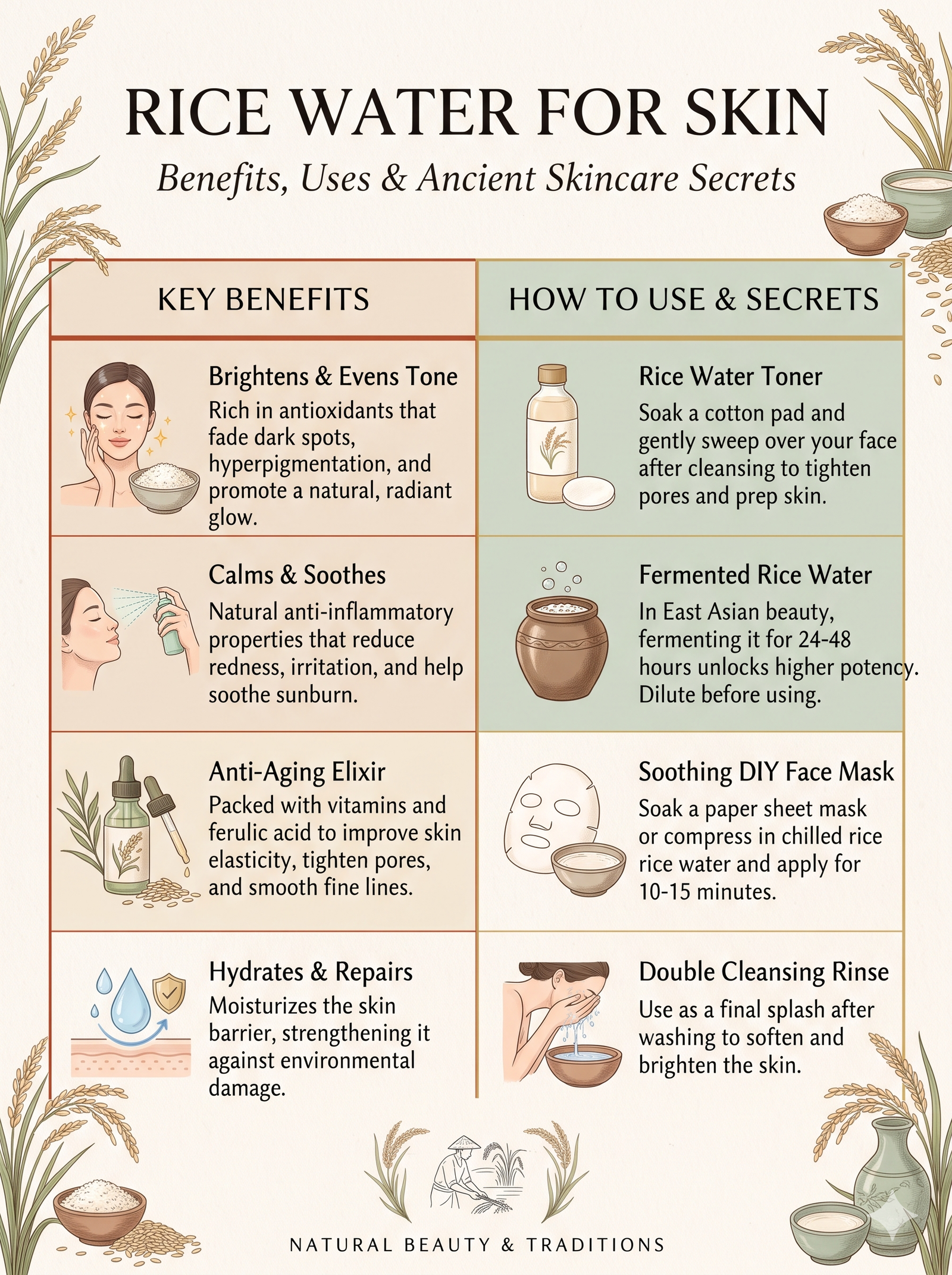
Rice water has been a popular ingredient in traditional Asian beauty rituals for centuries. Today, it has gained worldwide attention as a natural skincare ingredient because of its potential to improve skin texture, enhance radiance and support a healthy-looking complexion. From homemade rice water toners to professionally formulated skincare products, this simple ingredient has become an interesting addition to modern beauty routines.
But is rice water really good for your skin? What benefits can it offer, how should we use it, and what precautions should we follow?
In this comprehensive guide, we explore the science, traditional uses and practical skincare secrets behind rice water to help us understand how it can become part of a balanced skincare routine.
What Is Rice Water?
Rice water is the starchy liquid obtained by soaking, boiling or rinsing rice. It contains several naturally occurring compounds, including carbohydrates, small amounts of amino acids, minerals and plant-based antioxidants.
Rice has traditionally been used in beauty practices across countries such as Japan, Korea and China. These traditional practices have contributed to the popularity of rice-based skincare products.
Depending on how it is prepared, rice water may contain different concentrations of nutrients and compounds.
There are three common types:
- Soaked rice water: Prepared by soaking clean rice in water for a short period.
- Boiled rice water: Obtained by boiling rice and collecting the remaining water after cooling.
- Fermented rice water: Prepared by allowing soaked rice water to ferment under controlled conditions.
Each type has different characteristics, and its suitability depends on the preparation method and individual skin sensitivity.
Top 8 Benefits of Rice Water for Skin
Rice water is often associated with brighter-looking skin, hydration and smoother texture. Although scientific research on homemade rice water specifically is limited, certain rice-derived ingredients have demonstrated promising cosmetic properties.
Let’s explore its potential skincare benefits.
1. Helps Improve Skin Radiance
One of the most popular reasons people use rice water is to achieve naturally glowing skin.
Rice-derived ingredients are commonly included in skincare formulations designed to improve the appearance of dull skin. Their combination with hydrating and conditioning ingredients can help create a smoother, fresher-looking complexion.
When our skin is properly hydrated and its surface feels smooth, it naturally reflects light more evenly.
Skincare tip: We can incorporate a professionally formulated rice water toner into our routine after cleansing to help maintain skin freshness and hydration.
2. Supports Skin Hydration
Hydration plays an essential role in maintaining healthy-looking skin.
Rice water contains starches and other water-soluble compounds that may provide a temporary conditioning effect. However, homemade rice water should not be considered a replacement for a properly formulated moisturiser.
For better hydration, we recommend combining suitable rice-based skincare products with ingredients such as:
- Hyaluronic acid
- Glycerin
- Ceramides
- Panthenol
- Aloe vera
These ingredients help support the skin’s moisture balance and reduce the appearance of dryness.
3. May Help Soothe the Appearance of Skin
Skin can sometimes appear uncomfortable, dry or temporarily irritated because of environmental exposure, harsh cleansing products or excessive exfoliation.
Some rice-derived cosmetic ingredients, particularly rice bran extracts, have demonstrated promising skin-conditioning and soothing properties.
However, homemade rice water is not a medically established treatment for eczema, acne, rosacea or other inflammatory skin conditions.
For sensitive skin, we should always perform a patch test before introducing a new product.
4. Helps Improve the Appearance of Skin Texture
Uneven skin texture can make our complexion appear rough and dull.
A well-balanced skincare routine that includes gentle cleansing, hydration and moisturisation can help improve the appearance of skin texture.
Rice-based skincare products may complement this routine by providing conditioning benefits.
For smoother-looking skin, we should focus on:
- Gentle cleansing twice daily.
- Regular moisturisation.
- Avoiding excessive physical exfoliation.
- Using sunscreen every morning.
- Choosing products suitable for our skin type.
Consistency is more important than applying multiple skincare ingredients at once.
5. Contains Antioxidant Compounds
Rice bran and other rice-derived extracts contain naturally occurring antioxidant compounds, including ferulic acid and other phenolic compounds.
Antioxidants help protect cosmetic formulations and can support skin protection against oxidative stress.
Environmental factors such as UV radiation and pollution contribute to oxidative stress, which can play a role in premature skin ageing.
However, rice water should never replace sunscreen or other established sun-protection measures.
6. May Support a More Even-Looking Complexion
Uneven skin tone can result from several factors, including sun exposure, post-acne marks and changes in pigmentation.
Rice-derived ingredients are frequently used in brightening skincare formulations.
While some laboratory studies have investigated rice bran compounds and their effects on pigmentation-related pathways, evidence that homemade rice water visibly fades dark spots in humans remains insufficient.
For a more effective approach to uneven skin tone, we can consider established skincare ingredients such as:
- Vitamin C
- Niacinamide
- Azelaic acid
- Alpha arbutin
- Broad-spectrum sunscreen
The right combination depends on individual skin concerns and tolerance.
7. Helps Maintain a Fresh-Looking Complexion
Daily exposure to dust, pollution, sweat and excess oil can make our skin appear tired.
A gentle cleansing routine helps remove accumulated impurities and supports a fresh-looking complexion.
Rice water can be used as an occasional supplementary skincare step, but it does not replace a facial cleanser.
For best results, we should avoid harsh cleansing methods that strip the skin of its natural protective oils.
8. Can Complement an Anti-Ageing Skincare Routine
Healthy-looking skin requires consistent care.
Rice-derived antioxidants and conditioning ingredients may complement an anti-ageing skincare routine. However, rice water alone cannot remove wrinkles, reverse ageing or stimulate collagen production in a clinically established way.
For a comprehensive routine, we can focus on:
- Daily SPF 30 or higher sunscreen.
- Regular moisturisation.
- Vitamin C in the morning, if tolerated.
- Retinoids at night, where appropriate.
- Adequate sleep and a balanced diet.
These steps have stronger evidence for maintaining healthy-looking skin over time.
How to Make Rice Water for Skin at Home
If we prefer natural skincare preparations, rice water is relatively simple to prepare.
Here is an easy method.
Ingredients Required
- ½ cup of clean, uncooked rice.
- 1–2 cups of clean drinking water.
- A clean bowl.
- A strainer.
- A clean storage container.
Step-by-Step Preparation
Step 1: Wash the Rice
Take half a cup of rice and rinse it gently with clean water to remove visible dust and impurities.
Step 2: Soak the Rice
Place the washed rice in a clean bowl and add one to two cups of drinking water.
Step 3: Let It Rest
Allow the rice to soak for approximately 20–30 minutes.
Step 4: Strain the Water
Gently stir the rice and strain the liquid into a clean container.
Step 5: Use It Fresh
The prepared rice water is ready for use.
For hygiene reasons, homemade rice water should be refrigerated immediately and preferably discarded within 24 hours. Do not use it if it develops an unusual smell, colour or appearance.
Important: Homemade rice water does not contain a cosmetic preservative system. Avoid keeping it for extended periods or using fermented preparations without understanding the hygiene risks.
How to Use Rice Water on Your Face
Rice water can be incorporated into a skincare routine in different ways.
Here are some simple methods.
1. Rice Water as a Facial Toner
A toner is generally applied after cleansing to provide an additional skincare step.
How to use:
- Cleanse your face with a gentle face wash.
- Apply a small amount of fresh rice water using clean hands or a cotton pad.
- Avoid the eye area.
- Follow with a suitable moisturiser.
- Apply sunscreen during the daytime.
Start with occasional use rather than applying it multiple times daily.
2. Rice Water Face Rinse
A simple rice water rinse can be used as an occasional addition to your cleansing routine.
How to use:
- Wash your face with a gentle cleanser.
- Apply fresh rice water to the skin.
- Leave it briefly.
- Rinse with clean water.
- Apply moisturiser.
Avoid using hot water or rubbing your face aggressively.
3. Rice Water with Aloe Vera
Aloe vera is commonly used in skincare products because of its moisturising and skin-conditioning properties.
For a simple fresh-use preparation, combine a small amount of plain rice water with a suitable, cosmetic-grade aloe vera gel.
Apply a small quantity to clean skin and rinse if irritation occurs.
Prepare only what you need for one application. Do not store homemade mixtures without an appropriate preservative system.
4. Rice Water with Glycerin
Glycerin is a well-established humectant that helps attract and retain water in the outer layers of the skin.
For a simple hydrating preparation, we can use a small amount of cosmetic-grade glycerin with a properly formulated rice-based skincare product.
This combination can help improve the feeling of skin hydration.
Avoid applying concentrated glycerin directly if it causes discomfort or stickiness.
Rice Water for Different Skin Types
Not every ingredient works equally well for everyone. Understanding our skin type helps us make better skincare choices.
| Skin Type | Skincare Consideration |
|---|---|
| Oily Skin | Choose lightweight, non-comedogenic skincare products. |
| Dry Skin | Combine hydrating products with a nourishing moisturiser. |
| Combination Skin | Use lightweight hydration and adjust moisturisation according to different facial areas. |
| Sensitive Skin | Patch-test first and avoid fermented or fragranced preparations. |
| Normal Skin | Maintain a balanced cleansing, moisturising and sun-protection routine. |
Rice Water for Oily Skin
People with oily skin often look for ingredients that help maintain a fresh appearance without leaving a heavy residue.
Rice-based toners may be an option, provided the formulation is lightweight and suitable for the skin.
We should avoid assuming that rice water controls sebum production or treats acne.
Rice Water for Dry Skin
Dry skin requires additional moisture and barrier support.
Rice water alone is not sufficient to treat skin dryness.
A moisturiser containing ceramides, glycerin or hyaluronic acid can be a better option for maintaining hydration.
Rice Water for Sensitive Skin
Sensitive skin requires extra care.
Homemade preparations may contain contaminants or develop microbial growth if stored incorrectly.
A professionally formulated, fragrance-free product with a suitable preservative system may be a more reliable choice.
Always perform a patch test before applying a new product to the entire face.
Rice Water vs Rice-Based Skincare Products: Which Is Better?
Both homemade rice water and professionally formulated rice-based skincare products have their own characteristics.
However, there are important differences.
| Feature | Homemade Rice Water | Formulated Rice Skincare |
|---|---|---|
| Preparation | Prepared at home | Professionally manufactured |
| Ingredients | Naturally extracted water-soluble compounds | Selected cosmetic ingredients |
| Preservation | No built-in preservation | Usually includes a preservative system |
| Consistency | Can vary between batches | Designed for consistency |
| Storage | Very limited | Depends on product instructions |
| Skin Benefits | Limited clinical evidence | Depends on formulation and ingredients |
For everyday skincare, professionally formulated products generally offer better consistency, stability and hygiene when manufactured according to appropriate cosmetic standards.
Rice Water for Skin: Morning and Night Skincare Routine
We can incorporate suitable rice-based products into our existing routine without making skincare unnecessarily complicated.
Morning Skincare Routine
Step 1: Gentle Face Wash
Cleanse your face using a gentle cleanser suitable for your skin type.
Step 2: Rice-Based Toner
If your skin tolerates it, apply a professionally formulated rice-based toner.
Step 3: Vitamin C Serum
Vitamin C can help protect against oxidative stress and improve the appearance of uneven skin tone.
Step 4: Moisturiser
Apply a moisturiser to maintain skin hydration.
Step 5: Sunscreen
Finish with broad-spectrum SPF 30 or higher sunscreen.
Sunscreen is one of the most important steps in preventing sun-related skin damage and pigmentation.
Night Skincare Routine
Step 1: Cleanse Your Face
Remove sunscreen, makeup, excess oil and daily impurities.
Step 2: Apply a Hydrating Toner
Use a gentle rice-based toner if it suits your skin.
Step 3: Apply a Suitable Serum
Choose a serum according to your skin concerns, such as niacinamide for uneven-looking skin or hyaluronic acid for hydration.
Step 4: Moisturise
Finish with a suitable moisturiser to support the skin barrier.
Common Mistakes to Avoid When Using Rice Water on Skin
Although rice water is a popular natural skincare ingredient, incorrect preparation or excessive use may create problems.
Here are some mistakes we should avoid.
1. Using Unclean Rice: Always rinse rice and use clean drinking water.
2. Storing Rice Water for Too Long: Homemade preparations can develop microbial contamination. Refrigerate immediately and discard within 24 hours.
3. Applying Fermented Rice Water Without Precautions: Fermentation does not automatically make a preparation safer or more effective.
4. Expecting Instant Fairness: Rice water cannot permanently change our natural skin colour.
5. Ignoring Sunscreen: No rice-based skincare product can replace daily sun protection.
6. Using It on Irritated Skin: Avoid applying homemade preparations to broken, infected or inflamed skin.
7. Skipping Patch Testing: Always test a new preparation on a small area first and discontinue use if irritation develops.
Does Rice Water Remove Dark Spots and Pigmentation?
This is one of the most frequently asked questions about rice water.
Rice-derived ingredients contain compounds that are being investigated for their potential cosmetic benefits, including their effects on pigmentation-related processes.
However, there is currently insufficient clinical evidence to conclude that homemade rice water can reliably remove dark spots, melasma or stubborn pigmentation.
For visible pigmentation concerns, a skincare routine may include:
- Vitamin C for antioxidant support.
- Niacinamide for improving uneven-looking skin tone.
- Azelaic acid for certain pigmentation and acne concerns.
- Broad-spectrum sunscreen to prevent further UV-related pigmentation.
Persistent or worsening pigmentation should be assessed by a qualified dermatologist.
Can We Use Rice Water on Our Face Every Day?
Daily use is not necessary.
The ideal frequency depends on the preparation, formulation and individual skin tolerance.
If we are trying a homemade preparation for the first time, occasional use is a more cautious approach.
Professionally formulated rice-based products can generally be used according to their manufacturer’s instructions.
If redness, itching, burning or irritation develops, discontinue use.
How Long Does Rice Water Take to Show Results on Skin?
There is no scientifically established timeline for visible results from homemade rice water.
Some people may notice a temporary feeling of freshness or smoother skin after using a rinse. However, long-term improvements in hydration, texture or pigmentation depend on the overall skincare routine and the specific products being used.
We should avoid claims such as guaranteed glowing skin in seven days or permanent pigmentation removal through rice water.
Healthy skin is the result of consistent care, suitable products and sun protection.
Frequently Asked Questions About Rice Water for Skin
1. Is rice water good for glowing skin?
Rice water is traditionally used in skincare and may provide a temporary conditioning effect. Professionally formulated rice-based products can complement a hydration-focused skincare routine.
2. Can rice water remove tanning?
There is insufficient clinical evidence that rice water removes tanning. Sunscreen and appropriate skincare ingredients are more reliable ways to prevent and manage sun-related skin concerns.
3. Is rice water suitable for acne-prone skin?
Rice water is not an established acne treatment. People with acne-prone skin should prioritise non-comedogenic skincare products and evidence-based acne treatments.
4. Can we apply rice water overnight?
We do not recommend leaving homemade rice water on the face overnight. It is safer to use it briefly and rinse it off, particularly because homemade preparations are not preserved.
5. Is fermented rice water better than normal rice water?
Not necessarily. Fermentation changes the composition of rice water, but there is insufficient clinical evidence to establish that fermented rice water provides superior skincare benefits. Poorly controlled fermentation can also introduce microbial contamination.
6. Can rice water help with wrinkles?
Rice water has not been clinically established as a wrinkle treatment. Sunscreen, moisturisers and appropriate retinoid products have stronger evidence for supporting an anti-ageing skincare routine.
7. Can we use rice water with Vitamin C serum?
There is no general reason that a suitable rice-based toner and Vitamin C serum cannot be included in the same routine. However, we should introduce products gradually and monitor skin tolerance.
8. Is rice water suitable for all skin types?
Not necessarily. Individual reactions vary. People with sensitive or compromised skin barriers should be particularly cautious with homemade preparations.
Final Thoughts: Is Rice Water Worth Adding to Your Skincare Routine?
Rice water is an interesting traditional beauty ingredient that has earned its place in modern skincare conversations. Its naturally occurring starches and rice-derived compounds make it an attractive ingredient for cosmetic formulations focused on skin conditioning and hydration.
However, we should understand the difference between traditional beauty practices and scientifically established skincare benefits.
For healthy, glowing-looking skin, we should prioritise gentle cleansing, effective moisturisation, suitable active ingredients and daily sunscreen.
Rather than relying on a single natural ingredient, the best approach is to build a consistent skincare routine that addresses our individual skin concerns.
Remember: Healthy skin is not about using the maximum number of products. It is about choosing the right ingredients, using them correctly and maintaining consistency.