
Vitamin C vs Niacinamide: Which Is Better for Your Skin?
-
Dokmai London
- Posted on
- 0 comments
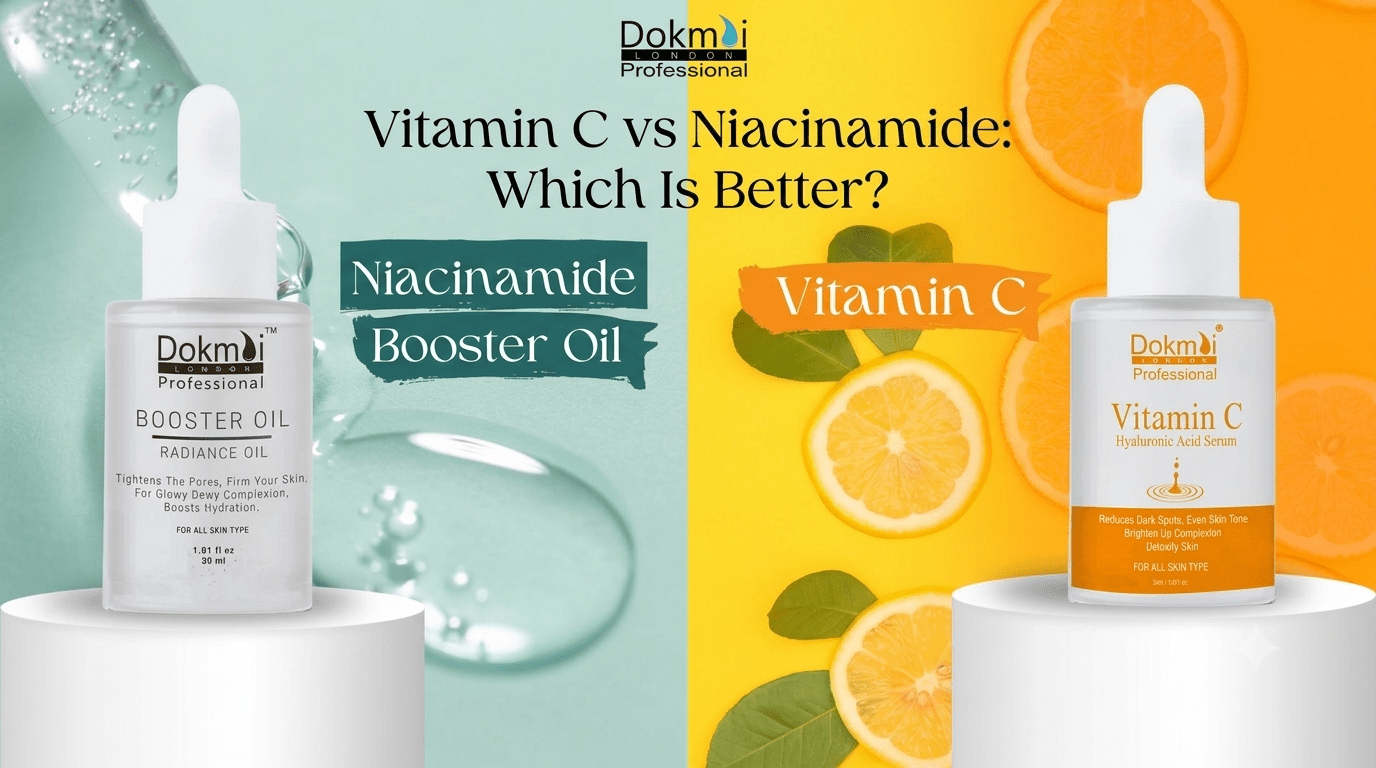
When it comes to skincare, Vitamin C and Niacinamide are two of the most popular ingredients recommended by dermatologists and skincare experts. Both offer incredible skin benefits, but many people wonder: Vitamin C vs Niacinamide – which is better?
The answer depends on your skin type, concerns, and skincare goals. While Vitamin C is known for brightening and protecting the skin, Niacinamide is famous for strengthening the skin barrier, controlling oil, and reducing blemishes.
In this comprehensive guide, we’ll compare Vitamin C vs Niacinamide, explain their benefits, differences, and help you choose the right ingredient for healthier, brighter skin.
What Is Vitamin C?
Vitamin C, also known as Ascorbic Acid, is a powerful antioxidant that protects the skin from environmental damage caused by pollution and UV exposure.
It is one of the most effective ingredients for achieving glowing, youthful-looking skin.
Benefits of Vitamin C
- Brightens dull skin
- Reduces pigmentation
- Fades acne scars
- Improves uneven skin tone
- Boosts collagen production
- Helps reduce fine lines
- Protects against free radicals
- Promotes healthy skin radiance
Vitamin C is commonly found in face washes, serums, moisturizers, and sunscreens.
What Is Niacinamide?
Niacinamide is a form of Vitamin B3 that supports overall skin health. It is suitable for almost every skin type, including oily, acne-prone, and sensitive skin.
Unlike Vitamin C, Niacinamide mainly focuses on strengthening the skin barrier and balancing oil production.
Benefits of Niacinamide
- Controls excess oil
- Minimizes enlarged pores
- Reduces redness
- Improves skin texture
- Strengthens the skin barrier
- Helps fade post-acne marks
- Reduces inflammation
- Supports an even skin tone
Because it is gentle, Niacinamide is often recommended for daily use.
Vitamin C vs Niacinamide: Key Differences
| Feature | Vitamin C | Niacinamide |
|---|---|---|
| Main Benefit | Brightens skin | Strengthens skin barrier |
| Best For | Dullness & pigmentation | Oily & acne-prone skin |
| Skin Type | Normal, Dry, Combination | All skin types |
| Oil Control | Moderate | Excellent |
| Brightening | Excellent | Good |
| Acne Marks | Very Effective | Effective |
| Anti-Aging | Excellent | Good |
| Sensitivity | Can irritate sensitive skin | Gentle for most users |
Which Ingredient Is Better for Glowing Skin?
If your primary goal is achieving a brighter complexion, Vitamin C is generally the better choice.
Vitamin C helps:
- Improve skin radiance
- Reduce dullness
- Fade pigmentation
- Boost collagen
- Protect against environmental damage
People looking for naturally glowing skin often include Vitamin C in their morning skincare routine.
Which Is Better for Acne-Prone Skin?
For oily and acne-prone skin, Niacinamide is usually the preferred ingredient.
It helps:
- Reduce excess oil
- Calm redness
- Minimize pores
- Strengthen the skin barrier
- Improve acne marks over time
Niacinamide works especially well for people who experience frequent breakouts.
Which Ingredient Helps Reduce Pigmentation?
Both ingredients help improve uneven skin tone, but they work differently.
Vitamin C
- Targets sun spots
- Reduces melanin production
- Brightens dark patches
- Improves overall complexion
Niacinamide
- Helps fade post-inflammatory marks
- Supports even skin tone
- Reduces redness associated with blemishes
For stubborn pigmentation, many people benefit from using both ingredients in a well-planned skincare routine.
Can You Use Vitamin C and Niacinamide Together?
Yes. Modern skincare research shows that Vitamin C and Niacinamide can be used together as part of the same skincare routine when products are formulated appropriately.
Using both ingredients may provide complementary benefits, such as:
- Brighter skin
- Better hydration
- Improved skin texture
- Reduced pigmentation
- Stronger skin barrier
- Enhanced protection from environmental stressors
A common routine is:
Morning
- Cleanse your face.
- Apply a Vitamin C serum.
- Moisturize.
- Finish with sunscreen.
Evening
- Cleanse your face.
- Apply a Niacinamide serum.
- Moisturize.
Which Ingredient Is Better for Anti-Aging?
Both ingredients help maintain youthful-looking skin.
Vitamin C
- Boosts collagen production
- Reduces fine lines
- Improves elasticity
- Protects from free radical damage
Niacinamide
- Improves skin barrier
- Smooths texture
- Supports hydration
- Softens the appearance of fine lines
Using both consistently can support long-term skin health.
Choosing Based on Your Skin Type
Oily Skin
Choose Niacinamide if your main concern is excess oil and enlarged pores.
Dry Skin
Vitamin C paired with hydrating ingredients like Hyaluronic Acid can help brighten while maintaining moisture.
Combination Skin
Both ingredients work well. Use Vitamin C in the morning and Niacinamide at night.
Sensitive Skin
Niacinamide is generally considered gentler and is often better tolerated by sensitive skin.
Common Mistakes to Avoid
Many people don’t get the expected results because of simple mistakes.
Avoid:
- Using too many active ingredients at once
- Skipping sunscreen after Vitamin C
- Over-cleansing the skin
- Using products inconsistently
- Ignoring your skin type
- Expecting overnight results
Healthy skin requires patience and consistency.
Lifestyle Tips for Better Skin
Skincare products work best when combined with healthy habits.
- Drink plenty of water every day.
- Eat fruits and vegetables rich in antioxidants.
- Get 7–8 hours of sleep each night.
- Wear sunscreen daily.
- Avoid smoking and excessive alcohol.
- Manage stress through exercise or meditation.
These habits can enhance the benefits of both Vitamin C and Niacinamide.
Frequently Asked Questions (FAQs)
Is Vitamin C better than Niacinamide?
Not necessarily. Vitamin C is excellent for brightening and pigmentation, while Niacinamide is better for oil control, barrier support, and calming the skin. The best choice depends on your skin concerns.
Can I use Vitamin C every day?
Yes. Most people can use Vitamin C once daily, preferably in the morning, followed by sunscreen.
Can Niacinamide be used twice daily?
Yes. Niacinamide is gentle enough for many people to use in both morning and evening routines.
Which ingredient works faster?
Results vary, but with consistent use, both ingredients typically show noticeable improvements within 4–8 weeks, depending on the product and individual skin type.
Final Thoughts
When comparing Vitamin C vs Niacinamide, there is no single winner. Both ingredients offer unique benefits that can improve your skin in different ways.
Choose Dokmai London Vitamin C if your goal is brighter, more radiant skin, reduced pigmentation, and antioxidant protection. Opt for Niacinamide if you want to control oil, minimize pores, strengthen your skin barrier, and calm acne-prone skin.
For many people, the best approach is to include both ingredients in a balanced skincare routine. A gentle cleanser followed by targeted treatments, regular moisturizing, and daily sunscreen can help you achieve healthier, smoother, and naturally glowing skin over time.